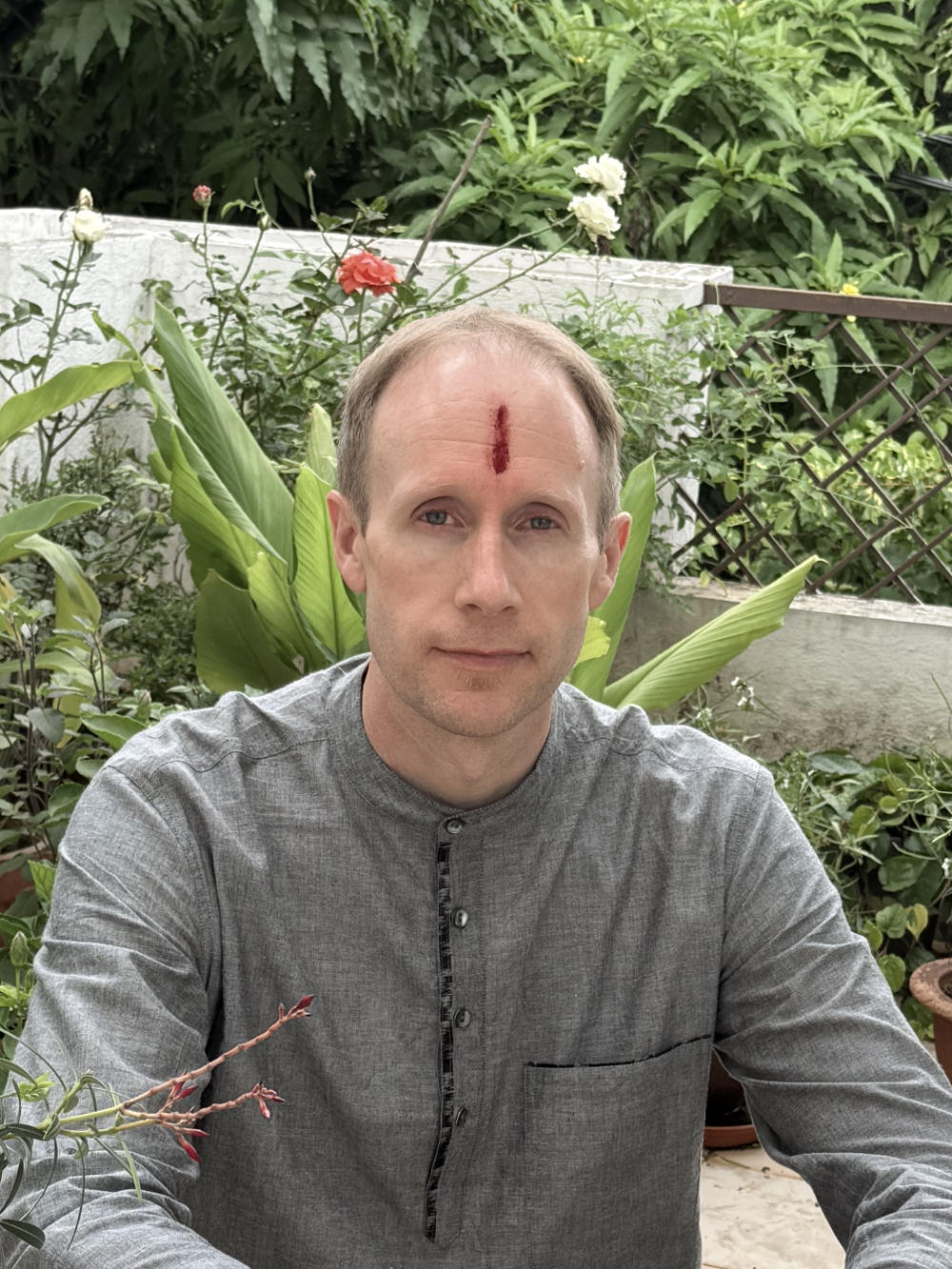
Spirituality & The Myth Sanskrit is the Oldest | Patrick McCartney

Spirituality & The Myth Sanskrit is the Oldest | Patrick McCartney
Podmasana: Spirituality, Awareness & Enlightenment
Spirituality & The Myth Sanskrit is the Oldest | Patrick McCartney

Aug 26 2026 | 00:04:17

/
Episode August 26, 2026 00:04:17

Hosted By

Brendon Orr

Show Notes

Welcome to the wisdom podcast exploring spirituality and awareness. Discover the enlightenment of ancient texts and Sanskrit's true history.

Cultural anthropologist Dr. Patrick McCartney brings rigorous empirical analysis to the myths surrounding Sanskrit, yoga, and spiritual authenticity. In this fascinating deep dive, Patrick debunks the popular belief that Sanskrit is the oldest language or the mother of all modern tongues. By examining linguistic evolution, Indo-Aryan migrations, and prehistoric South Asian cultures, he reveals the complex, hybrid reality of ancient texts like the Rig Veda.

Whether you are a yoga practitioner, a history enthusiast, or simply seeking deeper wisdom in your spiritual journey, this episode challenges us to separate myth from reality. Discover how understanding the true history of these traditions can actually deepen your mindfulness and appreciation for the profound enlightenment they offer.

In this preview episode, we explore:

  • The linguistic evolution of Sanskrit and the reality of ancient enlightenment texts
  • Why understanding true history deepens our mindfulness and wisdom in modern yoga practice
  • The fascinating prehistoric roots of South Asian culture that predate Vedic Sanskrit
  • How cultivating awareness of language myths transforms our approach to spiritual authenticity

Follow Podmasana wherever you get your podcasts. Get early access to ad-free episodes, bonus content, exclusive group chat, live Q&As and more by becoming a Podmasana+ member at podmasana.com/plus.

Follow and subscribe so you don't miss an episode. Leave a review and share the show with others on their own spiritual journey. 

Support the show:

Join Podmasana+ for extra benefits, content and perks

Say Thank You and Donate to the Show

Shop the Podmasana Store

Thank you for listening and thank you for your support! 

Connect With Podmasana:

Website: podmasana.com

Past Episodes: podmasana.com/archive

Submit Guest Ideas: [email protected]

Submit Feedback: [email protected]

Social Media: YouTube | Bluesky | Mastodon | Instagram

Check out Podmasana Media’s other show’s: YogaScussion and My Mindful Moment.
View Full Transcript

Episode Transcript

Patrick (00:00) then of course the language that's the Sanskrit that's spoken today is a watered down version of let's say the classical version of Sanskrit, which is preceded by the Vedic version. And even what is recorded in the Vedic texts is recognized as being Brendon Orr (00:01) Mm. Patrick (00:19) a kind of brief window of the ac even earlier Vedic Sanskrit that had been that had always had changed enough that by the time it was kind of compiled into all these Vedic texts was was actually quite different. And so even though people go, the Rig Veda is the earliest text in the in the Vedas, even though it's an oral tradition, we s we still call it a text, ⁓ I guess. there's there's three hundred odd loan words from non Indo Aryan languages, like Munda and Dravidian languages, which are the original languages of India. So this is where you get into the so there's already like at the earliest layer of what we can call Sanskrit hybri hybrid examples and and so the thing is is that people Sanskrit revivalists are even like devout yoga people who believe this the Hindu nationalist kind of story they they will they will agree that ⁓ Sanskrit is the oldest language in the world and that all of the seven thousand languages that Brendon Orr (01:22) Mm. Patrick (01:33) roughly spoken today, ⁓ all are descendants of Sanskrit and I mean that's just like it's just not true. The Brendon Orr (01:42) Well Tamil is believed to be is believed to be or known to be older, correct? At least Patrick (01:48) Yeah, yeah, I mean if if if if not as old, e possibly even older. So ⁓ I mean look, you know, you can go back even further, like to the prehistoric period, you know, that there's there's archaeological evidence like ⁓ megalithic sites that line up like in Bimbetka Cave in Madhya Pradesh and in Jatakhand and that kind of tribal belt in central central India. cave cave art and a complex ⁓ Yeah, megalithic structures that are that are align with, you know, the the summer solstice in ways similar to, you know, Stonehenge, for example. And and we're talking like twenty six thousand years ago, fifty tho ⁓ maybe not fifty thousand, but you know, there were people living in in the in South Asia, like well before Sanskrit was a thing or or had arrived from from from the Middle East sort of which is where it's kind of sprung from. Well, I mean, not the Middle East, but southern Russia and the Ukraine is more or less. And the Indo-Aryans, the people who came to be known as the Vedic Sanskrit speakers, some went into Europe, some went into Central Asia, through Iran, Turkmenistan and then down through the Bactriana Margiana, Bactria Margiana archaeological complex. It was there in in Turkmenistan where they picked up the Soma cult, ⁓ which becomes a really central part of the Vedic religion. And what scholars believe is that two there were two kind of two waves of these Sanskrit speaking people that came into into South Asia, maybe possibly like 500 years apart. And so there were kind of like two two layers that arrived. They're like four hundred years apart, but they like to be people quite often conflate these two patunjali when they're quite different. Brendon Orr (03:44) Right Yeah. Patrick (03:44) And and By the time of by the time of Parnini, around the maybe five, six hundred BCE, roughly, he was already saying describing how the Sanskrit that they were speaking and the tet was was different to the the ancient language. And by the and then by about the third, second century, Kartiana and Patanjali. They were noticing that people weren't really speaking we can call Sanskrit, but it was called something else.

Other Episodes