[00:00:00] Voice: Foreign.
[00:00:14] Brendon Orr: This is Podmasana and I am Brendon Orr.
What if the sacred language connecting millions of yoga practitioners worldwide isn't quite what we've been told?
What if the villages proclaimed as bastions of living Sanskrit are more myth than reality?
And what happens when ancient wisdom becomes entangled with nationalist politics, development schemes, and the global wellness industry?
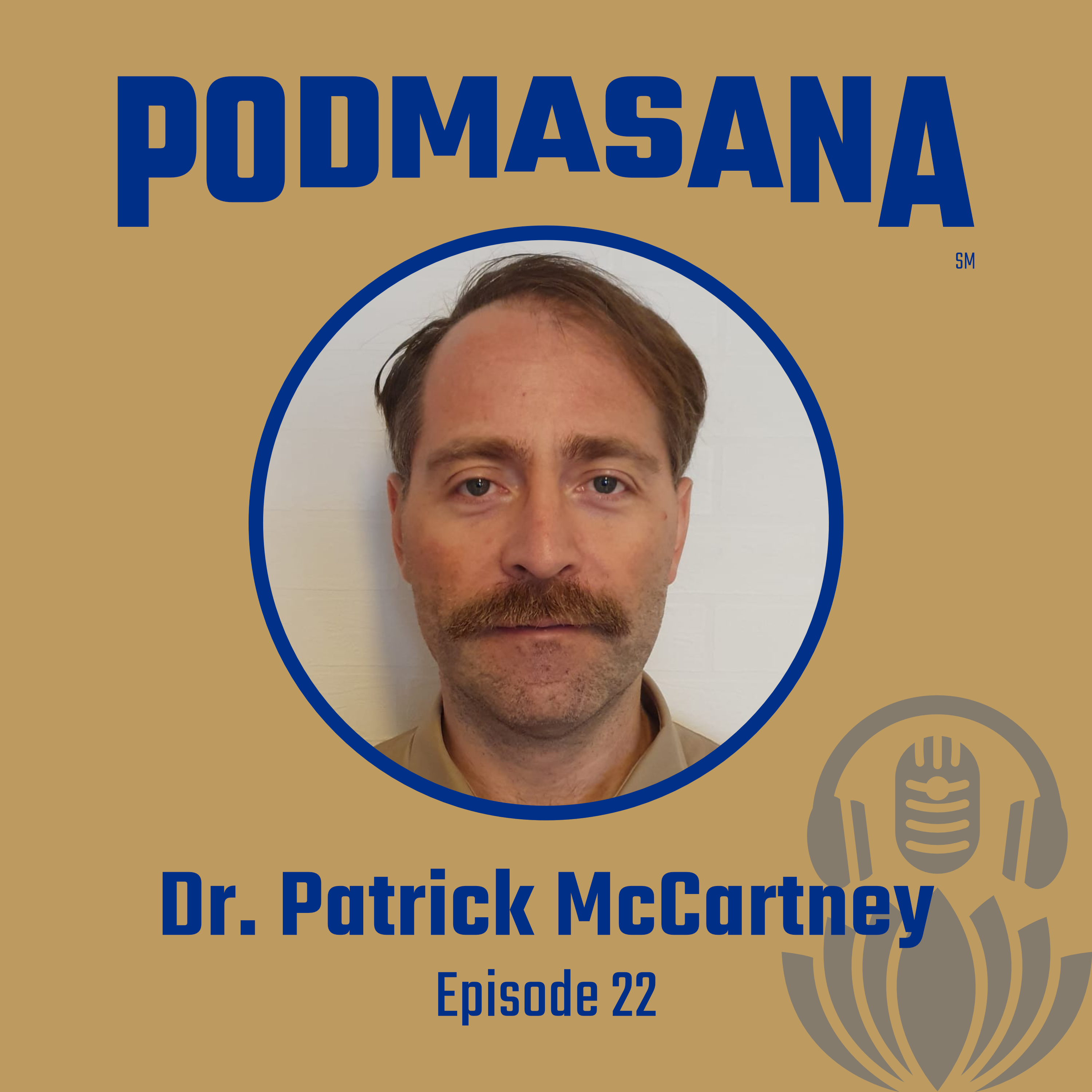
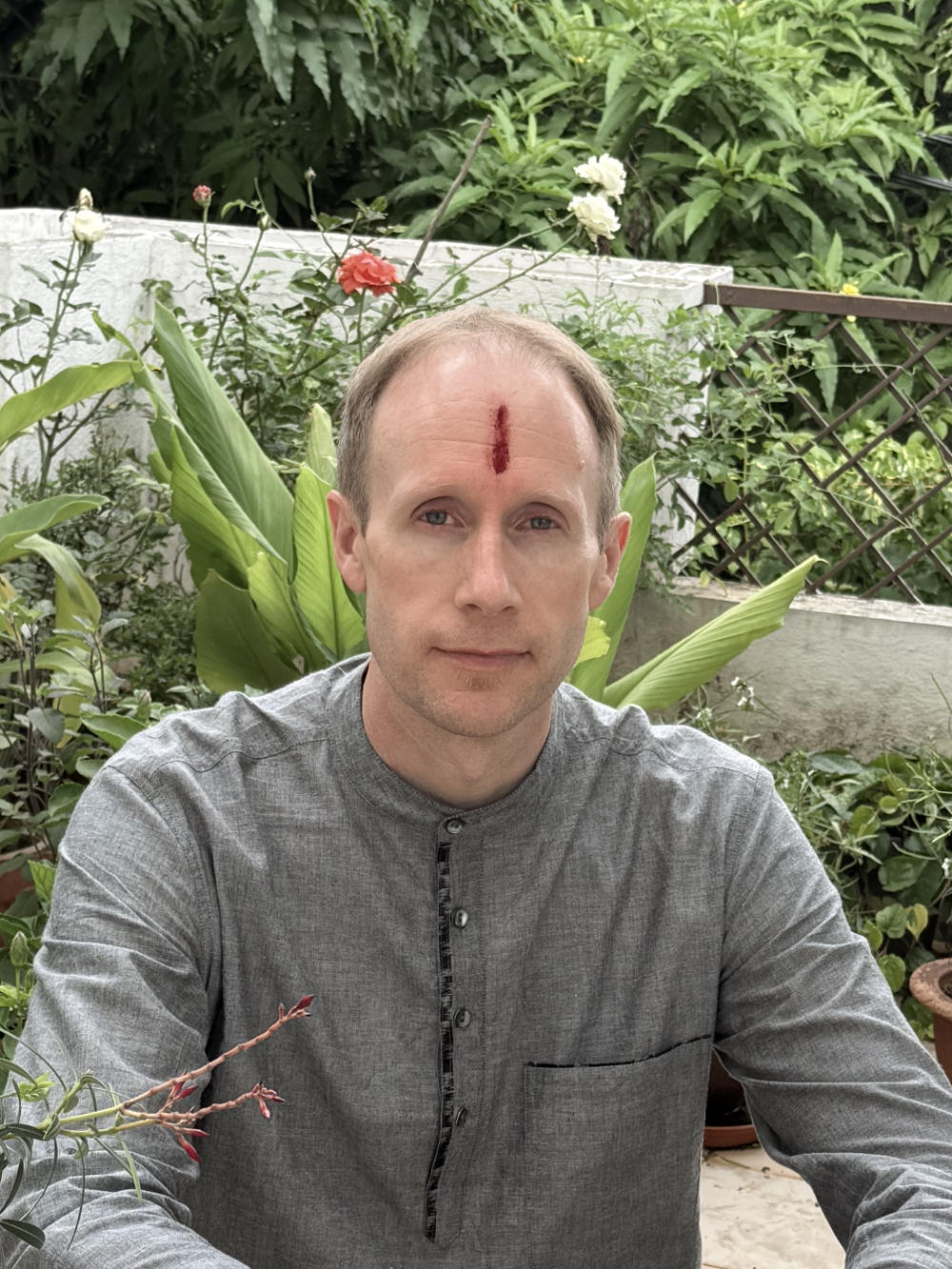
Today we're exploring these provocative questions with Dr. Patrick McCartney, a cultural anthropologist whose groundbreaking research challenges some of our most cherished assumptions about Sanskrit, yoga, and spiritual authenticity.
Patrick holds a PhD in Sociolinguistic and Cultural Economic Anthropology from the Australian National University.
His interdisciplinary work spans archaeology, classical philology, sociolinguistics, cultural anthropology, and computational social science, bringing rigorous empirical analysis to questions many considerations beyond scrutiny.
For years, Patrick has investigated Sanskrit revival movements, yoga and wellness cultures, and the politics of language, heritage and development in South Asia and beyond.
Through extensive ethnographic fieldwork and demographic research, he's examined what he calls Sanskrit's sociocultural imaginaries, the powerful symbolic meanings we project onto this ancient language.
His new book, Sanskrit Speaking Imagining Sanskrit Land, is a tour de force of critical scholarship that asks uncomfortable questions.
Using census data analysis, ethnographic observation, archival research, and philological investigation, Patrick interrogates the myth of Sanskrit speaking villages in contemporary India, communities celebrated in media, tourism campaigns, and spiritual discourse as living embodiments of Vedic culture.
The findings are startling.
Sanskrit is not a living vernacular language in any significant demographic sense those celebrated villages largely mythic constructs.
Census data reveals that Sanskrit speakers are predominantly urban, located in India's Hindi heartland, and their numbers reflect aspirational self identification rather than linguistic competence.
The symbolic capital of Sanskrit far exceeds its practical communicative use.
But Patrick's research goes deeper than debunking myths.
He traces how Sanskrit functions as a vehicle for cultural identity, spiritual authority, and nationalist ideology, particularly within Hindu nationalist movements and the global yoga industry.
He examines how organizations like Samskrita Bharati, linked to the Sanga Parvar, promote Sanskrit revival as moral regeneration and rural development despite limited linguistic impact.
The book also explores Sanskrit's role in what Patrick calls Indian knowledge systems transformational narratives promising personal and collective sustainability through ancient wisdom.
Yet these narratives often rely on decontextualized readings of Sanskrit texts, fostering contradictions when ancient knowledge is reframed as contemporary development policy or climate action.
Patrick reveals how the Vedic village concept serves ideological functions rather than describing lived realities.
A tool for nostalgia, spiritual aspiration, and political consolidation, Sanskrit's historical decline predates colonialism, beginning its transition from vernacular to ritual language over two millennia ago as part of broader research on what he calls cultural imagination as infrastructure.
Patrick is now working on his next book, examining the ethno history of ritual pole climbing acrobatics at agricultural festivals across Asia, advancing his contortionist turn theory that relates to the historical development of yoga's postures.
On this episode of Podmasana we discuss the gap between myth and empirical reality in Sanskrit revival, yoga's entanglement with nationalist politics, the commodification of ancient wisdom in global wellness culture, and what it means for spiritual seekers when sacred languages become tools of ideology.
We explore the tension between preserving heritage and fabricating tradition and ask whether critical scholarship threatens or enriches our spiritual understanding.
Hello, listener, Brendon here.
Do you or someone you know have an article or book to share, a work to highlight or story to tell
[00:06:07] Brendon Orr: that would be a good fit for
[00:06:09] Brendon Orr: Podmasana If so, feel free to reach out via
[email protected] that's ideasodmasana.com and we'll be sure to get back to you.
Thank you.
Part 1 the myth of Sanskrit Speaking
[00:06:32] Brendon Orr: Villages hi Patrick, thanks for being on
[00:06:35] Patrick McCartney: Podmasana Thank you, Brendon for inviting me.
[00:06:40] Brendon Orr: So, Patrick, you've spent years researching Sanskrit revival movements and yoga cultures across Sand South Asia. Can you take us back to the moment when you first encountered the idea of Sanskrit speaking villages and what made you question whether these communities were what they claimed to be?
[00:07:01] Patrick McCartney: So the first, first time I came across the idea of Sanskrit speaking villages was just through studying Sanskrit at the Australian National University.
And that program is kind of famous, I suppose, for having a strong spoken Sanskrit component to it.
And so that was my first introduction to, to learning that about people still speaking Sanskrit. And from there I just started to inquire myself and found out that, you know, just through searching the Internet that people, people speak Sanskrit and you can go to India and learn to speak Sanskrit. And, and then, you know, subsequent kind of searches on the Internet came. I came across the idea that there were these villages where everyone speaks Sanskrit. So I thought that was a kind of an amazing thing if it were true. And so I started asking, you know, my professors of Sanskrit and some of them were really kind of, how, how to put it, there was quite a polarity between the opinions. You know, some of them were like, yeah, yeah, of course it's true. Isn't that, isn't that great? And the others were just like, no, it's complete, complete nonsense. Of course it's not true. So that was kind of the in for me.
[00:08:15] Brendon Orr: Yeah, I'm wondering, did you have your own relationship to Sanskrit before this research? Were you a practitioner, a skeptic, or somewhere in between?
[00:08:26] Patrick McCartney: Yeah. So, I mean, the reason that I, I was became interested in Sanskrit was because I had a strong interest in yoga and I guess I still do. I've made a career as an academic doing research on it. And before that I was a yoga teacher several years. And that all stemmed from childhood when I was introduced to yoga. So my, the reason I went back to university to, to study Sanskrit was because I was so fascinated by the language and wanted to learn more.
I taught myself to read the script and so I could, you know, chant along in with some of the Sanskrit texts that I was learning through studying yoga. And then I wanted to be able to understand what I was singing. So that was the main connection.
[00:09:15] Brendon Orr: And so did questioning these myths, Patrick, ever put you in difficult positions with the communities or organizations that you were studying?
[00:09:26] Patrick McCartney: Yeah, not so much the organizations in India, but there was a period around 2016 to say 2018, 2019, where I was, I was heavily involved with. I'd never been on Facebook before and I met my wife and she was showing me this stuff, all these yoga groups on Facebook and she was showing me some of the things that were being said. And I, I couldn't help but get a Facebook account. I don't have one anymore. But I, I joined up for a while and got deep involved with, with these groups and wrote a few papers and articles about, about my ethnography of Facebook yoga. And one thing that was really interesting was how I was just getting added to all these other groups. You know, there was a big group with hundreds of thousands of people and then there was one with, you know, it was kind of like the. What is it, the Matrioshka Dolls. And it kind of got like smaller and smaller to down to. I was in a group, I think it was called Yoga is Dead and there's only like 15 people in it or something. And I hadn't, I was just, I kept getting invited to these groups. So I had this kind of, this weird kind of back door access to these, these greener and greener rooms.
And it was through that process that I was, I was in, had been invited into these groups and some of them I didn't even know I was in.
And it would seem that some other people who didn't know as well. And so anyway, there was one, one experience where I, okay, I realized I was in this other group and it turned out that they were there was a whole bunch of people that were essentially plotting to, you know, ruin my life and were trying to figure out how they could take me to the Human Rights Commission for offending a community of faith and all of this.
I received several death threats as well. It was, it was all quite disconcerting. And so the, yeah, yoga people can be pretty spiteful if they choose to be.
Yeah.
[00:11:32] Brendon Orr: Patrick, your book analyzes Census data from 1872 to 2011 and reveals that Sanskrit speakers are predominantly urban and located in India's Hindi heartland, not in rural villages as popularly believed. What does the census data actually tell us about who identifies as a Sanskrit speaker? And how does this contradict the romantic narratives that we've maybe been sold?
[00:12:02] Patrick McCartney: Yeah, so there's this, there's two really interesting things there. And if you look at the more of the historical data, one thing that it shows is so the census data in India started getting collected around 1872. It's been collected roughly every 10 years ever since. And so there's a census actually going on now in India and it'll take it maybe two years for the whole thing to happen. And the census data up until from like 1881 to 1951 shows this, this really strong presence of Sanskrit tokens in the, in the census data from South India and particularly around Madras and, or in the Madras Presidency especially, which is essentially Tamil Nadu today. And, and then after 1951, all of the so called Sanskrit speakers in South India just disappear and it essentially shifts into this North India thing.
And, and so for instance, in the, the Census data from 1991, there was 49,000 tokens. So if people aren't, don't know what I mean by token. Just like you know, one person who went and put in the census enumeration that they speak Sanskrit, then that means that there's one token. So it's, it's difficult to say that one token equals one Sanskrit speaker, fluent Sanskrit speaker or native Sanskrit speaker.
So it's kind of, that's a, that's another kind of thing. But yeah, so in 1991 there was just under 50,000 mother tongue Sanskrit tokens. And essentially like 90% of them all came from the state of Uttar Pradesh. And then from within that state, 90% of those tokens came from one district, Sita poor district. And so it's, it's just really the, this, the figures that are present especially for Sanskrit in the, in the census, it just totally unnatural.
And so that's what kind of, when I started looking at the Census data around 2018. That's what I quite quickly noticed. And what made it really quick to just crunch like hundreds of thousands, if not millions of data points was that since 1991, most of the census data is available, available as like Excel spreadsheets. You can just download them and even with, you know, like a basic, basic knowledge of, of, of how to use Excel, you can, you can filter out the, the Sanskrit data really quickly.
And so, I mean I went through hundreds and hundreds of spreadsheets to find all the data. I just became obsessed by this, this topic of, you know, where are these so called Sanskrit speakers?
And one of the reasons for that was because you can go on the Internet and type in Sanskrit villages and you'll quite quickly find all of these lists and you also find articles that say stuff like Sanskrit is the language of the rural masses.
So. Well, I mean, is it really?
I mean that's a bold claim to say that it was the language of the rural masses. And you know, if you hang out with Sanskrit speakers or the, the people who are involved in trying to revive this, this language and these people ultimately aspire to not only make it the, the national language of India, but to make it, to replace English as the global lingua franca. You know, these are, these are bold ambitions and there's a pretty heavy political theology that's linked to, to, to that. And so yeah, all of these, all of these questions around, like, where are these so called Sanskrit speakers? What, what sort of Sanskrit do they speak?
What do they believe? How, how do they create an identity, a community or you know, a world through identifying as a Sanskrit speaker. All sort of the questions that emerged as this research went on. And so yeah, I just became, just became kind of obsessed with this topic even though I had so many, yeah, so many colleagues who were just convinced it was a dead end and it was just a waste of time.
I, you know, I presented at a few conferences and just, I remember just having, talking about this stuff and you could see the looks on people's faces and the whispers to the person next to each other and you know, what's, what's he talking about? Why is he doing this? This is stupid. I know they said thought it was stupid because I had people shout at me as well. But I've never been one to kind of really worry about what other people think. So here I am.
[00:16:50] Brendon Orr: So Patrick, you used the Sanskrit term viparyasana meaning mistaken or false perception to critique the myths around Sanskrit speaking villages.
When you actually visited these celebrated villages, the ones featured in the tourism campaigns and spiritual media that we've been referring to. What did you find on the ground versus what was being promoted?
[00:17:15] Patrick McCartney: Yeah, so this term you reference, it basically means like false perception for seeing something that's kind of like imposing your own kind of view of, of objective reality. And that was one way that I came to understand what was happening within what I refer to as Sanskrit land is that you have all of these ideas and essentially misperceptions about what Sanskrit's doing and how far its reach is.
And yeah, so for example, you can do a Google search and just type in Sanskrit villages and you, you get pages and pages of lists of Sanskrit so called Sanskrit villages. Or you'll find on YouTube videos that will say this is the only place in the world where Sanskrit is spoken. Or here are the top five Sanskrit speaking villages. And it's presented as this, this kind of, kind of cultural odd, a bastion of cultural heritage as well.
And so for the uncritical mind, the. It's just there's this hope behind it when viewing these videos or through reading these articles or blogs. And what you might also quickly come to realize is that a lot of the, the articles and blog posts, they just copy and paste the same lists, the same, the same paragraphs, the same everything. And so that actually kind of came to intrigue me more than what sort of Sanskrit was being spoken. So the project kind of then had like these two themes or these two analytical streams where it was like, okay, let's try and find people who speak Sanskrit and analyze their, their speech. And then also this kind of more anthropological side to it of just trying to understand the, the worldview. And so that meant that I went around, I did most of this field work in 2015, 2016 between. Actually more. Yeah, between 202009 and around to 2016 is when I did most of this field work. So it's a few years ago now, but I've still been working on it. So I collected so much data, I went to so many villages and but to be honest, the.
I never really, I never found a village where everyone speaks fluent Sanskrit. There was not a single village where, where even 50% or even 25% of people who, the Internet at least claims that everyone speaks native, native level Sanskrit or that they were in fact mother tongue speakers of Sanskrit. It was more like probably 10% max was, was the most I found.
And then, then it goes into the question of well, what sort of Sanskrit were they speaking as? Well, so, and there's one poignant comment under one Sanskrit video where it's something like, yeah, they're probably not speaking. Actually speaking Sanskrit. It's more like they learned 50 Sanskrit words and they sprinkled that into their. Whatever language they're speaking. And that. That kind of sums it up in a sense, because really what's happening is, at least in North India, in the Hindi belt, people are just really speaking Hindi with. With more Sanskrit words. And that's basically. That's basically it.
Yeah.
[00:20:46] Brendon Orr: And so, Patrick, you write in the book that the symbolic capital of Sanskrit far exceeds its practical communicative use for listeners who have studied Sanskrit and yoga teacher training or chanted mantras without understanding them.
Can you explain what you mean by Sanskrit functioning more as a cultural signifier than an actual language of communication? Somewhat related to what you just said?
[00:21:11] Patrick McCartney: Yeah, I mean, I've done my fair share of yoga teacher training and being invited to give guest talks and in, you know, other people's courses. And so I know full well what's behind that sentiment of.
Of thinking that Sanskrit is. Is the language of the gods, the Devavani or the, the Devavak or the, you know, all these different descriptors of what, what Sanskrit is. You know, some people think of it as the language of the cosmos, and if, if you speak Sanskrit, then you're using different points of articulation in your mouth that you don't use in English, which is not true. But, yeah, it's. The reason why it's a cultural signifier is because there's, you know, there's thousands of years of. Of literature that have been produced through people who spoke this language and all the philosophy and the science and the grammatical traditions as well as the. The ritual functions. And so people have come to think that if basically there. There is a general sentiment that goes beyond yoga teacher training courses and that essentially holds this position that if, if people are lucky enough to. To listen to Sanskrit, to hear it spoken or to hear it sung, that that will create some sort of butterfly effect where they'll.
There will be some.
Not only moral transformation, but a substantive transformation of reality might occur.
And, and that's a strong. That's a strong, I guess, for, for people, because for a lot. I think for a lot of people who become interested in yoga, that there is this. There is this romantic sentiment that, that comes through that somehow yoga can make not only the. The person a better person, but make the. The world a better place as well.
[00:23:14] Brendon Orr: So I'm wondering for someone who chants Om or learns Sanskrit mantras in a yoga class or an environment or a group where there's a yoga practice occurring. Is there a way to engage meaningfully without participating in the myth making?
[00:23:34] Patrick McCartney: Yeah. So if you think about, like, the aesthetics of Sanskrit, what happened? The early grammarians and theologians, let's say that they had this idea that the, the power of Sanskrit was contained within proper pronunciation, proper articulation of, of the mantras. That's, that's where its power lay. And through knowing the precise meaning and using it properly in ritual.
And because of this, this logic, that's one reason why there's very little kind of exegesis or, you know, interpretation, because there was no, there was no need for it originally.
There was no need to come up with, you know, apologetics, presuppositional apologetics and this sort of stuff.
But what happened over time was that there was kind of like an epistemological turn and that essentially culminates with the whole bhakti movement.
And so it takes the theory of rasa and essentially turns it on its head. And part of that involves, I guess, democratizing access to the sacred through basically saying. It's more about the sentiment. It's about the feeling that's created creative, not so much the, the.
The arcane mystery or even the knowing, the grammatical tradition that's involved. You know, you can just sing like Kirtana, for example, and experience some nice feeling, and that's okay, right? So I think if you're a busy adult who's got a family and you go to a yoga class and you like hanging out with your new yoga friends and you sign up for more courses and you learn a bit more Sanskrit, like, you're probably never going to find the time to, to do 10 years full time of just studying Sanskrit.
So, I mean, as far as I can tell, it's whatever you're going to make out of it.
So. But there's one story that's kind of probably pertinent and that, you know, Hanuman, the monkey God, he, he. There's one story. I forget where it's from. It's from some Purana, I think, the Mahabharata, I think I forget where exactly, but he gets all kind of puffed up with pride because he thinks that he can recite all these mantras really good. And then he goes up to heaven and all of the devas have got broken limbs and.
And it's like, oh, no, what happened to you guys? And they're like, well, it's because you chanted so badly that, like, we're injured. It's your fault.
So, you know, you've got to be careful, I guess, mispronouncing.
But I, yeah, I mean at the end of the day, you know, there's that whole, the whole kind of decolonizing yoga thing where apparently people should, should learn how to pronounce Sanskrit mantras properly and not use the English names and all this for yoga poses. And I just think it's a whole lot of waffle to be honest.
[00:26:47] Brendon Orr: Patrick, if the evidence shows that Sanskrit speaking villages are largely fabrications, why do these myths endure so powerfully? Do you think what needs be they spiritual, cultural, political?
Do these stories fulfill for different groups of people?
[00:27:04] Patrick McCartney: I think what Sanskrit does is it, it evokes a sentiment of becoming and also being. But as far as I've come to understand it, it's about, it's. There's perhaps not an implied or implicit, but there is a sense among people who feel strongly about this that Sanskrit has a unique quality to it that can transform the world. And so through hearing it uttered, through speaking it yourself, or through hearing other people speak or sing it, then you are afforded access to some sort of higher frequency, some higher vibration of the cosmos is in Sanskrit for many is the, the language of the cosmos. That's what's being emitted from the black holes. And the cosmological side of it is really funky. So Sanskrit then finds its way not only into how people who get into yoga, it finds its way into government policies and, and, and agendas of, of governance in, in the, in the ways that for example, yoga apparently has the power to.
Well, a Sanskrit fueled yoga lifestyle has the power to do something about climate change, right? So because it's apparently a more sustainable lifestyle. And the reason for that is that if you become more in tune with yourself, then you will become more satisfied and content with what you have and what you don't have. And then you will consume less and then you will be contributing to saving the planet, saving the world, saving the cosmos. And you know, whether that's, that's in empirically measurable, I'm not sure.
But these are the sort of long range, big picture ideas that Sanskrit can, can find it's self involved in. So yeah, there's many different ways in which, which Sanskrit can be used by different groups.
And the reason that I started looking into that was because I, I found myself sitting in a yoga ashram somewhere in North India and just realizing, oh, everyone here is basically like a Hindu nationalist. And I think it's not so much a slippery slope, but the the boundaries are quite porous between Hindu nationalism and people who are interested in yoga and start going to India and maybe find a guru and stuff. And one of the reasons for that is because, for example, you've got similar people or people from different groups of, and walks of life who, who are both reading and chanting the Bhagavad Gita, for example. Like that's just one example of, of how it can cross over.
There are many, many other examples I could use, but so these worlds are quite. They overlap and intersect in ways that the non suspecting yogi might not even be aware that they're lending distant tacit support to political ideologies that they might not even know exist.
You know, it's a bit like all these different companies that all build some little component of landmine but don't even know that they're working on someone eventually putting them all together. You know, it's kind of a bit like that.
[00:30:49] Brendon Orr: Hey, it's Brendon If you've been enjoying the show, would you mind pressing pause
[00:30:55] Brendon Orr: and leaving a rating or review on
[00:30:57] Brendon Orr: your podcast listening platform or liking or commenting on an episode's YouTube video?
That's okay, I'll hang around.
Go ahead and hit pause.
[00:31:10] Brendon Orr: The episode will still be here when you get back.
Still there.
[00:31:19] Brendon Orr: Come on, hit pause and write that
[00:31:22] Brendon Orr: quick review comment or leave that rating
[00:31:24] Brendon Orr: or like an episode. It's a quick and meaningful way that you can help the show reach others.
You can also email any feedback to the
[email protected] thanks for listening and leaving a comment like rating or review.
Now on to Podmasana Part 2, Language ideology, nationalism and the politics of Authenticity.
[00:31:55] Brendon Orr: Patrick, you document how organizations like Samskrita Bharati, linked to Hindu nationalist groups such as the Sangh Parivar, promote Sanskrit revival as a means for cultural and economic development.
How does language revival become a tool for nationalist ideology?
And what promises are being made to rural communities that remain unfulfilled?
[00:32:23] Patrick McCartney: So Sanskrita Bharati is an organization that was founded in Bangalore in the early 80s and itself grew out of another group.
So it's not the only group that's involved in the revival of Sanskrit or that runs Sanskrit camps where you can go for the weekend or for a week or two weeks or something, but it's probably the most well known and even within.
So the song Pariva just means like the group of the family of groups sort of things, a loose translation.
And so there are many different Hindu nationalist groups that have different ideas about what should be done, but they all Basically there isn't. They all fall under this umbrella term is of Hindu nationalism is that they essentially would like to create a Hindu nation.
And so in the preamble to the, to India's constitution it actually refers to itself as a sovereign socialist democratic republic or something like this. Yeah, social. It's, it's socialist though. That's one thing. And so the, the Hindu nation is, is a complex idea and it itself relies on a heavy dose of rushing off of mythology to fuel itself.
And so Sanskrit becomes an instrument for that agenda of, of creating a utopia of returning to, to something. Because what's important to understand is that there's a cyclical time cycle within Hinduism that you know, takes us through the different Yugas and there's a millenarian aspiration to. There are some groups at least that have this really catastrophic aspiration for.
Similar to the Christians who hope that through a nuclear apocalypse that Jesus will return.
There's a similar messianic approach apocalypse where the return to Satya Yug would, would occur faster if there were a nuclear apocalypse to occur. To occur. And so that's like that, that's the extreme end of it.
Yeah, there's, there's a whole lot more I could say about that. But coming back to your question, the idea of what has been promised to, to this Sanskrit village as well, the.
It was never really clear to me in a few examples of whether or not it was the villagers who contacted Sanskrit Abrati or the Sanskrit of Bharati went into the village and said yes, you're going to become a Sanskrit speaking villager. The reason for that is that so Narendra Modi's political party, the BJP is kind of like the political wing. And then you've got the RSS which is like the paramilitary wing and then you've got the linguistic wing that's Sanskrita Bharati and there's a whole heap of other kind of organizations and they really merge in ways that to the outside are quite difficult to separate. And so you go into these villages and there's lots of people who are involved with, you know, they go and do the military paramilitary training in the afternoon and they all wear their RSS shorts and then in the morning they go to the Sanskrit class and in between that they're farmers for example. And once you get into the village life and hang out there for a month or two months or something, you realize that obviously not everyone is interested in speaking Sanskrit.
Most of the people who get involved with it are the kids who don't have a choice. They just get told to go and they go. And the older people, it's like, no, I'm not, I'm not doing that.
But there's one example of basically the whole revival of Sanskrit spins off this idea of having a civilizing power, right? And there's two failed villages up in Uttarakhand, so up in the mountains northeast of Rishikesh in Haridwar.
And one's called Kimota and the other one's called Bantoli.
And you'll find old news articles that talk about how the women in the village next door to the so called Sanskrit speaking village are envious of the Sanskrit speaking women because their hair shines. They don't have split ends, they're just better people because they've learned to speak Sanskrit and no longer speak Galwali or Kimoni. The language is up there.
And so that it fits in with this older sociological theory of Ms. Shrinivas. He was writing back in the 50s, 60s, 70s, and he had this theory of Sanskritization in which so groups that are of a lower social ranking or indexing, they would take on the, the attitudes, the behaviors, the customs, that attire of, of people of a higher symbolic social class and caste. And that was this idea of Sanskritization. And so having these rural farming communities take on the language of, of the Brahmins is a, is a clear example of this Sanskritization process.
And so one, one brief anecdote is I was in this one village during the wedding season. We were every second day going off to some other village to go to a wedding. You know, one of the girls was getting married off and so we'd all hop in the tractor on the back of a motorbike and go to the next village or whatever. And we would always stop along the way at a, at a temple and go and speak to the priests. And you could see the delight on the young guys from the village who I became more familiar with because we were similar age and how they would delight at kind of making fun of the, the temple priest who couldn't speak as good Sanskrit as them.
[00:38:46] Brendon Orr: So the concept of the Vedic village, Patrick, appears throughout your research as less a historical reality and more than what you call a mythic and political artifact shaped by Brahminical authority.
Can you unpack what the BIC village represents in contemporary India's cultural im, whose interests it maybe serves?
[00:39:10] Patrick McCartney: Yeah, there's a, there's a Vedic village. It's like a, a resort near the Kolkata airport. And it's mired in controversy because In a sense, because of like, illegal land grabs and just corruption amongst politicians and also became a. Some sort of like, brothel as well. So when I think of Vedic villages, I, I can't help but think about this embarrassment for the Bengali politicians. But, yeah, so that's the ludicrous end of it, the. But the Vedic village. So in India, the idea of the village is actually a really important anthropological idea.
You had Gandhi's village republics and so his ludicrous economic ideas that everyone should go back and live in the villages and, and everything should be sourced, all materials for the villages should be sourced locally. And all of this, there should be this swadeshi, this dependence, independence from outside and just, I mean, no economist is going to agree with that, those policies. So the idea of a Vedic village kind of latches on top of the idea of the Indian village as beings, kind of pure bastion of traditional Indian cultural values and practices. And why it's important is that everything external to that or external to the, the Hindu nation, for example, is considered impure. And what is within the land of India is considered to be pure.
It's a bit like the Ganga, the Ganges river, you know, like, it's terribly polluted. There are so many, so much stuff that's in it. I mean, no one should go anywhere near that river. It's. It's so polluted. But you have people, you know, who swim in it, brush their teeth, do lots of other things in it, and they'll look at you and be like, no, it's not polluted. The Ganga is pure. The stuff in it, that's impure, but the Ganga is pure. Right. And that's kind of the idea of the Vedic village.
But yeah, I think it's in chapter four of my book.
It's in the first half anyway, looking at like, Sanskrit texts, so from roughly like 2,000 years ago, where these, these political economic treaties during the, the Dharma Shastra period in which they are quite clearly identifying what a village is and how it, and what a, what a cluster of villages is, and then a cluster of a bigger cluster and how that relates to the towns and the cities and who has access, how much tax should be paid. Brahmins were given twice as much land, but it was, it was always the, the Shudras, the, the lower classes who were essentially kind of sent in a gulag, not so much gulag, but they were sent out to, to the frontier in this expansion of the Brahminical world. And one of the ways that the, the amount of land was given was Measured by how far you could hear a cow but mooing, which turned out, I forget how much it is now. A couple of kilometers, I think. So if you didn't, didn't pay your taxes, if you, if you let the land go, if you were a frontiers person, you were, when you were sent off, you were given like seeds and you were given land. And if, if you let the land go, you didn't have to pay taxes until the harvest actually came through, but if you let the land go fallow, then you'd end up, someone would take it on.
And interestingly so you had this whole frontier world that doesn't really get talked about much where you've got the jungle and the things in the jungle are scary. That's where all the aboriginals are that aren't Brahminical and that's where all the scary animals are that could eat you. And you've got tribes with the poison arrows that run around terrifying you at night. So the whole, the whole world is, are fraught with danger. And for example, there was no such thing as a yoga hole. A yoga shala didn't exist. But so it's a totally different concept of this, the world of the Brahminical kind of political world, economic world.
I mean, for instance, if you go back to the Rig Veda, the early Rig Vedic culture, the late Bronze age period, so 3,000 years ago, where yoga's first mentioned, it's, it's not a practice, it's not, it's not a thing that people did. It was actually a period of time. And in the binary system of yoga, it was opposed by, it was the antithetical concept of shamma, which means rest.
And so yoga was a period of action, a time for action that came after the monsoonal rains. And this is typically across the entire ancient world. That's when military campaigns would begin after, after the rains stopped. And so that's when all the strong armed men would come together, they would pick up their weapons and they would go off and find their enemies that were settled down the road and they smash their walls and steal their women and their cows and they come home and have massive barbecues. And that's what a Vedic village was, the original Vedic village. That's, that's what life. It was about securing property and prosperity and then enjoying it. And that's what yoga related to.
Totally different to vegan lasagna on a beach in Bali. That's for sure.
[00:44:46] Brendon Orr: I can appreciate that point.
So, Patrick, many yoga practitioners in the west engage with Sanskrit through Chanting, teacher trainings and the study of texts like the yoga sutras, often unaware of Sanskrit's fraught political dimensions in contemporary India.
How is the global yoga industry implicated in or shaped by these nationalist Sanskrit revival movements?
[00:45:12] Patrick McCartney: Yeah, I mean, it's shaped in lots of ways and like I touched upon earlier, I think it's important for people who become more deeply involved in yoga at least to, to kind of search out those, those boundaries between their political world and, and where it overlaps and to have some moments of reflection to figure out if that's something that they want to engage with, to understand or to just completely ignore.
I've seen, I've seen lots of examples of people who have come to India and started to become more brahminical in their own, their own way and then how they start to treat people from outcast groups and you know, they, they take on these, these, these attitudes and values of, of, of higher caste towards lower caste and lower class groups and you know, without really even kind of, I think noticing that it's happening or that they've adopted these values because they're just, they're just kind of assumed to be correct.
Yeah, so that's, that's an interesting thing. So an interesting one. With the whole yoga thing especially we say potentially yoga sutures. And this relates more to I think the, the world of how social justice activism has been colonizing yoga. And so yeah, before I, I was quite fixated on the idea of how, let's say the right wing interacted with yoga. But I think actually for people outside of India who live in America or Australia or even Japan or whoever else, the left wing colonization or procreation of yoga is perhaps even more, more of a pressing issue to explore.
But because, because a lot of yoga scholars and yoga people are kind of like more this is one of the weird things, right? In India, people who are really into yoga are most likely more right wing. But outside of India you've got all of these people who do yoga and they're probably, probably more left.
And that's a really interesting kind of tension when you get Indian yoga people and non Indian yoga people come together somewhere.
Right?
But yeah, so the, the social justice activism thing where, where they talk about how yoga's, yoga is a collective act of, or it's an act of collective liberation and smashing the patriarchy and decolonizing this and all that. What, what are the, One of the fundamental ironies is that the rhetoric that is used is essentially relying on the colonial era constructions of, of the romanticized yoga to begin with.
And they're just taken as being the quintessential classical archetypes of, of yoga.
And that's what's being that, that's what a lot of the, the social justice activism is trying to return yoga to. Which is ironic because these activists who claim to be the custodians of yoga, of the yoga tradition, which is too monolithic to really give any credence to what they're actually saying is, is kind of absurd. And I'll give you a really good example of that. So in Patanjali's Yoga Sutras, in the first chapter of verses 15 and 16, it talks about vedragya and para veeragya, right? So this is discrimination and like even more discrimination. And it says that one of the, one of the, the signals along the way of your yoga journey is that if you start to become disinterested in society, in names and labels and categories and all this sort of thing, then that's a sign that you're progressing along the Sankhya, at least the yoga that Patanjali is promoting around the 2nd 3rd century CE.
And then by the time you get to the end of the fourth chapter where you've gone through all the layers of Samadhi, you end up in Kevalya in a state of isolation or independence. And it's actually quite unclear whether or not you come back out of it or do you just like end up in a, in a coma like state for the rest of eternity.
But the point is, is that potentially Yoga Sutra has, I mean, there are scholars out there who, who claim that it's the, the epitome of an ethical doctrine that that can save the world, save humanity from itself. But that's not the Yoga sutures that I've read and I, I can read it in the original, right, so, but apparently so can they. So it's kind of confusing. And a good friend of mine, Carl Stefan Boutle, he's from Montreal and his second book called Gnostic Yoga, he, he goes to great lengths to demonstrate that at least from a gnostic yoga perspective, the idea of identifying with external categories is, is the opposite to what yoga is about.
Because a lot of people, a lot of people claim that yoga means union, which it does. But before there can be union, you actually have to separate yourself from all of the things.
And that's where that, you know, a lot of people would know this idea of neti, neti of, of discerning, like I'm not this, I'm not that sort of thing. And that's this part of this, what Carl Stefan calls this gnostic approach to yoga. But before you can actually create this union, you have to, you have to like disassociate yourself from everything else. And that includes like all of the politics and all of these things. So I think at least the social justice yoga people and the Hindu nationalists as well, I think they're both doing things with yoga that are not say, true to type. And it's being misappropriated in ways that serve material ends which either dishonest on purpose by design inside, or it just demonstrates ignorance. And so whatever reason it is, we probably should not follow those yoga teachers or gurus, but that's for other people to figure out. I mean, I'm just pointing out that that's a thing you know. For sure.
[00:51:47] Brendon Orr: For sure.
So Patrick, your research intersects with your previous work on authenticity, legitimacy and the trans global yoga industry.
When we talk about authentic yoga or authentic Sanskrit pronunciation in yoga studios throughout the world, what power dynamics and assumptions about cultural purity are we unconsciously reinforcing?
[00:52:14] Patrick McCartney: Yeah, yeah, that's cultural.
I mean the idea of purity is okay, this idea that, so Sanskrit is meant to be this pure language that's, it's untouched and that's what gives it its power. That's the perception, right?
And, and this links in with this theology that and this really funky history that the first humans that walked the earth with Vedic Sanskrit speaking Aryans and they had colonized the entire world. And this, there was this previous pan global Vedic thing, theocratic government that governed all of the world.
And then it, you know, the, the tongues of Babylon kind of story filters in and all of these other languages started being spoken. And so that's why you'll hear people. And I've even read it. I was going around collecting all of these yoga teacher training manuals for a while, trying to figure out the, what I called the grammar of yoga. But it was really hard. People just wouldn't give me the yoga teacher training manuals. And even if I said look, I just want to, I just want your history section, I just want to know what you say about the history. And get it, it was, it didn't work in the end. But the, a lot of people say like, oh yoga's 5,000 years old or you know, it's, and some yoga teach you training manuals even go even further and they, they buy into this funky history of the world history sort of thing. And it, it's, it's one of those things that I think like for me, I just. I just came up against so much cognitive dissonance, reading yoga books and going to see swamis that visited my city. And, you know, just listening to people and thinking. People just seem to be talking so much weird.
You know, it's just unsettling how uncritical people.
People can become. And that's. That's kind of the main thing that's in my first book about this authenticity and legitimacy is that one of the critical things is that people, if you decide, okay, this guru, this ashram, this community is mine, this is my tribe, and I'm gonna. I'm gonna lean into it, then you have to start showing allegiance. And one of the ways that you don't show allegiance is by questioning, right?
Because if you start questioning too much and that shows that you're not.
You're not part of the team, that you don't believe that what the guru has to say is. Is the ultimate truth.
And so you have, at some point you have to make a decision whether. Whether you're going to switch off your critical thinking capacity or, or leave it running. And if you do, then you're probably not going to last too long.
And where this gets really interesting is there is essentially, I would say that most yoga gurus in India are on, on some level, a type of narcissist, and quite often a traumatizing narcissist, One who just gaslights, one who just will play games amongst the devotees just to get them, like, riled up against each other. And then, so, oh, this is part of your training. This is the purification, some sort of thing like this.
And one of the reasons for this is that there's. There's. The guru comes to resent the disciples.
And the reason for this is that the guru needs the disciples because that's what a guru does and has his disciples. But the guru is also saying, like, yeah, just, just like, do what I say because my position is at the threshold of reality. And so you. It's through me that you, you will attain the truth, but at the same time says that you're already free. And so this creates this weird. This weird dynamic where the guru seems to ultimately resent the people who just keep coming. And because of the dynamic of that guru disciple relationship where you can't actually think critically, you're just in this kind of emotional cycle of what I call the guru goggles, right? And the guru seems to come to resent people for that. But, but if he would, if he or she, if the guru were to.
To actually Help people to, to get beyond the point where they need a guru, then he'd be out of a job. Right.
So there's these really interesting ideas around what legitimacy and authority actually equates to. And another example of that is the, the inter group competitions for status that occur within ashrams.
You know, you've got that, you've got the people. Everyone's just basically trying to outmaneuver everyone else and, and have more of the guru's time, get closer to the guru.
It's, you know, pretty sort of Game and Thronesy in a sense. And I mean, I just don't have any time for that personally.
But some people seem to get caught right up in it. So I don't know, it's.
[00:57:26] Brendon Orr: Yeah. Do you think these are hard, fast rules that we're applying to how it works, like in a sangha or a group learning from a guru? Or do you think that there's some variation that maybe occurs? Because we also have to consider some of the cultural differences at play in terms of considering how collectivist societies operate, whereas more individualistic societies may be more prone to this type of critical thinking, especially towards authority figures.
[00:57:55] Patrick McCartney: Yeah, for sure. I mean, it's not a hard and fast rule. It's. These are observations that I've made from living in India for 7 years and spending 20 plus years thinking about it academically. And yeah, of course there's always got to be, I guess, a spectrum of things. But to your point though, about, you know, you've got people who come more from an individualistic society, you're going to run into, if you're more individualistic, then you're going to run into issues when you try and somehow operate within a more collectivist cultural framework. Right. I mean, that's, that's just something that's going to happen. And one thing that I noticed, for instance, the place where I did my PhD fieldwork is that within the Swami Muktananda lineage, right, Baba Muktananda. Now I've never met Baba Muktananda and even a lot of people that I met in his ashrams have not met him, but they claim to speak to him every day, right. Like have literal conversations with this guy. And as far as I could understand, that was, that was a rhetorical strategy to, to, to flex right amongst the other devotees.
And so you had, you know, this hierarchy, these natural hierarchies would form where the people who were actually deputies of, of Muktananda and then, or even of Nitin, under the Guru Muktananda's guru and then the guru of the ashram that I did my fieldwork in, who's also named Nanda.
And so there's depending on who you knew, right, that determined kind of the, the where you were indexed within, within the hierarchy. But then even within the ashram, you had actual different hierarchies. So you had, you had the devotees who could have been Indian or not. And then they had their own groups and never really kind of mixed. Like, I spent, I spent more than two years in that, in that ashram. There are Indians that were there every weekend coming up from Mumbai. And I never spoke to them. They didn't even look at me sort of thing, you know, like that's. There was just. There's a big, silent, empty chasm. You go and sit next to them like every day in the temple for the, the chanting and like, not. Never spoke to me, not once. And there was actually, I think it was Muktananda's 100th birthday anniversary, so he was already dead by then. He died in, what was it, the early 80s. This was maybe mid 2000s, 2010s or something.
And there were 3,000 people staying in an ashram that only has like 200 beds or something. And essentially all of the foreigners got told it was their job to clean the toilets that were getting blocked rather severely. And there was essentially like a mini rebellion that occurred because it's like there's only 20 of us and there like 2,000 Indians. Like, why aren't they doing it? You know? And there was like, there was a proper little revolt that happened. It was pretty interesting. So you've got, you've got that group, but then you've also got the, the Sanskrit scholars and the Sanskrit science students. Because the reason I went to the ashram is not because I am a devotee of, of that guru or that lineage. It was because they had a. They have a Sanskrit college there and they have 150 now they have about 150 students who speak Sanskrit. All they do every day is learn to speak Sanskrit and learn to become Brahman priests and astrologers and teachers of Sanskrit grammar and literature and history sort of stuff. And that's why I went there, because I initially wanted to look at what sort of Sanskrit do they speak, how do they speak Sanskrit, when do they speak it, do they speak more Sanskrit or Hindi or whatever. And so you have these groups, and then you also have the swamis, the sannyasis, and these three groups. You, for example, you and I, we couldn't go to ashram and then just start symbolically competing against the swamis or the Sanskrit scholars, the teachers and students. Right. Because we're just automatically in another group. And there was an interesting example where a defective from Latin America, I'll say that much.
[01:02:13] Brendon Orr: He.
[01:02:14] Patrick McCartney: He came along, and he'd never been to India before, but he was a devotee of muktananda.
And he got out, you know, the lungi and the daughty and all this, you know, the. The white. The white clothing, and just started wearing it like a Roman toga.
This is just totally wrong. But he had no idea, and he thought that he was now a Brahmin sort of thing. And apparently it became my job to. To tell him no.
I was. I was deputized to deal with his error, which I handled deftly, I might add.
I didn't want to do it, but.
But the reason I'm bringing that up is that people would take it upon themselves to.
It would.
It would initially say, be seen as a. As, oh, they're just being friendly. They're taking the new person under their wing to educate them, show them how things work. But actually, what it was is more of a.
It would be like there would be a competition among the older devotees, the more experienced devotees, who would be vying for that fresh meat sort of thing to then claim as property, and then they could demonstrate that they knew the ropes. Right. So there's really, like, subtle, dynamic ways in which that you wouldn't necessarily kind of either perceive or really worry about. But I was an anthropologist in ashram who got in a lot of trouble because people like, Patrick, why are you, like, worried about this egotistical thing of, like, writing?
Why don't you just forget all about that and just, like, worship the guru?
So.
[01:03:58] Brendon Orr: So, Patrick, you describe how the revival movement actually produces what you call revitalized hybrid Sanskrit, simplified forms influenced by vernacular languages that challenge classical purist ideals.
What does this hybridity reveal about the gap between how Sanskrit revival is imagined versus how it actually manifests?
[01:04:22] Patrick McCartney: Yeah, so the. The really important thing, first of all, is that when you're talking about reviving a language, is that there. There is an inevitable hybridity that is going to occur. So if you take a language that is either moribund or dead and it's being revived from, there's. There's no native speakers of it anymore. There's only, like, say, a grammar that someone managed to write down before the last speaker. And then we come together and, like, right, our ancestors used to speak this Language, how do we, how do we revive it into a, into a language? And how do we become second language acquis, acquisitionists, acquirers of, of, of this language? And so that's what I was doing after I finished my PhD in 2016. I was working in Australia amongst Aboriginal groups who were trying to do this very thing. So, for example, we would take the language from that had actual speakers that was nearby, that was related to the language we were trying to revive and be. Yeah, okay, so we know that in, in the language up in the mountains. So it was in Australia, most of the Aboriginal groups that lived on the coast where the cities are today, they're the ones that lost their languages sort of thing. But so the, but the groups that lived up in that, in the mountains, they were less bothered by civilization encroaching. And so they become valuable resources for trying to revive languages. And so, for example, one language up in the mountains, it might use a voiced consonant like a D, or at the starter words. But the one down that we were trying to revive might use a voiceless consonant like a T, for example. So you can, you know, you can, you can work to build stuff together and build, build up the grammar, build up the lexical bass. But then like, so how do you say TV in a language that never had, had electricity or, you know, like, or technology, for example, like electronic devices. You know, you have to, you have to create a word.
And maybe you, you borrow how we say television, which just means to see far.
That's all that television means, like ferns. And in German it means the same thing. Doordashian in Sanskrit just means to see far.
Right?
So you have to come up with a word for that. But then like, so you've, you've already incorporated something, some type of hybridity just in creating new words.
And one of the other important things is that when it gets to kind of the grammar grammatical side or the syntactic side, you know, how do you create a sentence? And when you put the, the verb and the, you know, the nouns and adjectives and postpositions, you know, do you say to before the word or after the word or sort of thing or.
And that might. So the way that you construct a sentence in your, in your first language might actually be different to the language that you're trying to acquire.
And so then there becomes this idea of substrate interference.
So the first language you speak is the substrate, and that's interfering with the second language you're trying to acquire. Right?
And so what happens is you have these groups of People who, whether they're aboriginals in Australia or Sanskrit revivalists in, in India, they don't want to speak a hybrid language. They just want to speak a pure language. And that's just, it's just not feasible. There has to be a, a period of, of, of an inter. Language where you're slowly building it up. But even then like you never, if, if there's, if you're not a native speaker, you're always going to be being influenced by your first language. And so yeah, there's this, there's this wish to just go from nothing to 100 seemingly instantly, which is not, not possible. But then of course, the language that's, the Sanskrit that's spoken today is a watered down version of, let's say the classical version of Sanskrit, which is preceded by the Vedic version. And even what is recorded in the Vedic texts is recognized as being a kind of brief window of the even earlier Vedic Sanskrit that had always had changed enough that by the time it was kind of compiled into all these Vedic texts was, was actually quite different. And so even though people go, oh, the Rig Veda is the earliest text in the, in the Vedas, even though it's an oral tradition, we, we still call it a text.
I guess there's, there's 300 odd loan words from non Indo Aryan languages like Munda and Dravidian languages, which are the original languages of India.
So this is where you get into the, so there's already like at the earliest layer of what we can call Sanskrit, a high hybrid examples. And, and so the thing is, is that people, Sanskrit revivalists or even like devout yoga people who believe the Hindu nationalist kind of story, they will agree that Sanskrit is the oldest language in the world and that all of the 7,000 languages that are roughly spoken today all are descendants of Sanskrit. And I mean that's just like, it's just not true.
[01:10:11] Brendon Orr: Well, Tamil is, is believed to be, or known to be older, correct?
[01:10:15] Patrick McCartney: Yeah, yeah. I mean if, if, if not as old, possibly even older. So I mean, look, you know, you can go back even further like to the prehistoric period. You know that there's, there's archaeological evidence like megalithic sites that line up like in Bimbedka Cave in Madhya Pradesh and Jharkhand and that kind of tribal belt in Central, central India, cave, cave art and complex, yeah, megalithic structures that are, that are aligned with the summer solstice in ways similar to, you know, Stonehenge for example. And, and we're talking like 26000 years ago. 50,000. Maybe not 50, 000 but you know, there were people living in, in the, in South Asia like well before Sanskrit was a thing or had arrived from, from, from the Middle east sort of. Which is where it's kind of sprung from.
Well, I mean not the Middle east, but southern Russia and the Ukraine is more or less. And the Indo Aryans, people who came to be known as the Vedic Sanskrit speakers.
Some went into Europe, some went into Central Asia, through Iran, Turkmenistan and then down through the Bactria Margiana archaeological complex. It was there in, in Turkmenistan where they picked up the Soma cult, which comes a really central part of the static religion. And what scholars believe is that two, there were two kind of two waves of these Sanskrit speaking people that came into South Asia made possibly like 500 years apart. And so they were kind of like two, two layers that arrived.
And so that then creates different languages and this idea of language.
Basically people around you had the grammarians, the, like Panini or Yaska before him, Panini and Katyana and then the, the grammarian Patanjali. Not the Yoga Sutra patanjali, they're like 400 years apart. But people quite often conflate these two patanjalis when they're quite different, right? And yeah, and by the time of Panini, around maybe 5,600bce roughly he was already saying, describing how the Sanskrit that they were speaking and the Tet was, was different to the, the ancient language. And then by about the 3rd 2nd century, Katyana and Patanjali, they were noticing that people weren't really speaking what we can call Sanskrit, but it was called something else. And so they, they issued kind of like a, you know, this, like this Muslim idea of a fatwa.
They decreed, they created what's called an Ishti to.
And this is kind of where Sanskrit's revival actually begins because they were trying to halt this shift away from Sanskrit being spoken as a first language because everyone was just starting to speak the languages that developed into what are today Hindi and Marathi and Gujarati.
And so they developed this, this ishti which said if you speak Sanskrit as, as a language you will gain like Punya, like a kind of a moral credit, right? So you have this idea of Punya and Papa which is like kind of moral credit and moral demerit, right.
And the Vedic religion essentially had nothing to do with anything but three things.
Becoming twice born, being initiated, learning Sanskrit mantras and the rituals associated with it and then having sons. And the reason you, you did these three things and performed all of the complex rituals every day. And if you didn't, you were basically ostracized. And that's where the, the yogic groups, the Shramanas and the other groups that kind of a proto yoga evolved from. As outcasts of the Vedic society, your job was, your job was to pay off the debt of your ancestors. And you did that through those three things, becoming initiated, learning the, learning the, the rituals and the mantras associated and having sons. And if you did and that was it, that was the religion basically.
And of course it's evolved into what it is today. And that's quite different in many senses. So the point is, is that the language that is being revived today is, is so different and it's gone through so many layers over two, 3,000 years of, of, of being watered down, having stuff added to it, seeing, you know, languages change, they're always changing. And so this idea of finding some linguistic purity, which will then help reconstitute a cultural purity, whether that's at a national level or at a local community level, is such a strong and potent aspiration for a lot of people.
I mean, that's what fascinated me mostly about the whole topic, to be honest.
Whether or not, whether or not it's possible is another thing to create a utopian world. I mean, utopia is literally means not place.
It's the place that you cannot reach and that's why it's utopian.
[01:15:54] Brendon Orr: Hello listener Brendon here.
If you're enjoying the show and would like to Support it, visit Podmasana to learn about all the great ways that you can contribute.
You can become a Podmasana plus partner at three different tiers with a variety of perks and also make monthly and one time donations to help support the show. Any support is greatly appreciated.
Again, that page is Podmasana support.
Thank you for listening and thank you for your support.
Part 3 Development Narratives, Global Imaginaries and
[01:16:40] Brendon Orr: Future Research so, Patrick, you write about the tension between idealized visions and lived realities when Sanskrit circulates through global wellness and New Age contexts. For spiritual seekers who genuinely find meaning in Sanskrit mantras or yoga flow philosophy, I would include myself in this group. How do we hold both the value of these practices and awareness of their commodification and political uses?
[01:17:12] Patrick McCartney: I mean, ultimately I think it's up to the individual to decide what these signs mean to them, regardless of what anyone else says. And that's essentially what hermeneutics is about, is that we take a sign and we build an identity and value system around it.
So I think that's, that's probably the most important thing, regardless of what other people, like, including myself might say about, about such matters. Aside from that, I think it's at least I found it important and possibly even liberating to, to inquire deeper in, into the symbolic nature of the world. And I mean, that's what history ultimately means. It means an inquiry. And it seems it's. It, I mean, you know, you can just look at stuff on the surface level and if that's as far as it needs to go, then for the individual, then I think that's also fine.
But I, I'm initially trained as an archaeologist, which means I like to dig. I like to dig, dig deep. And I think not so much as it is about, you know, like turning over the earth. And it's, it's about understanding relationships between archetypes.
And so I think fundamentally that's what's driven me to, to take the direction that I, that I've gone in. And so there is a Gnostic impulse that kind of drives all of this. And I'm not necessarily interested in the occult, in Gnostic, hermetic, alchemical things or stuff like the Kabbalah, but from an individual kind of spiritual journey thing like that, I'm not interested.
I just try and be a nice person. I suppose that's about as far as I take that. But from an academic perspective, there, there are, there are layers to things and there are ways in which, for example, what, what Hata yoga has, has developed out of is the best way to. Well, Tantric Buddhism is kind of the origins of, of proto Hatha yoga in like 9th, 10th century and then by say the 13th, 14th, 15th centuries is when those, the foundational Hatha yoga texts are composed.
But these groups that were, that were creating those, those texts appear around like the 9th century. So we've talking about these guilds of, of ascetic mercenaries. A lot of people who are into yoga, they have no idea about the, the militaristic martial side of these groups that kind of created what has come to be known as this global phenomenon. And I think it's, I think it's worth at least knowing the bigger picture.
Like, so you had the Matas and these were the religious institutions and they controlled a lot of the trade routes that the Buddhists controlled until they were more or less kicked out of India.
Buddhism itself is really difficult to pass between the mercantile aspect and the religious aspect. It was a, it was a trading religion in some sense. And that's why it spread across Asia because they controlled the trade routes.
But these akatas, these gymnasium, akata means like training ground or gymnasium. And that's where you would learn to, to fight and wield weapons. And they would became such a, a bothersome thing that they were pillaging the trade and pilgrimage routes and centers. And the mutters actually were like, I'm sick of this. They keep taking all our things and we've got to do something about this. And so for a time they like, they tried to placate these guilds of ascetic warriors and said, can you actually just. We'll pay you to be our security on our caravans. You know, some of these caravans had like 700 carts and camels and really complex kind of hierarchies about like, you know, you had a, you had the caravan master who was in charge for all the packing up. You had the caravan master who was in charge when they were moving. You had the caravan master who was in charge when they stopped. And you had all the security involved long distance trade, cross continents.
And these seitic mercenaries, they, they were just pillaging this. And so the martyrs, they decided, yeah, let's, let's see if we can just pay them off and they can be our protection. And that lasted a while. And then, then the Akadas were just like, we're just going to take it all. That's basically what happened. And so they came to control most of the mercantile centers that were also the pilgrimage centers.
They were involved in slaves and not gun running I suppose, but like weapons and money lending and all and all this sort of stuff. And but these were also at the same time the guys that were developing the Hatha yoga text.
And so the way, the way I understand this and the way I understand the history of the, the development of the word yoga back from the earliest mentions of it being a period of time for martial action up until today, is that yoga is at least my definition of yoga is a, as a blend of, of techniques to, to secure property and, and power and prosperity.
Well, some people might take offense with that, but if you kind of, kind of step back and think like, why am I doing yoga?
What, what are, what are possibly of all the articles saying the yoga journal are about how do I get more power? How can I access my inner Shakti or my Kundalini or you know, something like this? You know, it's, it's, there's, there's always this underlying aspect of acquiring more power, whether it's in a cynical way in the material world or beyond, if you kind of allow yourself to maybe calm down and think about. Oh, yeah, actually, it's kind of. Right. Like there's always this aspect of acquiring something more involved with yoga. So yoga is a technology in a sense.
[01:23:44] Brendon Orr: Yeah. I think, Patrick, it's an interesting topic. Right. Because I could say for myself that if yoga is a technology or a tool, I couldn't say honestly that I was using it to acquire power as much as for a very deep internal inquiry.
Right. And as a tool, as a technology, as a practice, it seems like something that has helped me evolve as a human.
[01:24:15] Brendon Orr: Right.
[01:24:15] Brendon Orr: And so I think maybe both truths can be held at the same time. Right. Where the yoga sutras even talk about later on the acquiring of powers. Right. And how this is kind of like the last illusion or grasp for the ego before one really reaches an enlightened stage. So do you have a take on any of this?
[01:24:36] Patrick McCartney: Yeah, no, I totally, I totally agree with you. And I guess when I, when I say the acquisition of power and prosperity and things like that, I, I incorporate what you've just said into that, that context, inquiring deep within and advancing oneself to higher levels of clarity or realization. I mean, that's a type of power. Right. So when I say power, I don't necessarily mean like gaining power over other people or other things necessarily in a way that could cause detriment to other people in a toxic way or a malevolent way. I mean it in a, in a very broad and encompassing way that, that power to manifest change in some way also in the way that you're describing. Right. So, yeah, not only in a kind of in, in a cynical acquisition of other people's resources way, although that's also possible. But so where, where, where it kicks in is when you get this whole romantic sentiment that came out of like German Romanticism, which is kind of harking back to this Neoplatonic idea of, you know, this correspondence between the higher and the lower realms.
And German romanticism was a really, just a hard push back against the whole industrialization of, of. Of humanity, in a sense, wanting to get back to nature and all that. And so that kicks in hard with, with how yoga has become what it has become in the last one or 200 years, particularly. And as a, as an instrument of, Of New Age ideology. And whether or not the New Age ideology is, Is a good or a bad thing is, I think up to people to decide for themselves. But where I've gone more, even more recently is, is Looking at how yoga has become not just a instrument for New Age ideology, which is essentially trying to invert moral order, the traditional moral order, and that links in with, you know, Sabbathian frankism and Satanism. And, you know, you can explore the, the satanic origins of feminism, for example, which is essentially just trying to invert the family structure.
I would say that feminism is actually anti feminism if you actually dial down deep into it.
But that's maybe a topic for another conversation, but just to, just to kind of put it out there.
There are, there are many ways which it links in with this progressive progressivism ultimately.
And there's a really interesting kind of timeline between progressivism and evolution.
And what are we progressing towards?
What is the, what is progressive ideology actually pushing us towards? And that's when you get deep into the transhumanism and technocracy through their relationship to theosophy and the United nations, which is essentially a technocratic cult. That's, I mean, I'm being quite blunt with my words here, but I mean, I could, I could open it up a lot more, but the people don't understand that at the core of the United nations is, is, is theosophy, essentially. And at the core of theosophy is, is this Neoplatonic idea of correspondence between the, the higher realms and the lower realms. And where Sanskrit and yoga start to fit into that, into governance structures, relates to this idea of the, of the cosmic man going nuts about now they're trying to like, create another global lockdown with what is it, Hunter virus or Ebola or flying in ticks that turn everyone vegetarian or something? You know, like this sort of stuff is, you know, we just see people in suits, the bureaucrats, the technocrats. But behind that there is a, there is a gnostic cult. And that cult is trying to essentially transform the world through this, this New Age ideology. And yoga connects into that because yoga is a technique, is, is an instrument that through its link with this progressive ideology is going to, and through that technology of trying to connect the lower to the higher, to elevate cosmic consciousness through chanting Sanskrit and all this sort of stuff is, is part of the, the, the approach to creating this utopian world.
I know that might all sound a bit kind of way too conspiratorial, but if you, if you go into the literature and read it, this is, this is what Madame Blavatsky was saying. This is what the founders of the League of Nations of the United nations say throughout their literature. It's, it's really quite, quite clear if you actually take the time to read it.
So it's, it's interesting to think about that sort of stuff, but also at the same time, you know, that that's a world away from people going to a yoga studio and just having a nice stretch and a cup of chai with their friends after. I mean, you know, so it doesn't mean, again, like, it doesn't mean that these, that these things are mutually exclusive or that you can't do one because it leads to the other. Right.
But at the same time, it also doesn't mean that things aren't happening just because you don't know about them.
[01:30:18] Brendon Orr: Yeah.
[01:30:18] Brendon Orr: So, Patrick, you conclude that Sanskrit land is a dynamic cultural space where language, identity and development narratives intersect and where myth and modernity coexist in complex ways.
Can myth and empirical truth coexist productively or does one always maybe undermine the other?
What's lost and what's gained when we demythologize sacred languages?
[01:30:49] Patrick McCartney: I think part of being human, I don't know how big a part of it is juggling this tension between the past and the future and being, being stuck in between in the present, you know, so, and I think mythology plays a, a huge part in, as these archetypes of, of our being, you know, they're important whether or not people think about them.
There are archetypes and they have come, come down through, through different ways. You know, nursery rhymes, for example, encode some really deep archetypes. And of course these Sanskrit texts that are thousands of years old also encode archetypes in their own ways. Yeah.
How does it impact in today?
I think I touched on it in some of the earlier questions, but the main thrust is that these, that people believe that Sanskrit has a special power that, that can somehow help build better worlds, that the world can be built back better sort of thing. And you know, there's, in my attempts to kind of still man that, that argument, I've gone to great lengths to think about, you know, acoustic phenomena and archaeoacoustics even, you know, you can go and look at ancient ritual sites and how they project sound bouncing it off of stone walls or like these caves, like the structures in Malta. I don't know if you know about them, but they, you know, archaeoacoustics is a, is a legitimate sub discipline of archaeology. And it's absolutely fascinating to see what, what sound can do particularly to, in a, in a changing states of consciousness. And so there's, there's definitely, there's definitely scope to even measure The. This sort of possibilities that, you know, chanting mantras can have and. And, you know, even extending that to changing the world. I guess we'll just have to see how much the world can get changed with it, though.
[01:33:05] Brendon Orr: Yeah, for sure. That's. That's fair. I'm hopeful, but that's certainly fair. We can hope for the best.
So, Patrick, for Podmasana listeners who practice yoga, study Sanskrit texts, or feel drawn to Indian wisdom traditions, what would you want them to understand about the difference between engaging with these practices as spiritual tools versus accepting uncritically the cultural narratives and political projects surrounding them?
[01:33:38] Patrick McCartney: Yeah, you know, I really like this word Podmasana.
I think it's a. I think it's a great pun. It's very, very profound.
When I saw it, I was like, I like that.
I'm sure these guys are good.
Yeah. I think, again, it kind of comes back to what I was saying earlier about, you know, what people.
People can take what. What they want from something and.
And that if it works for them, then.
Then good, I guess.
But, yeah, there are ways in which. There are ways in which all of this stuff intersects that.
That can. Could otherwise lead people into.
Into ways of being that might be incongruous with where they thought they were going. And I guess it's just a matter of whether or not you're interested in reading the signs along the way.
So for me, it was a matter of just a light bulb moment. I was like, oh, well, that's what's happening.
Yeah. And I just wasn't able to kind of undo what. What had been done in terms of my awareness about things, whereas.
And then that caused such problems for me within this ashram where I did my field work. So I just became Persona non grata in a sense. I was the person asking too many questions. You don't go to ashrams to ask questions necessarily. So.
Yeah. I think at the end of the day, Sanskrit and yoga are amazing things, and they can be quite transformative in good. Good and bad ways.
[01:35:24] Brendon Orr: I guess.
[01:35:24] Patrick McCartney: It's a bit like a knife, isn't it? You know that that old metaphor of the knife in a murderous hand or a surgeon's hand can save a life or take one, I suppose the surgeon can just as easily take a life.
Yeah. So yoga is. Is not a monolithic thing. Like, it's. It's quite often just.
We just talk about yoga as if it's just this big thing and it's never changed, and it's just like a big stone and we we can't do anything except just kind of call it yoga. Whereas, you know, it. There's. If you actually get up a lot closer to it, then you can see that it's got its own cracks. And there's, There's. There's ways of looking, looking through yoga. That's what I do with my research. Like, I'm not necessarily interested in yoga as a. As anything really, for me, more as an analytical kind of frame to see the world. I'm always interested, whether I'm reading Sanskrit texts or, you know, some other text.
I'm kind of more interested in what people have done with the text, who created it and why? Like, what's its purpose? Is it genuine? Yeah. Why was it created and what's it used for? You know, these are interesting from a historical, analytical point. And so, you know, yoga is kind of like a flying carpet in a sense. It can, it can take you in just about any. Anywhere you, you will allow it. I guess it just depends where you want to go. Hopefully wherever that is that people can get there.
Yeah.
[01:37:07] Brendon Orr: I'm wondering, Patrick, how can seekers distinguish between genuine spiritual guidance and marketing dressed up as tradition?
[01:37:18] Patrick McCartney: Yeah, I mean, we all have. I think we have kind of pretty good BS detectors, right? I mean, we all have a gut feeling and can maybe generally tell if someone is full of it or not.
But then again, people can be quite charismatic, can't they, and say the right things or, or, you know, marketing is quite, quite seductive in, you know, what's that thing, you know, when you watch television, the microwaves or whatever they are that turn off your. Your frontal lobe, so you're just in a vegetative state. So you watch, you watch tv, and hopefully not too much tv. And, you know, it's the reason why things are called programming, being programmed. Right.
But yeah, how to, how to tell if something is. I mean, so, for instance, you know, you've got the culture warriors that will say, do you remember goat yoga? Is that still a thing?
[01:38:12] Brendon Orr: I mean, I've definitely heard of it.
[01:38:14] Patrick McCartney: Yeah.
[01:38:15] Brendon Orr: Never seen or experienced it firsthand, but definitely heard about it.
[01:38:19] Patrick McCartney: So the way I think about it, this whole authenticity thing, or, you know, like, every industry has an industry life cycle where you have kind of like a growth phase and then it starts to, like, stabilize, gets. Becomes more institutional, and then there's a saturation phase and then a, Then a decline phase, and then it might do this again. And that's what I've, I've been seeing, especially living in Japan the last 10 years is like now like yoga is almost invisible. Pilates is, is huge. There's Pilates studios all over the town I live in.
Whereas five years ago there were yoga studios everywhere. And sup yoga became a thing for a while and like yoga was really big 10, 15 years ago and then before that, you know, so these things seem to come in cycles and, and along that way, like everyone's just trying to create distinction for themselves for their own little yoga brand, their own yoga studio, their own style of yoga. Like it could be death metal yoga or there was even a guy, a guy in Kobe that was trying to like get satanic yoga going and that didn't last very long. No one was interested in that. But yeah, all, all different. Like goat yoga or whatever. Like because it's just yoga is, is something that people do something with and if you become a yoga teacher then you've got to create some, some identity that separates you. So that's inevitably going to lead to, to a whole bunch of hybrids forming. Whether it's. Yeah, Sup Yoga I think is a good example. All these things are kind of fun. Or like trap yoga. Do you know trap yoga, it's really big in Houston.
[01:40:03] Brendon Orr: I haven't heard of that one.
[01:40:04] Patrick McCartney: Trap yoga, it's kind of like, I mean it's, it's from Houston so there's a particular demographic that it's drawn to it because it combines trap music with, which is just kind of an evolution of, I don't know, hip hop or something like this. It's kind of like you can find examples of it on YouTube and it's kind of fun. It's like high, it's like it combines kind of like high intensity workout with, with urban music, let's say, and, and yoga. So is that authentic? I mean, and then you're like, you've got the Kemetic yoga or Egyptian yoga, which is just like a whole. I've written a few papers about that where the idea is that ancient Egyptians were doing, were doing yoga and that they gifted yoga to, to India and so, and they've also claimed Reiki as well. So I personally don't have a problem with all of these kind of yoga hybrids. I think it's inevitable. I think they're kind of fun and I think it's like kind of cool to be creative and come up with different things. But you've got the purists who want to police what other people are doing, even though they might be creating their own hybrid themselves, particularly the sort of social justice activism which is is itself a hybrid. Right.
But they won't acknowledge that. But the commodification thing, like, I mean, I think that's a bit, bit trickier. You know, like this whole exchange of money, it kind of profanes the, the thing that's meant to be sacred sort of thing. But it's the reason that yoga is globally popular is because it's been profaned. Right. And that, that brings its own kind of issues. I mean, profaning something just means that it's being revealed, that we always, we generally seem to affix that as a negative thing. Right. So. Oh, it's being profaned. So the reason everyone knows something about yoga and we're talking about it right now is because it's been profaned and commodified. So like, is that a bad thing or, or not? Like, I, I, I tend to, tend to side with the idea that it's not a bad thing for it to be commodified and to be, to be used in different ways. So some people might disagree with that.
[01:42:19] Brendon Orr: So, last question, Patrick. As someone who brings rigorous empirical analysis to topics many consider sacred or beyond scrutiny, you've likely encountered some resistance from both nationalist defenders of Sanskrit purity and New Age spiritual communities invested in what many could think of as romanticized narratives, or some think of as romanticized narratives.
What role do you see for critical scholarship in spiritual and wellness spaces? And how can we create room for
[01:42:53] Brendon Orr: both rigorous inquiry and genuine spiritual seeking?
[01:42:58] Patrick McCartney: I don't think those two things are mutually exclusive.
I think there's definitely space that can be held for, for both those things. And I would, I would actually argue the point that the unfettered pursuit of the truth is the highest spiritual course that someone can take. So anything, anything beyond trying to create a world that is not rooted in, in, in truth is something that I would personally kind of like to avoid. And so that's what gets me or someone like me in trouble, because you have people who would prefer to create a world that is based on softer, softer foundations, I suppose.
I guess that's their prerogative to do that if they so choose. And also there's, there's a lot of, like the, in the last 10 years, especially the kind of discipline of yoga studies has become far more, well, it's, it's, it's enlarged from, from a fringe thing into something more visible. And, but alongside that, you have lots of scholars who, who are beholden to a consumer demand.
And so there's a tension between, I mean, of course, like across the spectrum of people who are interested in yoga and consume yoga lifestyles. And there are certainly many different types of people and some are more romantic and some are less romantic, but there are yoga scholars who, who will write books that cater more towards the romantic type than. Because I think yoga, generally speaking is, is, is, is fixed to the, to that romantic sentiment. And so that lens lends the books that perhaps will be written that are more interesting to, to the yoga consumer that, that reinforce those kind of preconceived ideas of the history of yoga and what it's about and how it can shape the world going into the future. So yeah, I think it's a fascinating topic to explore and I'm always, I, I keep trying to like stop doing research on yoga, but I keep getting pulled back in because it's like there's more, there's more to. To. To uncover.
So yeah, it's, it's a fascinating topic and that's why I'm just like consumed about, you know, just like everyone else that's interested in it. Right, right.
[01:45:37] Brendon Orr: Right.
Yeah. Well, Patrick, I really appreciate you sharing your years of research in these topics with the Podmasana audience and thanks for being on Podmasana Oh, it was a
[01:45:49] Patrick McCartney: pleasure to talk to you. Yeah, I, I hope, I, I hope that the audience that listens to this takes something from it. I think ultimately I could be just saying the same stuff that everyone else is saying, but I'm trying to say something different. So hopefully that comes across and yeah, hopefully we can talk again.
[01:46:08] Brendon Orr: We hope you enjoyed this episode.
[01:46:11] Brendon Orr: If you did, please share it with
[01:46:13] Brendon Orr: people you think would also enjoy it.
[01:46:15] Brendon Orr: Consider leaving a review or comment on
[01:46:18] Brendon Orr: your preferred podcast listening platform, liking a
[01:46:21] Brendon Orr: video on YouTube or sending us an
[01:46:23] Brendon Orr:
[email protected] also be sure to follow or subscribe to the show wherever you get your podcasts.
You can also support the show by subscribing to Podmasana plus for access to Podmasana Live bonus content and other
[email protected] plus or Podmasana Media's YouTube channel.
[01:46:48] Brendon Orr: In addition, you can make monthly or
[01:46:50] Brendon Orr: one time
[email protected] support or say thank you with a super thanks donation on Podmasana YouTube channel.
Thanks for listening and thank you very much for your support on the socials. You can find the show on Bluesky, Mastodon Loops, Instagram and YouTube.
Catch you next time on Podmasana