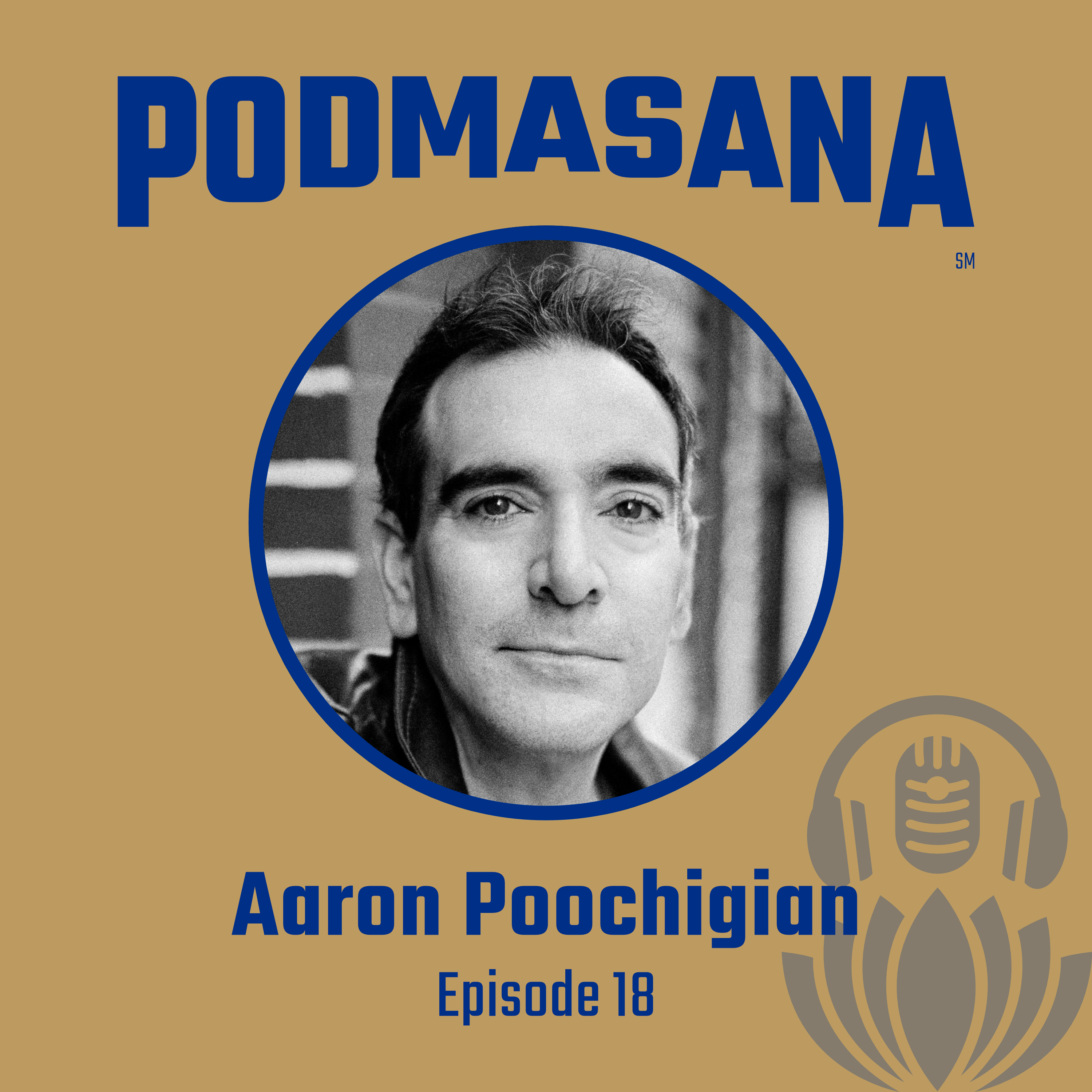
Mindfulness & Compassion in Stoicism | Aaron Poochigian | Podmasana Preview

Mindfulness & Compassion in Stoicism | Aaron Poochigian | Podmasana Preview
Podmasana: Spirituality, Awareness & Enlightenment
Mindfulness & Compassion in Stoicism | Aaron Poochigian | Podmasana Preview

Jul 01 2026 | 00:04:23

/
Episode July 01, 2026 00:04:23

Hosted By

Brendon Orr

Show Notes

In the next episode of Podmasana, explore Marcus Aurelius Meditations and Stoic philosophy with translator Aaron Poochigian. Discover ancient wisdom for modern living, cognitive reframing roots, and mindfulness practice through literary translation. This Podmasana conversation reveals how Marcus wrote in multiple voices during war and plague, offering timeless guidance on kindness, justice, mortality, and building your inner mental fortress amid modern chaos and distraction.

Key Topics:

  • Translating Meditations with three voices (instructor, aspirant, skeptic)—bringing ancient personality to modern readers through literary translation and poetic "charge"
  • Koinonia (universal human commonwealth)—Stoics' vision that rational animals are designed to serve each other, not pursue individualistic self-improvement
  • Cognitive reframing and therapeutic practice—Marcus's radical Stoic principle that happiness depends entirely on our judgments, not external circumstances
  • Daily Stoic practices—morning preparation for difficult people, stripping method for desires, focusing on what's in control, anachoresis (inward vacation)
  • Hegemonicon (ruling power) as inner fortress—cultivating divine logos portion in each human to escape modern information overload and distraction

Follow Podmasana wherever you get your podcasts. To access ad-free episodes five days early, bonus content, exclusive group chat, live Q&As and more, become a Podmasana+ member at podmasana.com/plus.

About Podmasana: More than a podcast, Podmasana is a global journey through the landscape of human spirituality. We weave together transformative personal stories with scholarly depth, exploring how ancient practices illuminate life’s challenges—from grief and illness to aging and adversity. Through carefully curated conversations and compelling narratives, we bridge timeless wisdom with contemporary understanding, offering listeners authentic pathways to consciousness, healing, and the universal threads that bind human experience across cultures and generations.

Support the show:

➡️ Join Podmasana+ for extra benefits, content and perks

➡️ Say Thank You and Donate to the Show

➡️ Shop the Podmasana Store

Connect With Podmasana:

Website: podmasana.com

Submit Guest Ideas: [email protected]

Submit Feedback: [email protected]

Social Media: YouTube | Bluesky | Mastodon | Instagram

Current Release Schedule:

New episodes every other Wednesday and Podmasana Preview episodes the following Wednesday

Early access for Podmasana+ partners (5 days in advance)

Follow and subscribe now so you don't miss an episode. Leave a review and share the show with others on their own spiritual journey.

Thank you for listening and thank you for your support! Feel free to also check out Podmasana Media’s other show’s: YogaScussion and My Mindful Moment.

Chapters

  • (00:00:00) - How does the Stoic vision of universal human duty connect to what
View Full Transcript

Episode Transcript

[00:00:00] Brendon Orr: And Marcus emphasizes repeatedly that humans are rational animals designed to serve each other within a universal ethical commonwealth, this term called koinonia. This is radically different from individualistic self improvement. How does this Stoic vision of universal human duty connect to what we might today call mindfulness, compassion, practice, or even political engagement? [00:00:29] Aaron Poochigian: Marcus sees the various existences in the universe. I'll be more specific in a second. As organized hierarchically, right at the bottom are material things that don't have a soul, like rocks. But then we move on to plants. And he says that plants have a soul, right? They're higher than, say, rocks that don't have a soul above the plants in the hierarchy, we get animals, such as horses, for example, who have a soul and in addition feel drawn to herd together to be around similar members of the same species. Right? And then finally we move on. Well, this other, higher post human in the hierarchy, gods and other things. But humans are above the animals and. And they, in addition to having a soul, they have a portion of divine intelligence called the Logos, right? And so we are logicazoia. We are rational animals. We're higher than the animals in that we have this Logos inside of us in this hierarchy. Marcus says lower things are created to serve the higher things, right? And so we can talk about oats, for example, that serve horses, and then humans can eat that as oatmeal, Right? Good. But the difference is that whereas lower species and existences are meant to serve higher ones, we humans are unique in that we are designed to serve each other. Right? Not to serve necessarily. We can do that. What's higher in the hierarchy. But we have an obligation to serve each other. And there are two concepts related to that. You mentioned koinonia, which I translate as the human commonwealth. Marcus, as a Stoic, believes there is a republic, literal, and it's literal republic, to which every human being belongs. That's the koinonia, a state to which we all belong. And then we each have a membership in our specific state, the one we actually belong to. And he talks about us, and other Stoics do as well, such as sexual. Seneca and Epictetus talk about us as having dual citizenship in the Koinonia, and for me, in the United States of America. And the just deeds we do serve both our state and that koinonia. And they come together. Good. And so that brings us back around to say, mindfulness and compassion practice. Marcus sees us as having an obligation to be mindful and even in terms of meditation. Right. And again, the purpose of that, though, is serving just action. Helping other people whom we ought to help here as our fellow rational animals and compassion practice. I like that phrase. That fits really well with what Marcus does for himself, right? And that he regularly fails. He reveals he's indignant and pissed off and doesn't respect certain groups of people. But again and again, he brings himself around, right? And tells himself, at a minimum, to tolerate your fellow humans, but at a maximum, to help them get what they want, even if, you know, it's meaningless, like somebody wants a fancy sports car. That's an object of indifference, right? But nonetheless, we humans are designed to serve each other, and so the practice in compassion practice is particularly important. It's not just empathizing with one's fellow humans, which we're required to do. It's helping our fellow humans, which we are also required to do.
Other Episodes