Episode Transcript
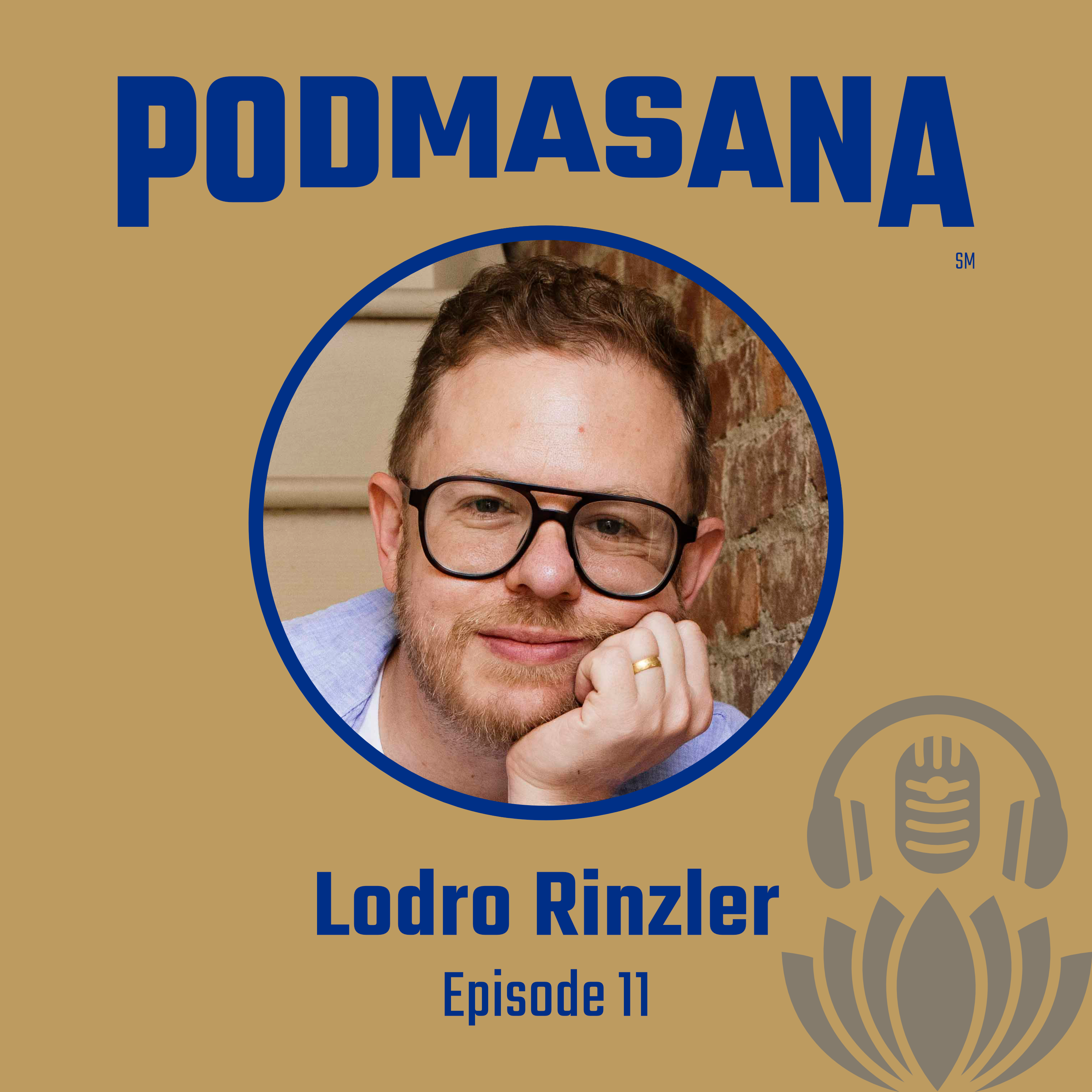
[00:00:00] Speaker A: Lodro, your bestselling book, the Buddha walks into a Bar, spoke to people who are identifying as spiritual but not religious.
How does. You are good. You are enough. Continue that conversation. Especially for people navigating 2025's and 2026's particular brand of chaos and division.
[00:00:24] Speaker B: Yeah, yeah. I mean, you and I have alluded to this a few times now. This brand of division that's happening here, it's like it's bad people. It's pretty bad out there right now.
I said this was a timely book. It's just like I feel like it's just dropping a bucket of water on a forest fire. It's not like this is the be all end all to solve the world. But I think it's my small contribution. Particularly as you said, for people who are not necessarily Buddhist, where they're not any anything in particular, but they're looking for some guidance to come home to who they are to discover that they are basically good, that they have that foundation.
And then when we start to notice that we are basically good, we look around and we say, I guess that's everyone.
So there's this three part arc we'll call in this book where it starts with you are basically good and practices and ways of looking at how we ourselves are basically whole, complete, good enough as we are and coming into a deeper understanding of that, developing a real relationship to that concept or experience, I should say. And then the second arc is everyone else is basically good and that's the people you like, which I think is easy. Oh yeah, I like my child. My child's basically good. Perfect example of basic goodness for people who are like, this isn't real.
When you look at a brand new kid, they come into this world, they aren't starting to doubt themselves, they aren't questioning their decision. They're just fully themselves. Right. Like that's a good example of basic goodness. Partner your friends, okay, I like those people. They're probably basically good. And then there's this massive group called people I don't know. And that is harder to identify. Oh, I guess that person behind me in line or that person holding up traffic are also basically good. And then the last one is the people we don't like, which is the hardest part. And that's where the chaos and division comes in, where I start to label someone else as bad or other.
And then I start to move in that direction of telling myself stories of why they're bad and how I don't have to treat them as basically good and I can dehumanize them, I can villainize them, which is, I have a couple chapters in this book just around that, you know, I have chapters on the idea of the danger of villainization. What about that? World threatening politician society is an effed up. And that last one actually takes us to the third arc, which is society is not something out there, some massive other thing. It's us. Like right now, you and I are in a podcast society. And anyone who's listening to this is participating in that. That is a society. My home is a society with two dogs and a wife and a child. And we have particular ways of doing things here. And it's probably different than my neighbors down the street. And each of these are mini societies. Society is made up of you, me, everyone we like, everyone we don't know and everyone we don't like. That is society.
So if it's a bunch of basically good individuals, we could argue, and I know this is controversial, we could argue that society itself is basically good. And that is a really tough thing to look at right now because it doesn't feel good. Because there is so much division, because there is so much othering.
That person on the other side of the aisle is wrong. They're doing things wrong, they're ruining the world. And then they say the same thing about us who are on the other side of the aisle. So it's, it's really, really hard to start to talk about seeking to understand people we disagree with, seeking to recognize their goodness amidst their confusion, because not everyone wants to have that conversation. But I genuinely believe that this is one of the ways that we can actually help heal this world. That this is not necessarily about like when we villainize others, we're villainizing ourselves. We're sort of shutting down our own open heart. It only, we are only hurting ourselves. So this idea of like enlightened society, it doesn't start in Washington, it starts in our nervous system. It starts with me working with my own mind, recognizing my own basic goodness, and then starting to look at other people.
Because if we don't reclaim basic goodness, society's just going to keep fracturing. And as you said, basic goodness isn't Buddhist. It's not a Buddhist concept. It's spiritual. It's. It's practical. It's an experience you can have on the meditation cushion when you drop some of these stories and you say, in this moment, I'm okay. And then once we realize that, we start to look at other people. Because if we keep seeing each other as monsters, we're going to create a monstrous world, and no one wants that. If we want a peaceful world, we have to look upon each other more peacefully.