[00:00:00] Speaker A: Foreign.
[00:00:14] Speaker B: This is padmasana and I am brendan orr.
What if everything in your life, every challenge, every relationship, every moment of struggle, was actually a perfect jewel reflecting the entirety of existence?
What if the path to awakening wasn't about escaping the human experience, but fully embracing it?
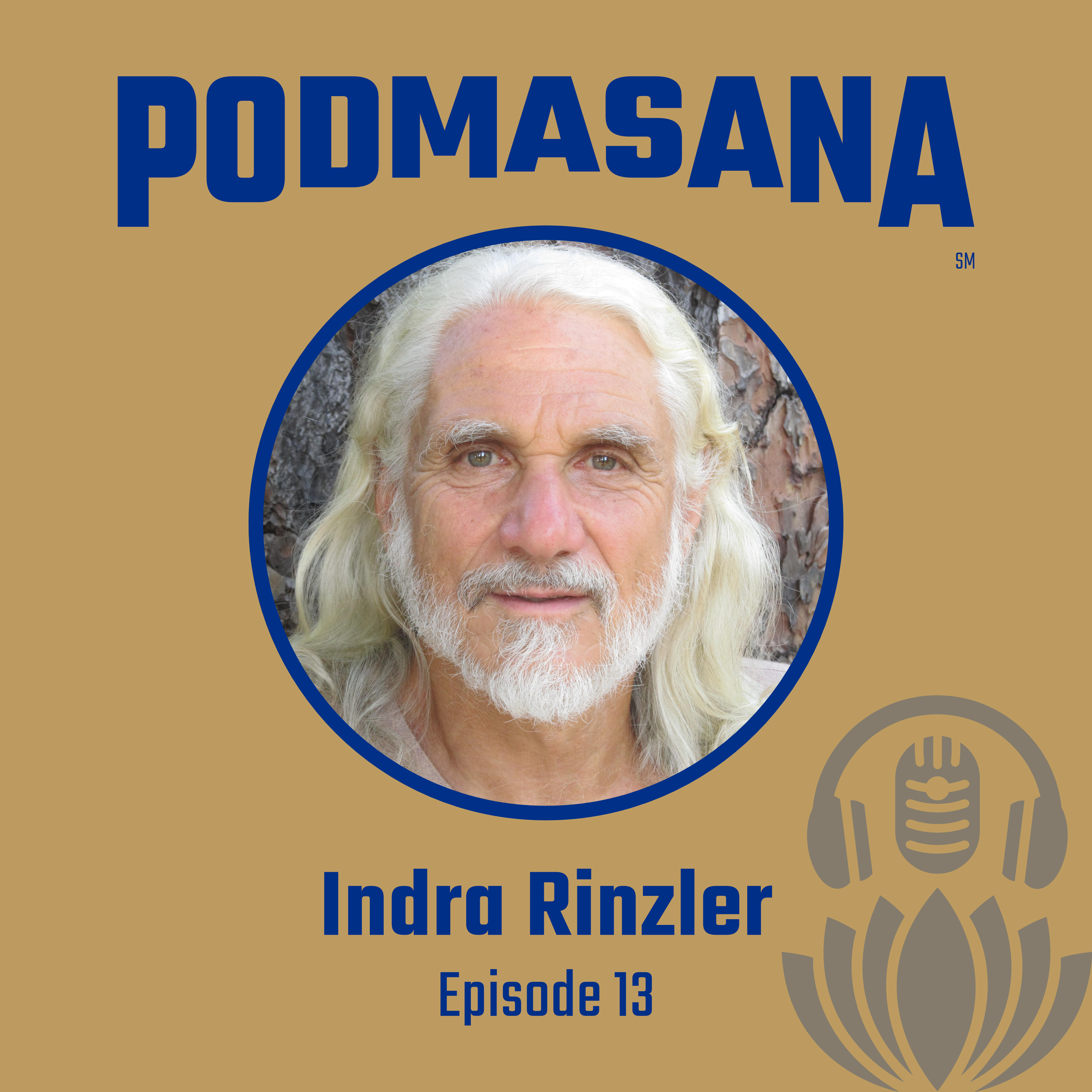
Indra Rinzler has spent over 50 years walking the spiritual path, studying Vedic astrology, the enneagram of personality, traveling extensively through India and synthesizing wisdom from countless traditions.
His award winning book, Indra's A Seeker's Guide to the Human Experience won Adult Nonfiction Book of the Year at the San Francisco Writers Conference and became an Amazon Number one bestseller in divination and personal growth.
But this isn't just another spiritual book.
Indra's Net is a deeply personal manual for awakening, structured around the 78 cards of the Tarot deck, but with a radical twist.
Indra eliminates hierarchy, reverses the order of the major arcana, and treats every theme as equally significant.
There are no bad cards here, no reversed meanings, just 78 interconnected teachings on vulnerability, gratitude, triggers, synchronicity, and what it means to come home to your truest self.
The title itself comes from a 2000 year old Hindu and Buddhist concept.
Indra's Net is an infinite cosmic web where each jewel reflects every other jewel.
It's the ultimate symbol of interdependence that everything is connected to everything else.
And, Indra argues, this isn't poetry or philosophy, it's the way life actually functions.
Throughout our conversation today, we'll explore how Indra built this book from decades of personal revelations, why he chose to structure spiritual teachings around Tarot, and what it means to live an awakened life in the midst of our messy, complicated, beautiful human experience.
We'll talk about the difference between your lowercase self, the ego driven personality, and your capital S self, the divine knowing that exists beyond mental stories and compulsions.
We'll discuss why true prosperity has nothing to do with wealth, how triggers are actually gifts for growth, and why life is fundamentally counterintuitive.
Indra will share practices for untying the mental ropes that keep us imprisoned, techniques for releasing limiting beliefs, and ways to cultivate what he calls prosperity consciousness through self love and acceptance.
Whether you're new to spiritual seeking or a veteran practitioner, whether you've never touched a Tarot deck or you read cards professionally, this conversation offers something profound because at its core, Indra's Net is about making sense of our human experiences and discovering what Indra calls a cosmic home here on Earth.
On this episode of Padmasana, Settle in Open your heart and let's explore the jeweled web of existence with someone who's spent a lifetime learning to see its reflections.
Hello listener Brendan here.
If you're enjoying the show and would like to Support it, visit podmasana.comsupport to learn about all the great ways that you can contribute.
You can become a Podmasana plus member at three different tiers with a variety of perks and also make monthly and one time donations to help support the show.
Any support is greatly appreciated.
Again, that page is podmasana.com support.
Thank you for listening and thank you for your support.
Part 1 the Journey and the Book
[00:05:25] Speaker C: Indra, thank you very much for being on Padmasana.
[00:05:29] Speaker A: Thank you so much for having me.
[00:05:32] Speaker C: Really great to have you on.
So, Indra, you've been on a spiritual path for over 50 years.
Can you take us back to the beginning?
What first drew you to this journey and what were you seeking?
[00:05:51] Speaker A: Well, I think I'm still seeking. Whatever I was seeking then.
It started, I like to say when I moved to California in 1970, I found natural food stores for the first time and metaphysical bookstores for the first time.
And I didn't have. I didn't.
I wasn't leaving the corporate world because.
Because I never started it and I wasn't.
Things weren't particularly bad but.
But there was and I don't remember. I wish I knew how I said it back then, but back then it would be like I was trying to find myself or I was trying to make sense of the world or I wanted to love myself or something like that. That was driving us in the early 70s, coming out of the 60s and drugs and spirituality and rock and roll and coming out of the. You don't look like you're that old. But coming out of 1968 and the Vietnam War and Eugene McCarthy who we wanted to win but didn't win in Chicago, you remember Chicago convention, There's been movies about that. Now out of all of that was the seeking and all of the spirituality was darn new.
And so like now you could sort of have a plan, but back then there was no plan. It was just the moment. And you see it with the 60s musicians and the Beatles didn't know what they were doing and Bob Dylan didn't really know what he was doing and Eric Clapton was with the Cream and then he was with this group and then he was with this group and, you know, we were just making it up.
So out of that we was going to metaphysical bookstores and starting to read Books and just getting pulled in to something that, that, that was formless and didn't need to have a form. It just, it just was kind of like almost on the level. Well, this is interesting. And the rest of the life fed it, you know, like, like, like vegetarianism and, and we started seeing, going to Ram Dass and things like that. So that's basically how it started. And I think what I was looking for was just the higher self.
And we put it in terms of, you know, a love partner or more money or, you know, inner peace. But really it's all about the higher self and coming back to who we are.
[00:08:34] Speaker C: Yeah. And so those early days of seeking, are there any particular moments that maybe out for either good, not so good in between?
[00:08:44] Speaker A: Well, I suppose, you know, was reading the autobiography of a Yogi kind of stood out.
Paramahansa Yogananda and becoming. And becoming a disciple, you know, 50 plus years later. I would say that's totally stood out.
You know, I think I mentioned just sitting with Ram Dass in 71, 72.
I had a friend that went to India that kind of stood out as like, whoa, you know, going to India. He kind of, you know, it was expansive. I ended up starting a community, a commune. A community, A commune. I ended up buying a place because my, my parents had passed on and I ended up buying a house. And then I started living with people. And we ended up with a commune where we had 14 people, I think at the height. And we had 22 cats and we had goats and we had chickens and geese. And this was on an acre in suburban San Francisco. And that was one of the first things that I actually did.
And I had a deep call. The community was important. Spiritual communities. Stephen Gaskin in the farm, kind of dating myself. That's kind of. People don't really know about that much now, but the people. Stephen Gaskin left San Francisco and they went to Tennessee to have a farming community. And the Mother Earth magazine was starting. And this is all early 70s stuff. I like to talk about the. The Whole Earth catalog that before the Internet you didn't know where to get the things you wanted to get, like a lantern, say, or kerosene lamp. You didn't.
Maybe Sears had it, but maybe Sears didn't. But this guy, Stuart Brand, kind of a musk type of visionary back in the early 70s, made up the whole Earth catalog, which he ended up having a store in Berkeley. And it was the resources to get all of this back to land stuff and all the books that you didn't really know existed. Cause you didn't just Google them and on the Internet. And I mean that was a thick book. I mean that was. That was the way that it worked back then. It was.
You kind of. I call it making it up but you kind of just kind of. Somebody had to sort of tell you because it wasn't like there was a way to. There was a popular book back then called something like 50 Ways to Help the Earth or Populate the Earth Ecology. What is it?
Earth Day.
Brand new. Like 1972. Earth Day as a concept.
So this was all coming out of that. It was incredible seeking. And it's kind of fun that when you go to a place that before it hasn't been built up, it's kind of fun that you know before you see it built up it's kind of fun to the pioneer days. And I think that the. For the younger people out there, the people that weren't part of it when they hear about the 60s music and the 60s, the music scene. And I think that's a. That's a way to understand it that they. They the spontaneity that all of these documentaries has been made of the Beatles and how they were performing. I just heard something that again that John and Paul wrote the songs and then they brought them in in the morning at 9 o' clock and Ringo and George hadn't heard them yet and that they were such good musicians that they just followed along and it's like that's kind of the way it was. So the idea that I had a plan, that's ridiculous. There was a plan. That's what I say about my kids. They say were your kids planned? And I'd say yes, but not by us. There was a plan, but I didn't have a plan. So that's. That's a long winded answer there for you.
[00:12:41] Speaker C: Well, no, I think. Thanks for sharing your experience of those times that definitely were very interesting and exciting for sure.
So you know the seeking journey of yours you've chronicled and touched on in your book Indra's Net and it's described as the book you always wanted to write.
What made this the right time to finally write it? Indra. And why did you choose to structure it around the tarot?
[00:13:08] Speaker A: So the right time was because the ego had died and that.
That there. I had heard a phrase in 2019, I did. I didn't hear this about me, but I heard about some friends of mine and they were told by. By spirit that the quickest way to Write the book was to stop writing.
And so. And that was to them. But I also took it up. And so I'd written, you know, most of the book was written eight and nine years ago, and I dropped the whole thing for four years. And then it came back because.
Not really from my own energy, but it just sort of appeared. And I like to say that the book came through me. It wasn't from me, but through me.
And while the experiences are my own experiences and my own sense of humor and my own quirkiness is in the book, I would write something and then I'd take a walk. And it still happens today that I take a walk and then I take my pad and 14 ideas come. And you should use this word, and you should use that word. And what about this? Had this, had this, had this at this. And I wasn't thinking about anything. And I wasn't thinking that it was. Wasn't thinking was perfect, but I was. You know, when I. When I write it, I kind of think it's sort of done. That's kind of my personality kind of. I kind of wrote what I could write. And then, you know, then. Then spirit just keeps dropping more on me. And. And that's the. The process.
So the tarot. So. So the, The. The. When I was first writing it, in the first.
So it was eight years, and so I wrote most of it, and I worked on it for about a year and a half, and then it got dropped for four years, and then it took two and a half years to complete with all the process of the designing and all of the things that I went through. I sort of was on hold for five months one time because an editor took it from 90,000 words to 30,000 words. And I had to kind of figure that out. Feel.
Not figure it out mentally, but kind of feel. But. So the idea was. Is originally was I kind of had the thought, well, this is kind of like a tarot.
They're kind of like tarot cards, you know, and it's kind of like a tarot, but it sort of dropped away.
But then it came back that it was, in fact, in the last. In the two and a half years, it came back that it was actually tarot. And the idea was that if you were to write 78 themes, you know, if you were to write 78 blog posts, Facebook posts, and you thought about making a book out of it, how would you order them?
And the answer was is that I don't have any idea. I tried a few ways that seemed logical. It Turned out that it seemed logical to put them into a northeast, southwest kind of an idea, you know, like early middle, you know, later and end. But it didn't work. But with the tarot, it gave an order to the book.
And in fact, which is kind of amazing. Without any plan. I had in 85 themes that I had maybe 90 with some subjects. I had one for each of the tarot cards.
If I had planned it, I never could have done it. But it turned out that I had one that fit each of the tarot cards. And it created an order that when you read the book, and I don't know how far you got to it, but if you read it as a book, you can drop into any of them, open it, or pick a card and read one. But if you read it in order, it really has a power to it.
And in fact, when you go from the major arcana, which I call the major truce, to the court cards, which I call the teachers, it doesn't feel complete. And when you go from the teachers to the minor truths, it doesn't feel complete. But when you get to the last one, somehow it felt complete. So there is a. The tarot is 500 years old. And I believe that it had an ordered sense to it that that I felt was a gift from God and that the frequency of them, it gave them all more meaning.
I had to rewrite some because then I knew what the theme was about.
That, you know, it was a theme and it had a meaning. But then, oh, it's really about this. And there were many examples of things where the. Where the structure helped me, helped it to go much deeper. That the tarot would explain things that I had decisions I had made that I didn't really understand why not. Not decisions, but that think that I'd been given. I didn't really understand why. And then when it came all together, it was like, oh, yeah, of course. Yeah, that's why.
[00:18:09] Speaker C: No, thanks for taking us into the process of how it came to be. That's really interesting. And so Indra, the concept of Indra's Net, that everything is interconnected like jewels in a cosmic web, is central to your work.
When did you first encounter this concept, Indra? And how did it transform your understanding of reality itself?
[00:18:33] Speaker A: Well, just to make sure, the name of the book is Indra's Net, A Seeker's Guide to the Human Experience.
And I was given the name Indra almost 30 years ago. So, I mean, I had that going.
I probably learned about indras net about 20 years ago. I don't really remember exactly, but I do remember that when I was in Nepal, and I don't know if you're familiar with this, but the bells that you. That they get, they have singing bowls, but they also have bells. And the bells come with this thing called the dorje or avajra, which is the thunderbolt. It's kind of is long and then gets round. That's also called indra. That's a thunderbolt. And. And so at some point, I found Indra's Net. And. And I would say that rather than change my. I don't know the word you use, conception of reality, I just think it confused something that I knew but didn't know how to put any words on it. And the things that. The idea that everything is connected. When I first came to India in 1986, it was an experience of a remembrance. Not that I remember being.
Not that I remember a street, but it was a way of being and a consciousness that I remembered. Not necessarily from past lives, though maybe it was past lives, but it was just something that felt so comfortable and natural, like, you know, meeting your life partner. That feels so comfortable and natural that you don't. That it just appears, you know, as a way. And of course, the book was originally titled who's in Charge? And that dropped away when, you know, oh, this is like Indra's Net. But I'm not gonna name it Indra's Net. But later on it came to me that. That, you know, that in fact was the title, because each card, because the book, everything in the book is interconnected. That they're whole as they are, but yet they are complete as they are, but yet they all are interconnected. They're basically, in some ways, are repeating the same thing over and over. But it's not that it gets boring, because it's the truth of. It's the same boring of the joy of going to the park is a joy or seeing a sunset is the joy. The boringness of the sunset is the same as reading these. These ideas of being happy and being conscious and finding God and letting go of story. You know that if you find that boring, then you find sunset boring. But, you know, I don't think these things are boring.
They're joyful every time you come to them.
[00:21:15] Speaker C: Thanks for that. And so you completely reimagined how Taro works in this book. There's no hierarchy, no bad cards, and there was a reversing of the major arcana. How did you need to. Or why did you need to break from traditional interpretations. Indra
[00:21:34] Speaker A: Well, I never. I've never done anything traditional. So, you know, I dropped out of MBA after I was in the number two MBA program in the country at the time. And I dropped out not because I didn't want to do business, but because I didn't want to work for a corporation. 1969. So, I mean, I never entered it. I do believe that I have never filled out a resume.
So I never, never have been particularly traditional. And the way that I do astrology isn't particularly traditional. I basically, whether you want to call it a loner or kind of just express my own way, the idea is that I don't really fit in. Not only don't I fit in with the Western astrologers, but I really don't fit in with the Vedic astrologers either. And that's okay because the why did I wait so long was because it took a really, really long time to one, to soften the ego and to soften my own need and for it to be look at me and, you know, be the center of it because the ego can really get up there and then to be able to just flat out learn to listen to the voice that was telling me these true statements the whole time and developed new ways of looking at the astrology and the readings that I give and having it be real in this sense of expressive of my own heart, not my own intellect, but my own heart and vibration, that there's a continuity. I used to talk about that I ran a very successful.
General store that we sold clothing and we sold incense and crystals. 1981 through 85, I sold crystals, jewelry, kids, toys, cards, greeting cards, everything.
And the reason it was so successful, I used to say, is that there was a gestalt because every part of the store was in harmony.
That the way we sold and the way that we looked and the hours we didn't close. We may have had a closing time at 5, but we never closed the door at 5. And we didn't kick people out in town. In my small town, there's the thing about five o', clock, time to leave. We got to get home. We didn't live that way. We were devotees.
It wasn't the way we lived and we didn't do. And I wouldn't allow people to do business that way. So when everything fit together, then it was bigger than the pieces. And I would say in a sense that the book and the readings and my own self and perhaps my own energy, if people are digging me, if that's the right way to say it then it's an integrity of a wholeness that there isn't that anything that's inconsistent has been worked on and. And has dropped away.
[00:24:44] Speaker C: Well, I think picking up on the word dig, I think you found a way to dig a connective tunnel between different traditions and approaches to the subject matter. So, yeah, it's all very interesting. And the book distinguishes between lowercase self, which is ego driven, the italicized self, which is conscious and ethical, and a capital S self, which is divine knowing. Indra, can you explain these three levels and why this distinction matters for seekers?
[00:25:18] Speaker A: Sure, yeah, that's an interesting question. And I gotta tell you that yesterday I was reading the I Ching and in the I Ching they. In this book, Introduction to a Book on the I Ching, they were talking about and making the distinction between the ordinary man, the noble and the sage.
And this is the exact same distinction that what happened was, is that in editing we would have a sentence and we would change it from a small S self to a large S self. And the reality came we didn't really know what the heck we were talking about. Going back and forth between the editor and I realized that I needed to get this clear.
And in fact there was a third distinction. So the, so the lower case is the. Is the ordinary self that is very physical plane oriented and not very conscious and is materialistic and no intuition. And that's the self with the small S. That would be the ordinary man. And then there's the italicized, which is the nobleman, which is intuitive and conscious and developed and knows right from wrong and not particularly attached and not particularly materialistic, but not divinity and not, you know, still human, not divine. So that's the italicized the nobleman. And then the capital self is divinity. There's no.
There's no agenda. There's no need for freedom.
There isn't a concern for self or life. And that's pure divinity. And that's the capital self. And that's called the sage in the I Ching. And these three distinctions were very important because.
And I put a note at the beginning of the book about this, a note to the reader that I think it's not only important to understand it for the reading the book, because we make these distinctions, but it's also important in everyday life to understand the three words. What I noticed was self, truth, and knowing that they all have capital, italicized and small. That I know is mental, that I know capital is divinity, and that I know italicized is that it's in my heart.
[00:27:52] Speaker B: Hello, listener. Brendan here.
Do you or someone you know have an article or book to share, a work to highlight or story to tell that would be a good fit for Padmasana?
If so, feel free to reach out by
[email protected] that's ideaspodmasana.com and we'll be sure to get back to you. Thank you.
Part 2 Core teachings and Practices.
[00:28:30] Speaker C: So, Indra, you write about untying the rope, that mental stories and attachments really imprison us. What are these ropes made of? And what does it actually look like to untie them in daily life?
[00:28:48] Speaker A: Okay, so this is a. This is an old Indian teaching. And the teaching is that the cow herder wants to tie up his cow, but he doesn't have a rope. So he goes to his guru and he says, guru, I want to tie up my cow, but I don't have a rope. And the guru says, well, tie the cow up with an imaginary rope. So he goes back and he ties the cow up with an imaginary rope, and everything's fine. The cow doesn't move. Now in the morning, he says, come on, cow, let's go to the field. But the cow doesn't move. So he goes back to the guru, and the guru, he says to the guru, the cow won't move. And he says, the guru says, well, untie the imaginary rope. So he unties the imaginary rope, and then the cow comes with him to the field. And so the imaginary rope is our own thoughts and our expectations and our stories and our needs and our insecurities that limit us by tying us up in lack of freedom and lack of opportunity to ideas that are not actually true and probably not even something that we would believe.
If we. When we look at our friend, we can clearly say that isn't true. Why do you believe that? But we have difficulty at looking at ourselves. What it looks like is freedom. It's in the moment. It's heartfulness and joy and peace and no limitations and no fomo and no, you know, you didn't miss anything. And the ropes are mental stories and conditioning.
[00:30:30] Speaker C: Absolutely.
[00:30:31] Speaker A: Feelings of limitation.
[00:30:32] Speaker C: Yeah. By conditioning, do you think we're referring to social conditioning, familial conditioning?
I think all of it's inflicted conditioning.
[00:30:40] Speaker A: Yeah. I think that they're. I think that they're also. Their shame in terms of body. Shame is not just. What's just a mental story, but it's also physical. I'm working with some people tomorrow who have some. Some limitations in Terms of thinking that they've done the wrong thing and that they're, you know, that they put it on a place that it doesn't work because it just doesn't feel right. And that's a, that's a, you know, it. If they would let go of that, then things work better. Like if you think your car won't start, then it may not start. But if you think your car is going to start, chances are it starts.
[00:31:19] Speaker C: I like that.
And so, Indra, let's talk about a theme from the book prosperity Consciousness. And you argue that true prosperity arises from self love and acceptance, not material wealth.
How do we cultivate this deeper prosperity in a culture obsessed with financial success?
[00:31:44] Speaker A: Well, I think we have to learn to not be obsessed with financial success because you're never going to have enough money to make it work if that's how you go. The prosperity consciousness has to do with loving yourself and being content with what you have and realizing what you're really looking for, which is love.
Comes down to love and peace.
And that the. I mention in the book that there's a guy here that I pass every day that I don't know that he has anything. Somebody told me that he. I see him. I don't. Not an early or a late person, but I recently I went out at nine in the morning and at nine at night and he was there both times. And somebody said, well, he sleeps on the street so he doesn't have to go very far to sleep. But he sits there and he doesn't ask anything of anybody. He just has a little cup out and he's just mentally doodling all day, every day for 25 years.
I mean, I don't know what he's doing, but I mean, even to be able to sit there every day is amazing to me. So, so can I.
I think he has prosperity consciousness. There was a. There was another beggar here. I haven't seen him in a long time, but he didn't have.
Or legs. And he was one of the most joyful people that you've ever seen. And he was. He used to pictures or draw pictures with his mouth, put a pencil in or a paintbrush and draw stuff. I call that prosperity consciousness. Not the financial prosperity, but the prosperity consciousness of finding joy in what you have and don't have.
Gratitude is prosperity consciousness.
[00:33:33] Speaker C: Yeah, that's a very resonant Indra. And it makes me think of all the historical figures that were enlightened or saintly or whatever words we might want to use that either Gave up material comforts or they never really had them to begin with. And so it seems like there's a connection here, wouldn't you say?
[00:33:57] Speaker A: Yes. If you make that your goal, then you're not going to get to sainthood. I mean, there are some rich saints. I remember that I did a one summer I went to Mongolia and I was studying Genghis Khan. And at the same time I was reading a book on Milarepa.
And they were rather close in time, maybe 100 years apart, but I mean, pretty close. And the interesting thing was that one was poor at birth, but then had the largest empire the world had ever seen, and the other one was rich at birth and then ended up with absolutely nothing
[00:34:39] Speaker C: both ends.
[00:34:40] Speaker A: And I found them to be a very.
Without a plan, because I don't do plans. You know, I just found it really interesting to study and inspired by both of them, you know, that Genghis is not really understood. He had a bad PR firm. But some really interesting facts about the empire. And they were illiterate and religion was shamanism and the biggest empire the world had ever seen. The paper from China came to the west from them and the oranges moved east or west, and the silk trade routes and everything. I mean, incredible facts on history.
That they had techniques of war that nobody had ever thought of because it was so barren in their land that. And in the winter that they had to figure out ways to outsmart the animals. And they used that in order to feed themselves. And they used that in their war. And nobody had ever seen these techniques before.
I found him and Milarepa to be, obviously to be incredibly inspiring. And it was a beautiful summer.
[00:35:51] Speaker C: Yeah, yeah, it sounds like a great time.
And so, Indra, the theme in the book, everything is a teaching, suggests that life's challenges accelerate our awakening.
But how do we avoid spiritual bypassing here? Maybe using this idea to avoid dealing with real trauma or injustice?
[00:36:14] Speaker A: Well, you know, real trauma is a little bit more difficult. Injustice is a mental story.
So that's pretty. That's pretty easy to. What is justice and what isn't justice? Wouldn't we, you know, how many people. How many stories and how many people have had horrible experiences in order? You know, the people coming out of the concentration camps who wrote the books on enlightenment, you know, I mean, they somehow got past trauma and injustice. But everything is a teaching that we have to realize that the problems are only because we make them problems. That there's nothing wrong with not getting our own way. That by realizing that. I like to Use the phrase everything that things are for us, not to us.
[00:37:02] Speaker C: Right.
[00:37:03] Speaker A: And so when we think of things for us, then we can expand into and release injustice. And trauma is the same, only a bit deeper. And there just has to be a bigger forgiving.
And another phrase that has come up recently is everything is divinity. The important self is an illusion.
The important self is an illusion. So when we make trauma too big, then we. We make the important self too big. And if we let go of the important self and be free to just be and realize that we're spirit in a body we see, then everything becomes a teaching. And that we're not limited by good, bad, right, wrong, getting our way, not getting our way. I don't have a way. It becomes a mute.
It all becomes mute.
[00:38:05] Speaker C: Yeah, yeah.
And somewhat related to this, Indra, is that you describe the theme or concept of triggers as unconscious reactions that provide opportunities for growth.
What's your practice for working with triggers when they arise?
[00:38:22] Speaker B: Especially.
[00:38:23] Speaker C: Especially the really intense ones?
[00:38:27] Speaker A: Okay, so a bunch of years ago, I developed something that I called. I call the four doorways to Conscious Living and the four doorways. The first doorway is to learn to observe. And so that is we have to observe our own thinking and behavior. We have to observe our reaction to other people's thinking and behavior. We have to observe our reactions to situations, our reactions to other people's reactions to situations. We have to get out of the movie of our life in order to have an objectivity about the things that are happening to us. And then the second doorway is to let go and release what doesn't serve us. That we have to realize that we're just reacting to a feeling, that we can't hold on to it, that it doesn't really have a meaning. And that we have to learn to look behind the feeling, to the energy.
Why the feeling is so important? Because we make it bigger than it is. And we have to let go of any of the thinking. And in this, then we're able to let go and release. The third doorway is to love ourselves. The fourth doorway is to live in the moment. If we live in the moment, we love ourselves. How do we love ourselves? By letting go and releasing anything that doesn't serve. It may be that we need ice cream still, so that's okay. It's still serving us. But if there are other attitudes or ways of being or thoughts that aren't serving, then if we let them go, then the triggers are released. And how do we know what to let go is? We just learn to Observe. Life will tell us where we are attached. And so the triggers, by observing our own triggers and noticing the patterns gives us the ability in noticing them to then to be able to a week later, a day later, an hour later, five minutes later, a minute later, and then in the moment say, yep, gonna let that one go right here, right now. Don't want to. I, I tell the story. I had a friend I just saw. I hadn't seen her in a bunch of years, but I saw her recently here in India, and she told me that she, she had this. In her 30s, she had this four year.
She had a relationship. I don't even know how the relationship might have gone a month, who knows, but it was four years in the culmination and in her 50s, 20 years later, she saw a guy. And the whole thing was done in her head in like a day and a half, or maybe it was an hour and a half. And that's the way we get that. You learn the story enough, you go through it enough times that you don't have to go through it at all. You know, you just, you know, is it Snow White?
She probably stopped eating the app, biting the apple after a while, you know, And Eve too, or Adam, whoever bit the apple, you know, you learn to stop doing that. And that's just experience.
There's nothing like experience.
[00:41:28] Speaker C: And I'm wondering, Indra, those are great practices with a lot of wisdom to them. And why do you think that it can be very hard for people in modern times to really mindfully incorporate these practices on a consistent basis into their lives? Is there something uniquely human playing out? Is it saying something about modern times? What are your, what are your thoughts?
[00:41:51] Speaker A: They're just not ready yet. I mean, you asked me why, why, why 79 did the book come out? I don't know and I don't care. You know, it just, it just wasn't. It wasn't the time that, that, that I remember taking a seclusion, 1980s and starting to write the book, but that when I say it was the book I wanted to write, it wasn't that. It was Indra's Ned and these stories. It was something meaningful. And I thought in the early 80s it was about business, but that was, you know, what, 45, 50 years too early? I don't remember 45 years too early. And that's okay. There's no. I don't have. We have until the last.
So I think that people aren't ready. I think that the idea that awakening is a. I had a teacher Here that what people call awakening is actually pre awakening. And Even Ramana spent 19 years living in a cave as an enlightened being. He still was meditating in the cave for 19 years after having his awakening experience. So it's really pre awakening and it's at a tremendous amount of time. From the. I was thinking when you were asking the question, if you think about, you pick up the piano and you immediately want to. Do you want to play like Elton John? It's going to take a while, you know, and that's okay. The mind wants it to be Elton John or Joni Mitchell or Tchaikovsky or Beethoven or whoever, you know, but that ability isn't there. And so there's a impracticality. I tell clients sometimes that in a session we get them really clear on what their stories are. And the lady, I had one today and we were tired. I say, when you go, it's really clear until you go over the threshold of the door and then it becomes hazy. But in that moment of being in here, what they want, the image of what it is, is complete freedom. That's a 20 year deal. That is to be able to.
Because it's so clear right in the moment when we're talking about it and then go out and now they're on their own again and she's back on the street having the same reaction to, to the cows and the motorcycles coming at her. When, before, when here it was, oh yes, it's peace and let it be and, you know, do my thing. And then you go back out there and the stories start again. And it's a. It's a long process. And the process is to. Is to enjoy the journey and not worry about the destination.
[00:44:31] Speaker C: And this relates a little bit to another theme in the book Indra, that life is counterintuitive, that living from intuition over mind leads to freedom. Can you give us an example of how this counterintuitive approach plays out in practice?
[00:44:50] Speaker A: Well, the way it plays out in practice is sometimes we have to go north in order to go south.
Sometimes we need to go to sleep in order to be productive with a lady. We need to stop being pushy in order to get what we want. And sometimes we need to be silent in order to be heard.
And so this is counterintuitive. The mind thinks that we need to push more and be more assertive and don't let go. But the reality of it is that it's in letting go that clarity comes and the way forward, the Tao becomes clear.
[00:45:32] Speaker B: Hey, listener. If you've been enjoying the show.
Would you mind taking a few moments and leaving a review or giving a rating on your podcast listening platform?
It really helps the show connect with others.
Please also share this episode with anyone you think would be interested.
You can also donate to the show to help contribute to its future production or become a Padmasana plus member for some extra perks like ad free listening to early episodes, ongoing access to the Padmasana Archive, a private chat community, and live video Q&As with featured guests.
Thanks for taking the time to support the show. However you choose to do so, it means a lot Part 3 Living the Awakened Life
[00:46:23] Speaker C: so, Indra, you describe synchronicity as the universe sending meaningful coincidences. When we're open and connected, how do we distinguish between genuine synchronicity and perhaps the mind seeing patterns that aren't there?
[00:46:46] Speaker A: Well, the way we need to do it is we need to learn to feel whether it's intuition or whether it's from the mind.
And there's just a knowing that.
And here we go. Is it a capital knowing? Is it italicized or is it a small letter? And this is experience. There's no other way that. It's just that when you do it enough, then you, you know, the sports people, they practice these things thousands of times. How many golf balls did Tiger woods hit? You know, I mean, maybe he had some God given talent, but I mean, you know, he had a lot of golf balls.
And so we just have to do the experience that we learn to recognize mental stories, we learn to recognize intuition. We learn to recognize the wanting and thinking that the heart can also be the mind. The heart can be the heart in intuition. The heart can go down to intuition, but the heart can also go up to I really want it. So then it must be true.
And the only way that we figure that out is by the experience and having enough experiences to see what happens in you know, you fall down, you pick yourself up. You fall down, you pick yourself up. There's no, there's no other way until you get quiet enough to be able to feel, feel the difference to where and when that happens, the question disappears. As long as you have the question, it's probably mental. But as soon as the question disappears, then it's probably more likely to be synchronicity or intuition.
[00:48:27] Speaker C: And so you incorporate Vedic astrology and the Enneagram in your work. And I'm wondering, how do these systems complement the teach in the book Indra's Net? And how can people use them for some Deep self understanding.
[00:48:47] Speaker A: Well, they are modalities that, that the, the. The enneagram of personality is. There's nine personality types and one of them is at our core. And it's a. It's a story, it's a strategy that is with us the whole life. And we don't let go of it, but we can live at a higher level of it or a lower level of it.
And the idea is that it has patterning. And when we realize how strong the patterning is and what the patterning is, then it releases the need for the strategy. So they are observational tools that Vedic astrology, the way that I do it, again, I don't use astrology or Vedic astrology. I'm not interested in predictions. I'm not interested in when you're going to get married. I'm not interested in that the planets, that you're doomed and that the planets have made your life bad, that the planets are just energy.
And I use the chart as strengths and weaknesses. And so they're indicative tools, they're X rays in order for us to understand how we are and how we react and in order for us to be able to observe, in order to be able to let go and release what doesn't serve.
[00:50:00] Speaker C: And there was a part from your book that I really liked. You were writing about becoming one with the river, dissolving separation and merging with all life.
For someone who maybe feels profoundly separate and alone these days, where do they even begin, Indra?
[00:50:22] Speaker A: Well, people that have a planet in their eighth house in their Vedic chart have an advantage because this is the. The client I had today didn't and felt loneliness. And I do. And I don't feel loneliness and I don't feel separation. And I think the reality of it is that separation, that we can't be separate. There is no such thing as separation. But there is the feeling of separation. And so we have to realize that it is just another feeling and we have to go underneath. And so what's underneath is that I'm not good enough, that I'm not worthy, that nobody likes me, that my body should be different, that my career should be different, that I should have, you know, 2.8 kids instead of 2 kids or whatever it is, my shoe size should be smaller or bigger. And so when you let go of those things, then you don't feel so separate that, that you realize that everything, you know, this is the Indra's net, that everything is a teaching, that it's prosperity consciousness, that you know, what were the other Ones that you said that fit right in, you know.
[00:51:30] Speaker C: Yeah.
[00:51:30] Speaker A: That life is counterintuitive. You know, the stories that we're stuck on that when we push, we actually need to release and not push. So they're all, it's all sort of the same answer. And the idea which I said at the beginning, we're probably not at the end, but to bring it back is that we're not tired of hearing this, but it's the same, it's all the same story that even though we're different and we're different ages and have different experiences and lived at different times, you know, we're all dealing with humanness and there's a tremendous commonality there that, that is, you know, breathtaking when you, when you're not in it.
[00:52:15] Speaker C: Yeah.
[00:52:16] Speaker A: It's incredibly frightening and trauma inducing when you're in it. But when you're, when you're released from it, it's like, it's like it doesn't touch you.
It certainly doesn't touch you in the same way.
[00:52:30] Speaker B: Thanks, indra.
[00:52:32] Speaker C: So after 50 plus years on this path, Indra, what surprises you most about the spiritual journey? Journey.
And if someone picks up a copy of Indra's Net today, maybe feeling a little lost or they're seeking answers, what's the one practice, if there is one practice or perspective you'd want them to take away first?
[00:52:57] Speaker A: Well, I wouldn't want anything first. But the most important is loving yourself. And if you just can start with observing, that's okay.
I don't care. I think I want everybody to do their own path and just to be empowered in every way. They're empowered. So I don't want to put any limitations or expectations on anybody. The perspective to take away from Indra's Net is that this is possible, that I can do this, that I'm going to give myself all the time that I need and I'm going to hug myself and love myself and I'm just going to sit with this and I'm going to slow down and just, and just, I mean, I guess I would, the ego in me would say that if I could do it, you could do it.
But yeah, just, just, just love yourself and, and, and, and be, be easy and gentle on yourself and, and, and, and notice how far you've already come.
We get so ridiculous about, you know, judging, you know, and comparing to other people. Yeah.
I think surprising is just how, how limited this spiritual path can be. And the people that are on the spiritual path, that's kind of surprising.
That the, that the, you know, but the people who kind of think that sometimes some of the fundamental Christian is kind of strange and we think that the fundamental Muslims are kind of strange and the fundamental anything is kind of strange. And it's just that the stuff that gets done in God's name is kind of strange. But this is just the way that it is.
But that's the one of the more surprising things.
[00:54:52] Speaker C: Yeah. Yeah. And so the last question, Indra, you dedicate Indra's net to a lifetime of teachers with deep love and appreciation.
If any of these teachers were here with us now in this recording session, what would you say to them?
[00:55:15] Speaker A: I would just put my. The book at their fate.
I would say thank you.
And I do say thank you. Not necessarily to them. A lot of them have left. But that's okay.
That's part of my humility.
My need for humility is that they're not around.
And I don't see that as.
Why did you do that to me? I see that as, as, as my gift. That, that I don't. I didn't do it for them.
I did it from them, but not for them.
And I didn't do it for me either. I did it for. Well, I did it for. I didn't do it for my ego. I did it for my, my self expression.
I did it. I did it if I did it, which I didn't do it. But the work I put in was because I didn't know any other way that this was my own expression and that it wouldn't leave me alone. So that I, you know, felt it was coming for 70 plus years and so it came. And that's enough, right? That that's complete. There's nothing missing from that.
It doesn't have a part two.
I mean, there may be a second book, but. But to that feeling, there's no part two.
[00:56:40] Speaker C: Yeah, that's definitely resonant for sure.
Indra, thank you very much for joining us on Padmasana.
[00:56:48] Speaker A: Thank you so much for having me.
[00:56:51] Speaker B: If you enjoyed this episode, please share it with people you think would also enjoy it.
You can also leave a review or rating on your preferred podcast listening platform or and be sure to follow the show to subscribe to future episodes.
You can also email
[email protected] or reach out to us on the socials.
We're on Bluesky, Mastodon, Instagram and YouTube. Catch you next time on Padmasana.
[00:57:28] Speaker A: Sam.