Episode Transcript
Brendon Orr (00:00)
What does it mean to truly listen inward? To pause amid the beautiful chaos of life and reconnect with yourself? How does a yoga practice evolve when life shifts from the constant rhythm of raising five children to a quieter season of spaciousness and reflection?
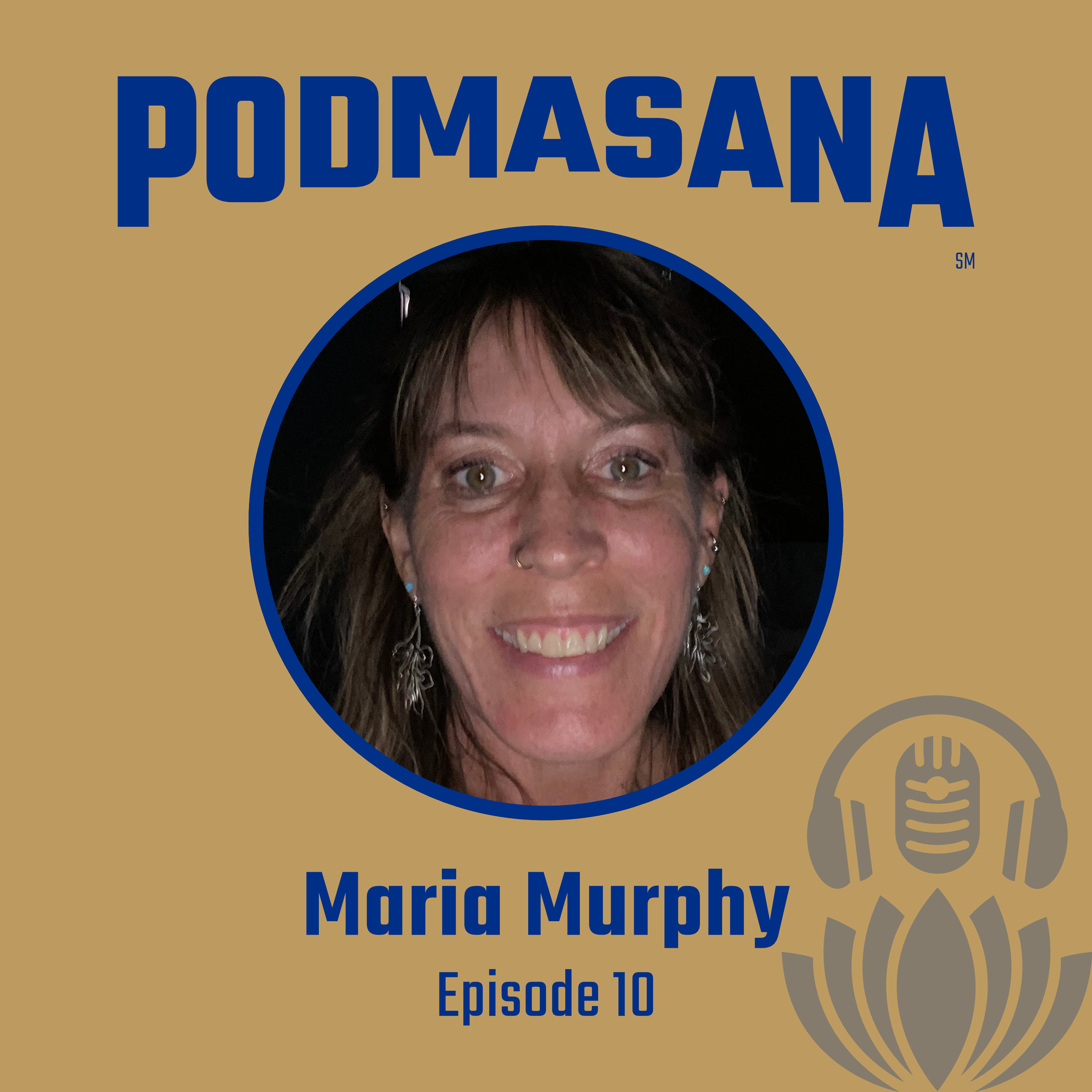
Today we're exploring the journey of Maria Murphy, owner of the Yoga Patch in Kansas City, Missouri, and a yoga teacher whose calm presence and open heart have been guiding students for over 15 years. Her approach to yoga is rooted in inner change gentle presence, and the kind of awareness that comes from years of showing up for her practice, even when life gets loud.
Maria's yoga journey began over 17 years ago, but it was in 2008 that she felt a clear calling to teach. In 2009, she completed her first teacher training through the Yoga School of Therapeutics, earning her RYT certification with a focus on Iyengar and restorative yoga, an experience she describes as profoundly life-changing.
She has since completed her 500-hour Yoga Alliance training and continues to deepen both her practice and her teaching, never stopping her exploration of the ancient practice.
Before becoming owner of the Yoga Patch in 2013, Maria taught there for four years, offering a diverse range of classes including restorative, hatha, stress relief, vinyasa, prenatal, and kids yoga. She remains deeply grateful for the community, relationships, and growth that the Waldo Studio has brought to her journey.
Her extensive training includes certifications in yoga fit levels one and two, prenatal and postnatal yoga, kids yoga, reflexology, and meditation.
She's studied anatomy, neck and shoulder health, the art of Shavasana, and has had the privilege of learning from a renowned teacher, Judith Lasseter.
What makes Maria's teaching distinctive is not just her impressive credentials, but how she weaves together different styles to cultivate awareness, balance, and inner peace. Her approach is accessible and gentle, reflecting an open heart and a calm presence that students immediately feel when they enter her classes.
Outside the studio, Maria's life tells a beautiful story of love and expansion. She's a mother of five through birth, adoption, and as she puts it, one very memorable surgery.
While her children are now grown and life has shifted out of the constant rhythm of practices, games, and recitals that once filled her days, motherhood continues to shape her perspective, patience, and compassion. In her quieter moments, she enjoys pottery, art, and dancing it out in Zumba sessions. For Maria.
Yoga has always been about inner change and self-connection. Now, with more spaciousness in this season of life, her practice has become a place to pause, reconnect, and listen inward, tuning into her body, mind, and spirit. That heightened awareness is what continues to draw her to the mat.
and fuels her passion for sharing yoga as a tool for presence, balance, and peace.
On this episode of Podmasana we'll hear about Maria's journey from student to teacher, to studio owner, explore how yoga practice evolves through different life seasons, and discover what it means to create a welcoming space where students can find their own path to awareness and inner peace.
Brendon Orr (04:44)
Part One, The Journey to Teaching.
Brendon (04:51)
Maria, thanks for being on Podmasana really great that you could be here. So Maria, you practiced yoga for over 15 years before feeling a clear calling to teach in 2008. Can you take us back to that moment? What was happening in your life? And how did you recognize this as a calling rather than just an interest?
Maria (04:55)
Thank you for having me.
So it's kind of a funny story. I started doing yoga, did yoga with my mother-in-law, and then I started having children, and I worked with abused and neglected kids for a long time, and found that my mental health was taking a toll with that. So I...
was getting ready to be released from that, releasing myself from that. And I had a dream one night and I woke up and told my husband I needed to teach yoga. And that's how it started.
Brendon (05:51)
That's so touching because there's so there's so many stories like that where something happens in the dream space and then all of a sudden your life takes a new trajectory so you describe your first teacher training in Iyengar and restorative yoga as profoundly life-changing
Maria (06:00)
Most definitely.
Brendon (06:08)
What shifted for you during that training? What did you discover about yourself or about yoga that you hadn't understood in those 15 years of practice?
Maria (06:20)
I think I realized that yoga was not just for your body because I was doing so much yoga. I really had a profound impact in my mental health, I guess. And it really just, especially with kids, like my life was busy. I have five kids. So that
that really gave me the space to be quiet in a not so quiet life.
Brendon (06:47)
Absolutely. It's almost kind of like if you think of something that could just be recommended to any parent or you know mother or otherwise, know like, hey try this it may help at home. Before becoming owner of the Yoga Patch, you taught there for four years. What was it about that Waldo studio and community that eventually called you to take ownership?
Maria (07:00)
Definitely.
Brendon (07:15)
Because of course that's a significant leap from teacher to owner. How did you know you were ready?
Maria (07:22)
I didn't is the short answer. I typically just how I kind of roll with life is if something falls in my lap, I feel like it's meant to be. And that was kind of the situation with the studio. The previous owner,
We worked together for four years and then she wanted to move back home to Washington. And when she was going to decide that she was going to do that, she asked me if I wanted to buy it. And I was like, yeah, no problem. So didn't really have much thought there. And from there it was a one, like just a one room space and it was pretty small. A lot of times I was teaching from the closet. So because we were so full.
that pretty quickly within a year I started looking for another space and that's how it came to be at the current location. But I always wanted to keep it in Waldo because I love that community. They walk, they ride bikes, I feel like they're real and so they're definitely part of my family.
you
Brendon (08:35)
maybe talk a little bit about if you had a vision for that space and maybe what it looked like for that to unfold?
Maria (08:42)
Again, that space kind of fell into my lap. I don't think I've ever driven down that street and one day I did and it was for sale. So I walked in, it was a big warehouse. It was in a state sale place and whatever they didn't sell, they would bring back to the building and just house it there. Once it was cleaned out, so it was just a big open space. My dad's an architect, so
He helped design it and we wanted it to feel like home to people. So if you notice on one side of the building, all of the offices are built with angled roofs like houses. And then each ⁓ yoga room has a curve in it to help with energy flow.
Brendon (09:28)
Yeah, was appreciating that. that's great. And you've studied with Judith Lasseter and completed extensive training in multiple yoga styles, Iyengar, restorative, vinyasa, prenatal, and kids yoga. How do you navigate all these different approaches? And do you see them as separate practices, or have they woven together into something uniquely yours?
Maria (09:54)
Yeah, I think I've taken parts from all of those different styles and kind of woven it into what we loosely call like a Hatha flow class. I just think that yoga is not one size fits all. And you have to tailor your classes to the people that are in front of you.
So there are many times that I go into a class with something in mind and have to pivot because that's not what that class needs at that moment.
Brendon (10:26)
Yeah. And I think if for any yoga teachers or other studio owners that may be listening, think they can really connect to that experience. And, looking back over 17 years of practice and 15 plus years of teaching Maria, how has your own understanding of what yoga is really about evolved? What do you know now that you wish you'd known when you took your first step on this path?
Maria (10:56)
I think that what's become clear to me is that it's the whole mind and body focus and it's a balance. So even with different styles, I believe that it's good to take different styles because that balances your life. There are different times of year that certain yoga types might be a better suit for that time of year. so I love the different styles that we can bring
to the community. I did not realize when I was little that I probably was doing yoga my whole life. I had epilepsy until I was 16 and when I would have seizures I would just go inward and I really believed that I was meditating in those moments so that I could
just stay within myself and in my body.
Brendon Orr (11:53)
Part Two Teaching Philosophy and Studio Life
Brendon (12:02)
Maria, your teaching style is described as having an open heart and calm presence that creates a gentle and accessible experience. In a yoga culture that can sometimes emphasize achievement or advanced poses or asanas,
How do you intentionally create space for accessibility and inner peace?
Maria (12:24)
I think offering several different options to people can bring in that accessibility. Also paying attention to who's in front of you.
I think a lot of times people go into class and they're like, okay, this class I have planned and I, so that's what I'm teaching today. You have to be willing to pivot quickly if you see that something's not working. I like to offer props to everyone so that no one feels like they're singled out for using a prop. I think props are important.
It's an extension of your body and we should all, there aren't many people that don't need them.
Brendon (13:03)
Yeah, it's a really interesting topic. I think about my own experience or relationship with props, how I think when I came to yoga initially, I felt like a prop was a crutch that I shouldn't use with the idea that people would think less of me or my abilities, which is in hindsight quite silly. But then...
Also coming around to appreciating its usage along the lines that you're talking about and how it can be a way for people to feel a little bit more comfortable in their practice and that maybe keeps them in their practice. you seen something like that out in your time teaching or at yoga patch?
Maria (13:39)
Most definitely. think people can get frustrated if they see someone else in the class or the teacher is doing, they're doing things that their body is not able to do in that moment. And they'll get frustrated. I think especially if the teacher is using props, that is...
That's like telling your class that it's OK. I feel like people need that reason, that excuse, or to be told that it's all right to use them.
Brendon (14:13)
So you've studied the art of Shavasana specifically, which suggests you see it as more than just lying down at the end of class. What have you learned about Shavasana and why do you think it's important enough to study as an art form?
Maria (14:29)
Yeah, think Savasana is an art of releasing the muscles, the breath and the thoughts. It's knowing how much to release without falling asleep. It's a balance like all forms of yoga. Think of a painting. You have the negative space and that negative space is what makes everything else in that painting make sense.
So it honors stillness as a skill.
Brendon (14:57)
Yeah, think Shavasana, in my early days, maybe the early days of, you know, some listeners, it's almost an excuse to bliss out or fall asleep. if someone's listening to this and they're trying to understand Shavasana, both within that art context that you've mentioned, like what should someone, should's a loaded word, but what should someone be doing?
in Shavasana, how should they think of Shavasana as they're laying down on their mat.
Maria (15:26)
I think that's part of the problem is people think they should be doing something and that's that's not really the case. Right. It's letting go. Yeah. And that's that's what I believe Savasana is about. So that is one thing that Judith Lassiter like kind of imprinted in my mind is that you need at least 10 minutes of Savasana.
And then she actually would say 20 minutes. Well, that would take up most people's part, you know, a big chunk of their class. So I try to always have at least like eight to 10 minutes. I think people need that to be comfortable in being uncomfortable.
Brendon (16:15)
that's a good way to describe it for sure. So, Maria, as a studio owner, you're not just teaching yoga. You're creating and holding space for an entire community. What do you see as your responsibility beyond offering good classes? How do you think about what the yoga patch offers to the Waldo neighborhood in Kansas City?
Maria (16:40)
So first I listen to what people want and need. And then also listen to what they're not saying. So if you're...
Looking around you and you're paying attention. You'll see maybe something that might balance people's lives a little bit more I also believe that a big part of the Yoga Patch is providing a safe place to be And I I don't think that yoga is just about the movement it's very much about everything else in between and that's what I feel like I bring to
Brendon (17:23)
Have you found that some people who come to the studio maybe for the first time that that's like a challenging thing to shift from movement to something like either stillness or awareness of the space between movement? you maybe speak to that a little bit?
Maria (17:38)
I do think that that's difficult because I think people are, we're a go-go-go society. We have everything at our fingertips and so we want it right now. And I think yoga can offer people the availability to be quiet and still and, but with some movement. So, but
that's where that practice and that balance comes in. Because I feel like a lot of people will come in maybe thinking more about the movement part, being healthy, getting cardio, more of an exercise, and then they very quickly learn that it's about much more.
Brendon (18:25)
You hold certifications in both reflexology and meditation alongside your yoga training. How do these practices inform or complement your yoga teaching? Do they show up in your classes in specific ways?
Maria (18:42)
Probably not the reflexology as much other than an understanding of the body. I do believe that we have so many points within our bodies, nadis or you know, I mean people call it different things so but it's mainly the same and that's where we
probably bring that in for yoga is just an understanding help. think most people don't have a very good awareness of their body or where their body is at in space. And so anytime that we can bring awareness to that or through feelings, then I think they understand it a little bit more. The meditation, I...
can't say enough about meditation really. I think most people are lacking that quiet stillness. Not just in their bodies, but in their minds. Because we're used to doing several things at once. It's hard to slow down. It takes practice, but it's important.
Brendon (19:47)
Absolutely. As someone else who's grown up in the West, what do we, what should we attribute these characteristics to in terms of this lack of familiarity, like with stillness or perhaps on to an extreme, maybe a lack of valuing of stillness.
Maria (20:08)
I see it a lot in kids really, just how they're growing up. They have phones, have computers, things that we didn't really have when we were growing up. Like I remember going outside and playing in the street and you know, my dad would whistle outside to have us come home.
Kids are on their phones or TVs or computers so much now and everything's at their fingertips. They very rarely have to wait for anything. And so it's just you want it right now and you get it right now. So bringing that practice of more mindfulness and slowing down I think is going to be important for the next generation.
Brendon (20:54)
I agree. It's hard maybe for some young people to wait for that calmness to come or maybe even divine revelation of some kind because it's not at the press of a button.
Maria (21:06)
Very much agreed.
Brendon Orr (21:09)
Part Three Life, Motherhood, and Evolution
Brendon (21:16)
Maria, you're a mother of five through birth, adoption, and surgery. Each child coming to you in different ways. How has motherhood informed your teaching and your understanding of yoga? Did becoming a mother change how you practice or what you emphasize in class?
Maria (21:42)
Well, I definitely think that it has made me realize how slowing down is important in our lives because I was always going so many directions with the kids. But I also learned a lot from them with that even though all of the kids are raised in the same household with the same parents, each child has been very different.
And I think classes are like that as well. We all have different needs at different moments. So it doesn't mean that because one day somebody needs this particular thing that the next day they're going to need that as well. So that's where as a teacher that we come in and paying attention to our class is important because you need to be able to offer all those different things to different people.
and at different moments.
Brendon (22:36)
yeah.
So how does teaching awareness to kids at home compare to maybe teaching or sharing awareness, like in the studio space?
Maria (22:48)
Sometimes I think it was easier because kids are so malleable at a certain point and they have no fear. you know, I mean, they just don't have all the stuff that adults have. So when people come into your space and you're teaching them yoga, a lot of them don't even realize what they need or, um,
how their day is going, where their body is, where their mind is. So being able to offer those things, sometimes maybe in a sneaky way so they don't know it, is important. And then later on they'll understand. But I think adults come in with stuff. And so it's a little bit harder for them to...
go through and release.
Brendon (23:45)
The baggage is maybe heavier for the adults or there's more bags. So you describe an earlier life season filled with driving to and from practices, games, recitals, conferences, and nonstop errands. These are things many parents maybe connect with. How did you maintain a yoga practice during those years when life was so full and busy?
Maria (23:49)
Definitely.
Brendon (24:10)
What role did yoga play when you had so little time for yourself?
Maria (24:17)
think my yoga during those moments was more about the meditation, the space in between those, even driving or washing dishes. Like I looked at those things as meditations and offering to slow down and focus on what you're doing in that moment.
So it wasn't necessarily so much about the asanas. It was more about the spaces in between what you're doing.
Brendon (24:49)
Now your children are grown and you describe having more spaciousness in this season of life. And I liked how you referred to it that way. How has your practice evolved with this shift? What are you discovering in this quieter chapter that might not have been accessible before?
Maria (25:10)
think a lot of it is just time. It's been a little difficult, I must say, just to honor myself, I guess, in those moments and take that time out. Because of the business, still have, that's kind of my baby as well, and so I still have things that I need to do with that. definitely being able to take time out and,
self for self-care then that's been a big deal for me.
Brendon (25:39)
What does self-care look like for ⁓ a modern day yoga studio owner, either inside the studio space or outside the studio space?
Maria (25:49)
Yeah, taking classes for myself. I don't think that teaching yoga cannot be about the teacher. So that doesn't count as going to a class because it's very different. When I go to a class, I can just leave it all behind and...
not pay, you know, just I'm, being led so that it's a nice feeling. I've also started to get massages or, do floating because that's, they're available to me. All I have to do is walk outside my office and I have so many options that, you know, to choose from, but it is still difficult for me to take those, that time out. ⁓ because I,
focus a lot on other people.
Brendon (26:40)
Yeah.
You know, the studio space, like a lot of studio spaces, they're offering essentially like various forms of relaxation, different modes to get to a relaxing point. Seeing the look of someone's face after a yoga class or after, a sauna or a massage or some relaxing experience, can you maybe speak a little bit to the energy that you feel
coming off of just people who are getting services at the yoga patch.
Maria (27:14)
Yeah, they...
I've had so many people that come in, walk in the door and they, you know, they're rushing in because they're in a hurry to get there. And when they finish what, whatever service they've, they've been to, it just is a different, a different feeling. They seem relaxed. They're smiling. They're, glazed,
But it's nice because they, I've had a lot of people that walk through the door and when they come in, they say, ⁓ wow, this is like home. I just feel relaxed when I walk in the door. So that's always, that's like one of the best compliments I could ever get from someone just walking in the space. But I love seeing their smiles and their...
relaxation when walking out.
Brendon (28:13)
So you say yoga is about inner change and awareness for you, that you must put everything else on hold, connect to yourself, and become more in tune with your body, mind, and spiritual being. Maria, for listeners who struggle to give themselves permission for that pause, what could you say to them right now?
Maria (28:40)
Kind of what I say to myself a lot of times is like, how good are you going to be to the people around you if you're sick or if you're stressed out? taking that, even if it's 10 minutes, to just sit and be quiet or relax, then that's important for people.
Brendon (29:00)
Well, Maria, thank you very much for being on Podmasana.
Maria (29:05)
Thank you. This was fun. Thank you very much.