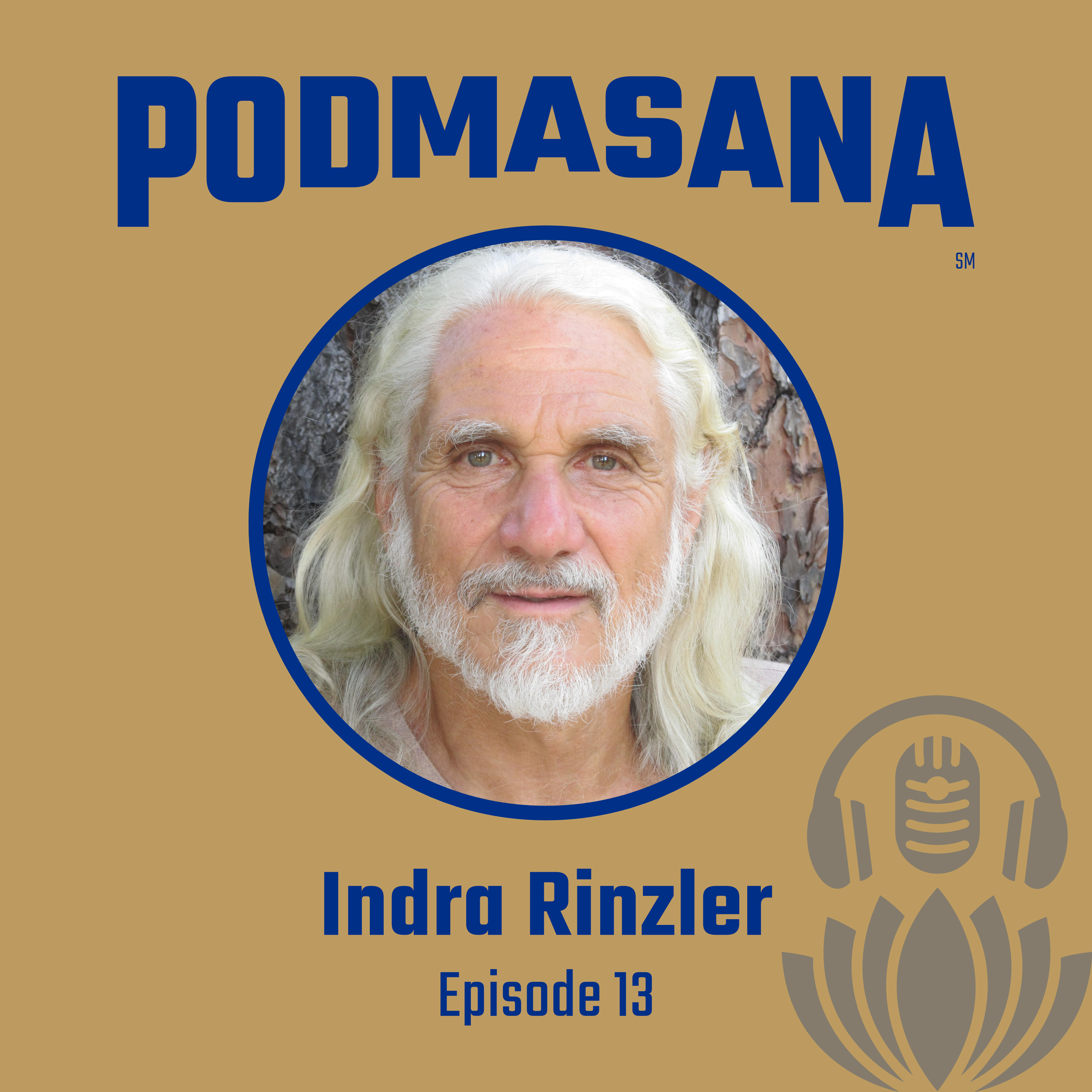
Cultivating True Prosperity Beyond Financial Success | Indra Rinzler | Podmasana Preview

Cultivating True Prosperity Beyond Financial Success | Indra Rinzler | Podmasana Preview
Podmasana: Global Spirituality, Timeless Wisdom
Cultivating True Prosperity Beyond Financial Success | Indra Rinzler | Podmasana Preview

Apr 22 2026 | 00:04:15

/
Episode April 22, 2026 00:04:15

Hosted By

Brendon Orr

Show Notes

In the next episode of Podmasana, Indra Rinzler shares wisdom from 50+ years on the spiritual path and his award-winning book Indra's Net: A Seeker's Guide to the Human Experience, an Amazon #1 bestseller structured around 78 tarot cards. Discover how the ancient concept of interconnectedness—like jewels reflecting in an infinite cosmic web—transforms our understanding of life's challenges. Indra explores reimagined tarot teachings, the difference between ego-driven and divine self, prosperity consciousness rooted in self-love, and practical practices for working with triggers. Whether you're new to spiritual seeking or a seasoned practitioner, this conversation offers powerful insights for embracing the messy, beautiful human experience as a path home to your truest self.

Key Topics:

  • The concept of Indra's Net: infinite cosmic web of interconnectedness

  • Reimagining tarot: no hierarchy, no bad cards, reversed major arcana

  • Three levels of self: lowercase (ego), italicized (conscious), capital S (divine)

  • Untying mental ropes: releasing limiting stories and conditioning

  • Prosperity consciousness: finding abundance through self-love, not wealth

  • Triggers as growth opportunities: the four doorways to conscious living

  • Life is counterintuitive: intuition over mind for true freedom

  • Synchronicity: recognizing genuine meaningful coincidences

  • Vedic astrology and Enneagram as observational tools, not predictions

  • Embracing the human experience as the path to awakening

Follow Podmasana wherever you get your podcasts. To access ad-free episodes five days early, bonus episodes, exclusive group chat, Q&As and more, become a Podmasana+ partner at podmasana.com/plus.

About Podmasana: More than a podcast, Podmasana is a global journey through the landscape of human spirituality. We weave together transformative personal stories with scholarly depth, exploring how ancient practices illuminate life’s challenges—from grief and illness to aging and adversity. Through carefully curated conversations and compelling narratives, we bridge timeless wisdom with contemporary understanding, offering listeners authentic pathways to consciousness, healing, and the universal threads that bind human experience across cultures and generations.

Support the show:

Connect With Podmasana:

Current Release Schedule:

New episodes every other Wednesday and Podmasana Preview episodes the following Wednesday

Early access for Podmasana+ partners (5 days in advance)

Exclusive Podmasana Petal episodes every other Sunday and a monthly Q&A (Wisdom Seeker & Enlightened Circle Podmasana+ members only)

Follow and subscribe now so you don't miss an episode. Leave a review and share the show with others on their own spiritual journey.

Thank you for listening and thank you for your support! Feel free to also check out Podmasana Media’s other show’s: Yoga Scussion and My Mindful Moment.

View Full Transcript

Episode Transcript

[00:00:00] Speaker A: Indra, let's talk about a theme from the book prosperity consciousness. And you argue that true prosperity arises from self love and acceptance, not material wealth. How do we cultivate this deeper prosperity in a culture obsessed with financial success? [00:00:19] Speaker B: Well, I think we have to learn to not be obsessed with financial success. Because. Because if you. You're never gonna have enough money to make it work, if that's how you go. The prosperity consciousness has to do with loving yourself and, and. And being content with what you have and realizing what you're really looking for, which. Which is. Is love. Comes down to love and peace. And that the. I mention in the book that there's a guy here that I pass every day that I don't know that he has anything. Somebody told me that he's. I see him. I don't. I don't. Not an early or a late person, but recently I went out at nine in the morning and at nine at night, and he was there both times. And somebody said, well, he sleeps on the street so he doesn't have to go very far to sleep. But he sits there and he doesn't ask anything of anybody. He just has a little cup out and he's just mentally doodling all day every day for 25 years. I mean, I don't know what he's doing, but I mean, even to be able to sit there every day is amazing to me. So can I. I think he has prosperity consciousness. There was a. There was another beggar here. I haven't seen him in a long time, but he didn't have any arms or legs. And he was one of the most joyful people that you. You've ever seen. And he was. He used to pictures or draw pictures with his mouth. Put a pencil in and. Or paintbrush and draw stuff. I call that prosperity consciousness. Not the financial prosperity, but the prosperity consciousness of finding joy in what you have and don't have. Gratitude is prosperity consciousness. [00:02:06] Speaker A: Yeah. No, that's very resonant, Indra. And it makes me think of all the historical figures that were enlightened or saintly or whatever words we might want to use that either gave up material comforts or they never really had them to begin with. And so it seems like there's a connection here, wouldn't you say? [00:02:27] Speaker B: Yes. If you make that your goal, then you're not gonna get to sainthood. I mean, there are some rich saints. I remember that I did a. A 11 summer I went to Mongolia and I was studying Genghis Khan. And at the same time I was reading a book on Milarepa. And they were. They were rather close in time, maybe 100 years apart, but I mean, pretty close. And the interesting thing was that one was poor at birth, but then had the largest empire the world had ever seen, and the other one was rich at birth and then ended up with absolutely nothing. And I found them to be a very. Without a plan, because I don't. I don't do plans, you know, I just found it really interesting to study and inspired by both of them, you know. You know that Genghis is not really understood. He had a bad PR firm. But some really interesting facts about the empire. And they were illiterate, and religion was shamanism and the biggest empire the world had ever seen. The paper from China came to the west from them, and the oranges moved east or west, and the silk trade routes and everything. I mean, incredible facts on history that they had techniques of war that nobody had ever thought of because it was so barren in their land that. And in the winter that they had to figure out ways to outsmart the animals. And they used that in order to feed themselves. And they used that in their war. And nobody had ever seen these techniques before. So I found them to be. I found him and Milarepa to be, obviously, to be incredibly inspiring. And it was a beautiful summer.

Other Episodes