Episode Transcript
Brendon Orr (00:00)
What if healing isn't just personal work? What if it's cultural, relational, and deeply embodied? What if the nervous system is actually a public concern And rest is a civic practice. Today, we're diving deep into a conversation that bridges worlds often kept separate.
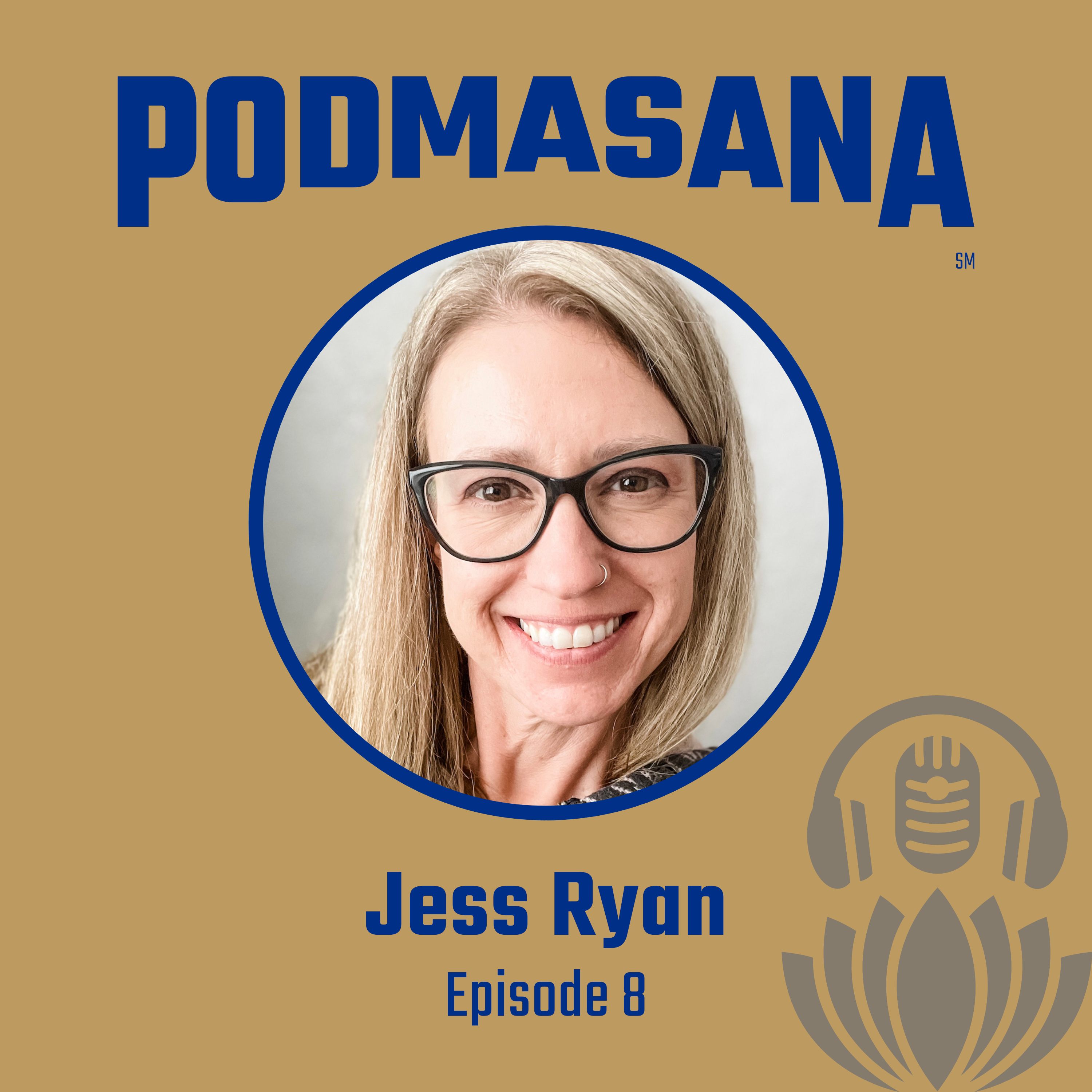
therapy and spirituality, science and somatic wisdom, personal healing, and collective care. Today's guest, Jess Ryan, a therapist, educator, and guide whose work lives at the intersection of trauma healing, nervous system regulation, energy work, and public humanities.
Jess holds multiple master's degrees and is a licensed professional counselor specializing in trauma and life transitions. But her work extends far beyond the therapy room. She's a Reiki facilitator trained in the lineages of Mikayo Usui and William Lee Rand, a longtime apprentice of energy-based traditions from the Andean and Quero Nation
and a trauma-informed yoga teacher with her 500-hour E-R-Y-T. Currently pursuing doctoral studies in public humanities, is researching healing as a public practice and exploring how collective trauma and ecological change register in our bodies.
What makes Jess's approach so compelling is her refusal to choose between seemingly opposite poles. She doesn't see science and spirituality as contradictory, but as complementary. Her therapeutic work integrates somatic psychology, mindfulness, IFS parts-based work, and attachment theory.
while honoring what she calls the intelligence of the body and the subtle ways experience lives beyond words. Clients often seek her out.
when talk therapy alone hasn't been enough, or when they're navigating periods of awakening, burnout, grief, or profound transformation.
through our real work, her counseling and education platform, Jess supports highly sensitive, self-aware individuals, people she describes as navigating the space between who they've been and who they're becoming. She's also co-founder of Earth School, a Patreon-based learning community for people experiencing spiritual awakening and collective fatigue.
offering what she calls practical tools for big spirits navigating life on Earth. And on Insight Timer, her guided meditations and live events reach a global audience seeking collective nervous system regulation and energetic clearing.
At the heart of Jess's work is a radical but simple belief. Healing is not just personal. It's cultural, relational, And embodied. Her research and teaching circle around provocative questions that challenge our cultural assumptions. What if healing
counted as knowledge. What if rest was a civic practice? What if the nervous system was a public concern? Whether she's holding space in therapy, guiding collective meditation, teaching in community spaces, or writing at the edge of multiple disciplines, Jess's orientation remains consistent.
Listen first, honor what's present, and trust that healing unfolds when we stop trying to outrun ourselves. As a self-described INFJ, human design, five two generator, and longtime resident of the American West, Jess brings quiet intensity paired with deep devotion to balance.
and relational care. While her work happens in public spaces, she's replenished in solitude through walks, wide landscapes, and poetry books with dog-eared pages.
on this episode of Podmsana We'll explore how personal healing and collective care are not separate paths, but part of the same deeply human practice.
Brendon Orr (04:52)
Part One Foundation and Journey.
Brendon Orr (04:58)
Jess Ryan, thank you for being on Podmasana
Jess (05:02)
Thank you so much for having me. What a delight. What a delight.
Brendon Orr (05:07)
really great that you could be on the show. Jess, so you describe being drawn to the spaces where people pause, listen, feel, and begin to make meaning of their lives again, long before you had language for it. Can you take us back to when you first recognized this calling and how it shaped your path into this multidisciplinary work?
Jess (05:32)
Yeah, you know, it's funny when I think about like, oh, this is a calling. I definitely believe that the work I do in all sorts of ways, whether that's as a parent or a community member, but through some of the practices and some of the ways in which I interact with the world is definitely vocational and a calling for me. do believe that the source of my understanding, Dharma,
something bigger is moving through me. But I don't know if there's ever been like a moment that was
my gosh, this is my, this is my life's path. This is, this is my calling. And I think there are two things that that kind of stand out as pivotal moments or like, like commitment points, so to speak. But I think a lot of times with callings, we think that there can be this big
my gosh, this is your calling. And I think for a lot of humans, it's a lot of like, we're living our way into it. It doesn't have to be this amazing sort of thing that we read about in books or hear about in other things. And I want to normalize this experience of, I just kind of like lived my way into it. And, you know, one thing is, is that I am an empath and an HSP. And so I like came into the world
world that way. And I think the ironic and funny part is, is I didn't even realize I was an empath or HSP until I was in my 30s. So I didn't realize that people didn't feel everyone else's stuff, that people weren't kind of moving through the world in this deep sort of listening, feeling, sensing way that I have navigated the world. And so that was an aha moment for me to be like, my gosh, other
people, not everyone's living through the world this intensely as I am and there are others that are. So how do I, how do I get to work with these folks and also where do we create the bridge? A lot of my work has a lot of bridging.
of how do we use this skill in some ways, this gift, and sometimes seems like a curse in a lot of different ways for people. So that's the one is I was just kind of born like an empath and HSP. think that plays into a lot of this. And then, you know, there was a really pivotal moment that sort of drew in
this multidisciplinary path for me. So I originally started working in the medical field. So I was a medical laboratory technician for the University of Cleveland hospitals. I was looking under microscopes. I love science. I love the human body. I love the things that are going on that we can't see.
right, like the things beneath the surface. And I didn't realize at the time, like that's a huge metaphor for a lot of the work that I do in a lot of ways. But it started in this really physical, tangible way. And I would go in and someone would look, you know, like quote unquote, seemingly healthy, but you would look at things under a microscope where you'd run tests and that wouldn't.
coincide with what you're seeing on the outside or vice versa. Someone's in extreme pain and or extreme sensation and illness and you look at things in the microscope and everything looks fine. And during this time period, I had my own incident and so I call it the ass breaking incident, but I dislocated one side of my pelvis from the other.
Yeah, and I ended up having chronic pain and I ended up using all the Western medical things, you know, like going to some of the best doctors, I think in the country, physical, you name it, I did it. And we did fix the physical structures, but I was still having such intense chronic pain that I couldn't move. And, you know, that led me to some of this
path, this multidisciplinary path of, okay, this thing is important. This Western science is medical field, I definitely has helped me. And it's not the only aspect of who I am. It is not the only aspect of my healing journey. And, you know, I had been on disability.
and was not able to walk. So I could only meditate, right? So I was reading about how pain and emotion lives in our body. I was meditating all the time. And it was through a series of other processes that I realized, whoa, my healing is a journey of a lot of different levels and layers. And then that started to link back to the work I was doing in the hospitals where I was like,
⁓ we as humans, have so much going on into the surface all the time. We have so much going on relationally, spiritually, mentally, that just to address one little part, we're missing a really, really big picture of things. And so that's how I kind of came in some ways. So that was a starting point. There's been a lot more.
Brendon Orr (10:51)
Hmm.
that's a remarkable story, Jess. That's a remarkable story. Thanks for sharing. So your work deliberately refuses to choose between science and spirit, rigor and intuition, intellect and body. What experiences or realizations led you to embrace this integrative approach rather than staying with more traditional boundaries?
Jess (11:23)
Yeah, you know, I think that that first incident in my physical body was a big one. Like that was a wake up call for me in
in my own journey of this needs honored. And I think it's interesting because I grew up, I'm a very spiritual person. And I think my access point at that place in time was religion because of where I lived in a very rural community. because of the times, it was like the 80s. There wasn't a lot, you we didn't have the internet then. so, so church was a spiritual place.
Brendon Orr (12:02)
Yes.
Jess (12:06)
for me and
I think that there were these moments where like that was the connection, the connection point to some of the invisible forces, the things beyond us. And I also was connected to the natural world. I lived on a farm, I lived out in the country. I spent a lot of time in the natural world. And I think when you spend a lot of time on land, you see the cycles of things. You see relationship happen in ways
that we don't in our everyday busy lives. And I think that gave me a love for environmental.
like the science, I started to love the science of things. And I never thought those things were mutually exclusive to me. I'm like, of course there's something bigger that runs through the natural world. There's something bigger that runs through humans. And there's all this really cool stuff we get to learn about. get to see, we get to experience in these human suits.
And I also think another really interesting, you know, and this is specific to me is that in human design, which is a school of thought that I find really informative for me and a lot of clients I work with, I have something called the doubt channel. And so in the doubt channel, it has sort of a blessing and a curse to it. And the curse being if I'm not in alignment, I will doubt myself a lot.
But when I am in alignment, it really brings this sort of curiosity to things and discernment all the time where I'm just like, is that true? Why is that happening? And I remember sitting in church and I had to have been like eight or nine years old and someone was like there was some message being sent that did not seem very loving and open to me at the time. And I remember no one outside of me, but something in my own little
was just like, well that can't be true. Like that's not what this like sacred text says. Like that, they must be mistaken. Like there's always been this sort of internalized, like.
Brendon Orr (14:11)
Yeah.
Jess (14:20)
questioning that happens and the same in the science world, in the academic world, which I'll talk a little bit later, in that not everything that we're fed is, you know, I don't, I think, I think we're meant to be critical thinkers and questioners.
Brendon Orr (14:37)
Hmm.
Jess (14:38)
And I have that just sort of hardwired into the design of who I am. And so for me, and again, I think this also goes back to that physical incident that I had of very much...
We're all of it, right? We're all of it. We are this human suit and we are also like this huge spirit, right? Stuffed into this very clunky human experience.
Brendon Orr (14:56)
Hmm.
Quite clunky, quite clunky. So Jess, you're pursuing doctoral research on healing as a public practice and the body as a site of knowledge. Can you unpack what you mean by this? Why does healing need to be understood as public rather than just personal? What does it mean to treat the body as knowledge?
Jess (15:32)
Yeah, you know, I think I am still dancing with this question a bit. And it's one of the reasons I'm on the front end of this academic PhD journey with this. But I have very much been in the journey for 20 years with healing practices and environmental practices and interpersonal practices and
you know, collective you we have known each other in group yoga asana context and other yoga contexts that have a communal aspect to them. And so I think healing is very much a personal journey, we all have some agency and accountability to to walk our life's path to live our own Dharma in
in this form that we're in. But, and both, right? That if we continue that in isolation, doesn't matter if like, we believe we're healing the collective or not when we do our own internal.
work, we do our own internal practices that inherently impacts the collective, right? It's like an energy grid. It's like if lightning strikes one house, that house is going to take out like a huge chunk of the grid. And
A couple things with that. One is I don't want people to feel this like huge responsibility of like, my, I'm here to like do this collective work or my ancestral work or like, I can't even get my own crap together, let alone like take care or help with all of this. And I think everyone feels so bogged down. And I wanna, I think part of this work is beginning to explain our work here does impact the collective. It does make it.
public work, it does make it collective work. And that doesn't mean you're going out into public and telling people all of your secrets or doing your things or sharing inappropriate material out in the spheres. But it does, it does mean that we are a living organism, you know, we are as healthy as our water is, as our communities are as our
neighbors are. And we, I think we'd like to think and sometimes believe, right, that it's like, okay, that this really individualistic mindset, especially in the Western sphere, that if I just stay in my lane and take care of myself.
That's all I need to do. And there's truth to that. And you're going to hear me say this a lot. There's a lot of both and and holding holding it both. I think a lot of that is true. And we are part of a bigger organism like we are part of something much, much bigger than ourselves. Whether that's in a very sciency like ecosystem perspective or whether that
Brendon Orr (18:25)
Mmm.
Jess (18:44)
that's in a more spiritual context, know, thinking of the cosmos, thinking of Brahman, thinking of the God sources of our understanding, whatever those are, like that's in all of us in some way or shape, whatever lens you come to that through. Yeah, so I think very much, you know, I've been for the last eight plus years have been
Brendon Orr (19:05)
Yeah.
Jess (19:11)
you know, a clinical therapist. And so I'm doing so much one on one work with people and I'm seeing the way that that changes a person's experience with themselves, the way they move through the world, the way they interact in their relationships. And I'm like, how for me, I'm realizing that is a public practice, even though it's happening in this private room. And how can we start to take some of these practices
Brendon Orr (19:36)
Hmm.
Jess (19:41)
and flip them. Like, how can we work in community? How can we work in these ways and do this? Because we are, you know, you've been in a yoga asana class or a breathwork class or a practice where you feel different at the end of it than you do at the beginning because there is collective and co-regulation happening in that space.
Brendon Orr (20:01)
Hmm.
Jess you've apprenticed in Andean and Quero Nation energy-based traditions while also maintaining your clinical licensure and academic rigor. How do you navigate these different wisdom traditions? And what has that cross-cultural learning taught you about healing?
Jess (20:22)
Yeah, yeah, so this is a super tender and I think a really important question and topic. And so I'm gonna kind of weave in a couple of things that I think are important, especially in the lens and the way in which I view it and also.
I think in the Western healing worlds. And so thank you for asking this question. And I hold it with a lot of care. And I first and foremost, I think it's really important to say clearly if you're seeing this on a screen, I'm a white practitioner.
And if you're not, I've just verbally told you. And so I want to make sure that people know that I am not claiming ownership of several lineages that I've studied in, but this indigenous or Indian tradition. And I really want people to know that the Quero Nation and the...
And in cosmologies are living lineages. These are held by specific people, places, histories, and right, whatever it is, think whatever lineage we practice through or lineages we practice through to not extract from them, to not universalize in a way that that water sinks down or extracts from folks.
And knowing that for me and in some of these traditions, right, like my learning and these traditions has come through apprenticeship, through relationship, through permission. And, you know, I want to make sure.
to encourage people to really seek out primary sources whenever they can. So rather than learning strictly from voices filtered only through Western voices like mine, find the teachers, find the origin. And I understand, right? We can't always do that. And so what are the bridges and how do we do that as ethically responsible and as honoring and
differing as possible. And so, you know, I think this weaves in a lot for me because there's a lot that comes in with, you know, ethics, I think as a therapist, as someone who works in a clinical setting is academically trained. Ethics is a big part. And I think also, working in this field where I am
I am trying to honor the practitioners and the wisdom and my teachers. I always am asking myself, like, how can I stay in right relationship? What needs to be considered here? Do I need to reevaluate? Am I being transparent? Am I compensating the global majority and people of color and people whose these
this has been their, again, their living lineage. Am I deferring to that? What is mine? What's not mine? And that's like, that is a constant dance and it's uncomfortable. And I think like, that's the like, that's the name of the game. And I think, you know, as I said, like in clinical and in academic settings,
Brendon Orr (23:21)
Hmm
Yeah.
Jess (23:43)
there, if you've taken an ethics class, like ethics aren't comfortable. There's usually not just a, this is the black and white answer, this is the right answer, this is the wrong answer. like, granted, there are some inherently like, okay, that is obviously wrong. But I think as humans, we live in...
Brendon Orr (23:49)
you
Jess (24:04)
this gray space, like we live in gray space. We don't like gray space, but we live in gray space a lot. And I actually think combining these realms has actually sharpened some of my, my ethical compass has sharpened.
my participation in both, know, Western psychology has really given me this language around consent, around nervous system regulation and trauma and safety. And I think some of these other wisdom based traditions really remind me and ask me to keep coming back to
wisdom and this process is relational. This is ecological. This is spiritual. This is a human sitting in front of me. And that our bodies don't heal in isolation from each other. We don't heal in isolation from the land. We don't heal in isolation from community. We don't heal in isolation from our ancestors, right? And there can be some doozies back that line. So we're in relationship.
Brendon Orr (25:09)
you
Jess (25:12)
with that in a lot of different ways. And so, you know, I think there's a lot of humility. There's a lot of humility here. And again, I think that doubt channel for me is that for me, and this isn't true for everyone, but for me, no one system holds the entire truth of everything.
And that's what I think and this sort of weaves in with this interdisciplinary. I am very much a learn the rules and then break the rules, but learn the rules first, right? There is this sort of like honor, learn, apprentice, like immerse yourself. And for some people, that's gonna be one tradition for their game. And just the way I'm hardwired, I sink deep for a while. And then I'm like, yeah, like an ecosystem.
Brendon Orr (25:54)
Mmm.
Jess (26:05)
thing over here is like this and this and this and I can see the bridge and the cross and the three lines and a lot of that.
Brendon Orr (26:15)
Yeah, great answer, great answer. So Jess, you mentioned that clients often come to you when talk therapy alone hasn't been enough. What are people experiencing or seeking that conventional talk therapy might miss? And how does your somatic and energetic work address those gaps?
Jess (26:37)
Yeah. Okay, I'm gonna geek out a little. This is stuff that I get really excited, really excited about. just a little bit about about our brains first. And that'll give a little a little prep work into why why why some of the somatic work, why the energetic work, and why that's so important. So
you know, our brain, I'm very basic. This is very basic. Also, I'm not a like a brain scientist. But if we look at in therapy, there's kind of like two camps. One is top down and one is bottom up. And so when we look at the human brain, right, we as humans have this neocortex, it is the uppermost part, it is the layer of the brain around, it's why we can like think thought.
and tell stories and rationalize and philosophize. And then we have the midbrain, which is like our emotion. It is our ability to like vocalize like dogs, you know, we have a midbrain. It is sort of that like action reaction type part of the system. And then we get into the lower the brainstem and
We're looking at things like survival, fight, flight. We're looking at the regulation of our heart rate, our breath, things that we don't have to think about all the time. And so traditional Western psychology starts from this top down. know, we look at, you know, people would be like, they're having weird thoughts or they're having this or this is going on. And so we're going to start from their thoughts. We're going to start from this. then
And so a lot of original therapies come out of talk therapy come out of if we can think about the things different if we can talk about it if we can tell a different story. CBT cognitive behavioral therapy comes out of this top down. I actually love some of those schools of thought and I do use some top down but I'm primarily a bottom up because the bottom up starts to look at
gosh, we're in fight flight. This person doesn't feel safe. We need to help them regulate that process because you can tell a person till they're blue in the face, you're safe right now. You're safe. You're safe. And if their nervous system does not feel safe, there's no amount of telling them that they're safe. That's going to make them believe that. And then it can actually become really
It can actually do the opposite. It can actually cause more damage. so, you know, in the last, I mean, for many years, there have been these practitioners that have done real body-based work. But of course, in the Western sphere and research, in the last 10 years, it's really hit the scene, right? So like breath work and yoga and meditative and mindfulness has these amazing impacts on
nervous system on our, our capacity to be able to speak to the nervous system in its language and start to bring it into some resilience and bring it into some regulation, which we'll talk about here in a little bit. And it's in that space, then we can start to look at our thoughts differently, we can start to question we can
go back into how memories felt in our body and sort of, we call it reconsolidating memory. We can go back and have a different experience so that our nervous system has a different response now. And there can be actual change and healing and resilience that happens. And so I think that there are a lot more therapists that are starting to weave in some of these practices, EMDR, IFS, somatic-based breath work.
mindfulness-based stress relief. There's a lot that is kind of coming into play with some of that. for me, I very strongly, again, because I'm empathetic and HSP, highly sensitive person, my physical body experiences a lot. I somatically sort of sense the world. I feel my emotions strongly.
Brendon Orr (30:43)
Mm.
Jess (30:53)
that fight flight response can be really strong. And so a lot of people I work with tend to have some similar veins and doing that work and creating that foundation is going is a very, different experience from we're just gonna like think our way out of something and that might work for a little bit, but it doesn't stick.
And it also doesn't honor the person's experience. And like, that's part of the process too.
Brendon Orr (31:23)
you
Brendon Orr (31:25)
Part Two, Practice and Approach.
Brendon Orr (31:32)
Jess, you emphasize that your approach to energy work is less about bypassing and more about integration, embodiment and regulation.
This is an important distinction. Can you explain what spiritual bypassing looks like in your field and how you keep energy work grounded in reality rather than escape?
Jess (31:58)
Yes, and so people, the people who find me and we work together either they love it or they hate it. They love it or they hate it. You know, I think, you know, I've definitely had a lot of people, especially when I first started doing this work that came in, they were like, please fix me. Like, please fix whatever is here. And I think that that comes from, you know, it comes from a place of like wanting relief and I have such care and compassion for that.
like, a, like, nobody can fix anybody else. I'm just gonna like lay that one out right here. Like that is not other people's jobs. And, right, I think that there is this sort of like, it does, it does take some work to kind of, to be in, to be in the process of it. And so in a nutshell, right, like spiritual bypassing is
is just for any listeners who might be hopping in here in some ways, right? It's like when we're using spiritual language or practices. And again, I think it's not malintent. It's often ill intention, like unintentional, not ill intentional at all. I have certainly done it, but we use these practices to avoid pain rather than to metabolize it, right?
And I think in like energy healing world that can often look a lot of different ways. But one way it's like, but like we're gonna stay high vibe. And that's where sometimes that top down stuff gets kind of a little wonky too, just like think your way out of it. High vibe, like stay up here. Don't invite the bad things in. And also I think sometimes it can be, you know, like reframing.
actual trauma in the system is like that was just a lesson. that was and I think again, multiple things can be true at the same time. I very much think that the trauma in my life has been a huge lesson, but I also had to like work through the very unpleasant process of going through it. And so, you know, we are in these human suits. And so
no matter how much spirit and how much we're connected for both, there's a lot of both and. And so the body has to metabolize and process things. And I think a lot of a lot of folks, you know, can use myself included in the past, like meditation, yoga, psychedelics, energy work, to dissociate and get a little relief from the situation instead of feeling.
the situation or metabolizing or working, working with the situation. And I really want to be clear, like the tools themselves aren't the problem, right? I, I love all of these things and think they can be used in really, really beautiful ways in tandem with your healing journey, your self discovery, your actualization journey.
So, you know, I really, I, that's a really strong, I guess, center point for my work. And, you know, I think a lot of people who want to come to energy work come because, again, they want relief and they might feel temporary relief or expansion if they go to someone that's like, I'm going to do the thing to you, right? And
⁓ instead of with you. I do a lot of work that's with you. And, and so in my work, I'm always kind of participating, like, what are you sensing? What's coming up as I say this, as this is coming through me? What reaction are you having? Where do you feel this in your body? And so I am really sort of grounded in this belief that
real spirituality, real energy work makes you more available for your life, not less. And so, right, this is where regulation, embodiment, all of this, this sort of stuff comes into play. And before we can clear and ascend and transmute, like, are we resourced enough to do that? Can the nervous system stay present?
Brendon Orr (36:01)
Hmm.
Jess (36:20)
Um, can this insight land without overwhelming the system? I have been guilty of this myself and, um, see this a lot, like going to some really intense practices and you could have a breakthrough and a breakdown in the process of it, but I don't think it has to be that way. We don't have to re-traumatize ourselves and other people to have these.
awakening, illuminating, healing responses. And I think the other thing about how I work is that it's returning agency to the person. you know, we are these humans who have such amazing, amazing source that runs through us, right? Like I believe we do all have this. In IFS, we call it core self.
you know, in Christian traditions, they can call it the Holy Spirit and, you know, other the Atman, right, like the personal cosmos within us. That's the energy that creates universes. And if we think that we can only find that outside of ourselves, we're handing over a lot of our power and a lot of this amazing source that runs
through us. And so I really come from this place of how can we help you come back into relationship, into sovereignty, into agency, and realize like the amazingness of source that's and healing that's within you.
Brendon Orr (38:02)
Powerful stuff, Jess, powerful stuff. So your work centers on nervous system regulation and literacy. For listeners who might be new to this concept, can you explain what nervous system regulation actually is, why it matters for healing, and what some signs of dysregulation look like in daily life?
Jess (38:25)
Yeah, yeah. So this is again where I love some of the science and I kind of geek out on some of this.
And the like, one of the first things I want to bring to the table is we often hear nervous system regulation. And we think regulation means calm regulation means I'm just kind of like, I am not fazed by things I am skating through life, I don't react. You know, I am very peaceful. And that is not at all scientifically what nervous system regulation is. We are humans. And if we look at a nervous system, like we look at our brainwaves, we look
at our heart rate, we look at our heart rate variability. If you look at polyvagal theory,
When you look at a chart and you look at all of these things sort of plotted out, nervous system regulation, a really healthy nervous system looks like a sinusoidal wave. So it goes up and down and up and down, like kind of like a smooth little rolling hills, like a roller coaster of sorts. But it stays kind of even within that. But it goes up and down. We are meant to experience stress. We're meant to get mad.
We're meant to even experience some trauma and our systems are actually designed to heal from that and to come back into it. And so a lot of times nervous system regulation is actually the capacity.
to come back to something, to have some resilience in the system. know, heart rate variability is one aspect of this. When we breathe in, our heart rate increases a little teeny tiny bit. So our heart rate bumps up and when we breathe out, our heart rate slows down. And so we're in this sort of constant like bump, bump, bump, bump, then bump, bump, bump. And we actually want
like some heart rate variability. If we're flatlined, we're dead, like right? We don't want, we don't want and the same with our emotions. Like if we are happy all the time, we're either on something or like we are in a situation, right? And if we're, if we're funked out all the time or if we're angry all the time,
that's, you know, something's not rebounding, something's not resilient in the nervous system, either. And we want this, we want this fluctuation so that when something does come up, that we can respond to it in the moment, and then come back. So, you know, dysregulation, when we talk about dysregulation,
You know, we can have momentary dysregulation. And here's the news, friends, is that we all have momentary dysregulation. It doesn't matter how calm someone seems. You should see me after the eighth time of telling my kid to put their shoes on. I am not a regulated person in that moment. am not. Right. And I can come back.
Brendon Orr (41:28)
Mmm.
Jess (41:33)
regulation. It's when dysregulation gets stuck on or off and that can look very, very different depending upon the person. So when we get stuck, what we call like stuck on, that can look like highly anxious. We can't calm down. We can't sleep. It can also look sometimes really socially acceptable. Like I'm going to keep doing things. I can't sit down. I'm going to like, look, I'm doing this thing and I did this and I did this and
You know, we can get a lot of external validation in our culture sometimes around that. Like, look at all the things that are getting done. And, you know, there can also be other aspects, right? Like, I am angry, I'm explosive, I can't quite be in relationship with the people around me. It can also look like not engaging.
with other people, with getting real quiet and going off the radar, isolating. It can look like depression. It can look like a lot of pretty intense self-talk. so dysregulation can sometimes look really internalized. You won't be able to see it from the outside. And then sometimes dysregulation looks really externalized in the system. And so...
you know, nervous system illiteracy becomes a little bit more of like, okay, there's nothing wrong with with with me for having emotions. Actually, it's really healthy. I'm not a bad person if I feel anxiety sometimes or depression sometimes. Or if I yell sometimes. And it becomes about like, am I coming back? Can I repair?
Brendon Orr (43:00)
Mm.
Jess (43:15)
this with the people around me, can I, you know, be in a place and not get triggered by a particular interaction or a person or a place or a thing? And, and if you don't know, or you can't answer that, that's where we get to work with other people in the world to kind of help that and to learn to co-regulate together because we have this really cool capacity to co-regulate.
Brendon Orr (43:31)
Hmm.
so you had mentioned work. And through our real work, you specifically support people navigating the space between who they've been and who they're becoming. What makes this liminal space so challenging and what does support need to look like during these threshold moments,
Jess (43:46)
Mm-hmm.
Yeah, I love me some good liminal space. And what I will also say is that in between space, it is the least comfortable.
place to be. It is a really, really hard, hard spot. And so I have so much grace and compassion because I usually tend to be working with people in that space, right? Like,
When you know my the name of my business our real work comes out of Wendell Berry's poem The Real Work and one of the lines in there is when you know when we no longer know which way to go we've like when we no longer know what to do right we've basically we've come to our real work.
It's a gnarly spot to be in because systems for safety love predictability and consistency. so, right? Like, this is predictably going to happen this time every year. This is consistent. I can count on this. What we also know about being human is that change is inevitable.
change rocks those things and kind of tosses them out the window. You know, you're a human you've experienced right like
pivotal change in your life. think a lot of people who are listening here will have that experience. And this in-between space is really hard because our old identity isn't working anymore for whatever reason, whether that's because it's coming from within us or because some, you know, it's coming from outside of us. You've lost your job. I'm leaving. Somebody dies. Something like that, right? This old way of knowing the world isn't there anymore. And the new ones not
there yet. And so that kind of sends our system into this space of like,
grief, fear, disorientation. And I also think something about like these threshold moments and the support or the lack of support sometimes that we have is if we don't have clear language for this, we don't have social permission to slow down. We don't normalize.
⁓ you're gonna be uncomfortable for a while and not just uncomfortable, you're gonna be hurting or you're gonna be disoriented. You know, we're always telling people like, but you got the new job. Like it's a great job or like, you have the new house now. It's a great house, right? Like be grateful for that. Like, you know, and people are like, but I still feel sad or I still miss the thing. And our bodies need that time.
Brendon Orr (46:48)
Hmm.
Jess (46:51)
They need the patience, they need the permission to slow down.
and the language to say multiple things are true at the same time. This can be amazing and it can be hard all at the same time. you know, think ways to like support, you know, and maybe even start to change the culture and the voice of this is giving yourself permission in these spaces, having language for that in these spaces. I do that a lot in my sessions with people.
but also allowing...
allowing and naming that for other people. Like liminal space, the transition isn't a failure, right? Like this is actually where the butterfly is moving from a caterpillar to a butterfly, right? It's in the messy, the messy middle, the breakdown. is a very, very necessary aspect of becoming and so normal.
Brendon Orr (47:33)
Hmm.
Jess (47:53)
that process a little bit more for people.
Brendon Orr (47:56)
You ask provocative questions like, what if rest was a civic practice? And what if the nervous system was a public concern? These reframe traditionally private matters as collective issues. Could you maybe expand on this? And what would it mean for our communities if we took these questions more seriously?
Jess (48:21)
Whoa, I think we'd be in like a way different space if we took these questions more seriously than what we are in in this moment. And that's, again, this is part of the process. think we are collectively in one of these messy middles.
I believe there's a lot of really cool work that's coming up and part of the work I'm doing is talking about ephochal moments or ephocal moments depending upon British or Western English translation. But these are moments that
shift a sense of knowing or a sense of being a sense of consciousness in the world, right? Like, you know, there have been different, different eras, there have been like the medieval, we are not living and technically we're not living in the medieval period right now. There has been a complete shift, right? Like, I love Rob Bell has this podcast called smoking on an airplane.
and it's kind of like, my gosh, people just used to smoke in restaurants and airplanes. Like that was a thing. Like that was just like normal. And now we're like, who would smoke on an airplane? Like, what? Right? Yeah, it's like something has fundamentally shifted. And, you know, right now we are really in a period of...
Brendon Orr (49:30)
RUDE.
Jess (49:44)
huge, huge change, burnout, dysregulation, technology shifts that are happening at rapid firepaces that we can't necessarily keep up with. And so, you when I'm saying private or when I'm saying personal and kind of shifting that into the public concern, I'm really looking at this
again, as we are all impacted by what's happening, whether we have direct access to these things, or not something in the cells of our body knows, knows this stuff. And I think right now, you know, these questions are really about starting to dance with and shifting the responsibility or the blame.
I guess maybe from the individual to the responsibility and maybe the agency and the amazing gifts we have as a collective. Because when we treat things like exhaustion and dysregulation and burnout as personal failures, right, we're missing some really huge things, right? We're blaming the individual and we're missing the fact.
But these are often shaped by and impacted by the systems, right? These systems like our work culture, the colonialism that lives in our Western world, if you're listening to that here, inequality, chronic stress, the lack of support, living in a system that doesn't work like nervous systems work, right? So if rest,
like if rest were a civic practice and Trisha Hersey has some amazing work if you're interested in rest as revolution, right? As rest is resistance. There is some amazing, amazing work out there. But if rest, if nervous system regulation was a civic practice and that this is like, this is the thing that stands out to me. It is something that didn't have to be earned
through after you broke down, right? Like, it's like, you can't rest until you have burned yourself into the ground. Like that has become sort of a norm in our Western culture. What happens if it was actually part of or designed into our work systems, our education systems, our caregiving, our community life? What if our
Brendon Orr (51:53)
Hmm.
Jess (52:19)
our nervous system was a public concern, like something we took seriously in how policies and environments, living conditions, social norms, affected people's capacities to feel safe, to feel connected, to feel engaged. It's really hard to feel engaged when you're in constant fight or flight. It's really hard to think of new...
you know, new solutions to things. It's hard to have civic discourse. It's hard to have two people who might have two different experiences and disagree on something. And I actually think that that's normal. I don't think we all should believe the same things or agree on everything together, but to have a conversation where the meeting points, we can't do that if our nervous systems aren't regulated. And so doing this work,
Brendon Orr (53:03)
Hmm.
Jess (53:15)
is, you know, could you imagine, right, like the civic, the civic shifts that would have happened, you know, the humanity that would happen if we made some of these things a civic or a public practice.
Brendon Orr (53:33)
What a vision. a vision.
Jess (53:36)
Thank you.
Brendon Orr (53:38)
Part Three Application and Vision
Brendon Orr (53:44)
Jess, Earth School, the community-based learning space that you co-founded, is described as supporting big spirits navigating life on Earth during times of spiritual awakening and collective fatigue. What does collective fatigue feel like, and why do you think so many people are experiencing this particular kind of exhaustion right
Jess (54:10)
Yeah, it's funny. The first thing that popped into my head was like, I have this part in my system that was like, well, what does collective fatigue feel like to you? Because I'm sure you're feeling it, right? So I offer that to anyone who is listening because my hunch is, is we all know kind of what that feels like there is this sort of, you know, definite we live in a culture that I just talked about is like we're
We are nervous system fatigued. We are physically tired. I think we're mentally, emotionally, we're spiritually tired. But I think when Steph and I started to like wanted to found Earth School, it was because we were working with a lot of people and we're seeing people are going through some pretty huge internal shifts emotionally.
nervous system wise, but also spiritually and energetically, like there is a shift in our consciousness that is happening. And I think for our systems to be able to hold that kind of capacity, it is requiring like this stretching, it is sort of requiring this breaking, breaking down, you know, I've used this metaphor of the chrysalis so many times of to change into a different form.
it, it takes energy, right. And so that caterpillar eats a crap ton of food, and then it goes in and it uses that energy to transform. And so we are using so much energy to shed old beliefs, old patterns, you know, you've watched a snake shed its skin, it's not a passive experience, it takes energy to get that old skin off to get, you know, antler velvet to
come off. is a process. And I think we as humans are
we are moving from one era to another and human design, they use the words like moving from the cross of planning. So this very like rigid structure and we do this in hierarchies and this is work. We were supposed to be in that. Absolutely, but we're moving to a different era, a different consciousness, the cross of the sleeping phoenix, which is more ecosystem based, honoring our own system within the bigger system so that we can actually be healthy.
ecosystem, right? The sloth and the jaguar are part of the same ecosystem. But they're not meant to be the other the jaguar is not like, hey, wish I was a sloth. They get a lot more press on social media. You know, it's just like I am being fully me. But that keeps this whole system in balance. And we need the sloth and we need the toucan and we need the tree. Like, we need it. But there's so much
Brendon Orr (56:51)
you
Jess (57:09)
conditioning
of being in this old system that we're Again, like kind of like that snakeskin kind of like the old beliefs. And it's exhausting. It's exhausting. And I want to normalize that exhaustion is that in growth, in the creation of something new.
Brendon Orr (57:14)
Mmm.
Jess (57:27)
what is the unhealthy stuff, like what's the internalized capitalism versus what is trans transformation. And so our school we're trying to use that as a platform to be like this kind of exhaustion is kind of normal right now, it's not pleasant. And how can we help support that through some of the work that we're doing there.
Brendon Orr (57:44)
Mmm.
So Jess, your research explores how collective trauma, apocryl transition, and ecological change are registered somatically. Can you give us some examples of how these large-scale phenomena actually show up in individual bodies and nervous systems?
Jess (58:10)
Yes, and I'll try to address this from a couple different lenses. The first is like, right, I am an empath and a highly sensitive person. And so I, I can sense like being when I used to work in the environmental field, I would be in a in a particular place, I'd be like, something feels a little off here. And my friend would be like, ⁓ that was a super fun site. Or this is, you know, like that sort of thing. I think
I think that there are folks and a lot of people I work with, whether they realize it or not, can be attuned. Like you can feel it as discomfort. You can feel it as discord. We can also look at environmental justice, right? And looking at, you know, people can literally get sick, like get ill based on some of the things that are happening in the environment around them, whether that's
you know, processes, extraction processes that are happening, other things that are going on on the land and it's not healthy, monocropping, right? That shows up in the nutrients that we have or the lack of nutrients, right? We have in our very physical, tangible body and system.
So there's that very physical process that scientific that earth based process. And then I look at, know, over the last, the last five years, we've had some things, you know, like we had a global pandemic, that was an equal moment, like we have not had that experience in most of our lives at this time. And especially not with
access to social media, access to, you know, having it be a global shift. And we saw with that, how that impacted collective mental health, like there was documented shifts in depression, in anxiety, in reaching out for mental health care.
And I think on a more personal and spiritual level, I work with folks, you one on one, and I work on them in these various settings, counseling, healing work, teaching, you know, yoga, doing some of these other things. And there are themes that show up in this sort of sort of collective way of there will be for a period of time, several very unrelated people
from all over the country or other countries even that are going through this like shedding an old belief like I what does it mean like what does it mean to be in relationship what does it mean about my identity what does it mean you know some of these very strong constructs
And they're starting to break down in the individual, but I can see this like sort of universalization that is happening in the collective.
Brendon Orr (1:01:13)
as someone who identifies as highly introverted and replenished by solitude, I believe is how you referred to it, yet does significant public facing work, how do you navigate the tension between the need for quiet restoration and the call to show up in community spaces?
Jess (1:01:33)
Yeah, I think this is, part of my personal work and life's work. Because I do feel very much that, that my work,
And I don't think this is, again, the case for I think that there are some people that their work is meant to be like I am supposed to be in a lab doing a thing or I am supposed to be writing a book and sending it out into the world and not interacting.
And for whatever reason, you know, I think that there is something about being an empath. There is something about knowing nervous system regulation and helping large groups be able to do that and individuals be able to do that. But it takes a massive amount of awareness of my own system and giving myself permission. So I am someone who has my own therapist and has my has had my own therapist for a long, long time. And I
I
think as long as I continue to do this work and hold space for others to make sure that I keep that channel as clear as possible for me, I need to walk my talk. So I do all of these things. And sometimes I do them, you know, a little less, a little more, like, right? But...
I definitely, use these tools that I am sharing with others. And I think a lot of it too is like permission. It's taken me a long time to say.
it's okay to say no to things like it is okay and some people are going to be disappointed or whether that's like friends because they can't go to a thing or whether that's like, I didn't agree to do the event or you know, all all levels personal and professional. But what I have learned in my own system is if I go against my authentic knowing
with the highest good in mind that long term it won't work. Like I will crash and burn. I will not be sustainable for other things. I'll not be able to connect in other relationships or even the relationships that you know are happening. I want to have authentic moments and so I'd rather have fewer.
Brendon Orr (1:03:56)
Yeah, I think what you're alluding to now is genuine, authentic self-care and the importance of that.
Jess (1:04:03)
Yes,
yes. And it's amazing to me because I have some friends that are literal extroverts. Like they are energized by being with people. And I was like, I can't imagine what that feels like. But I trust that that is like happens. I trust that happens for people. But I need like, I'm just gonna sit and stare at a wall for a minute. Yes.
Brendon Orr (1:04:26)
Shout out introverts. Yeah. Yeah. Yeah.
so, Jess, looking ahead, what's your vision for how healing practices might evolve? If more people understood healing as cultural, relational, and embodied rather than purely individual, how might that shift our approach to everything from mental health care to community building to
responding to collective challenges? I know that's a big question,
Jess (1:04:58)
Yeah, yes. And I, you know, I wish I had this like one size sort of fits all. And that's what I'm doing my doctoral work on is like spending years thinking about this, which I feel lucky.
lucky to do. But it kind of goes back to some of those questions that I posed earlier, and that you asked about, right? Like, what if rest was civic practice? What if nervous system literacy? What if, you know, we looked at things relationally and holistically, as opposed to this binary, right? Like science and spirituality are good or bad, or action and inaction. And what happens if it was
a spectrum of things and meeting people where we are. I think, you know, ideally in education systems, weaving in a component of nervous system and not just like mental, emotional, go see a counselor, do the thing, like learn what your emotions are. Those things are really important. But I think there's something
really to this process of like, our nervous systems interacting with each other, because we do have this amazing capacity for sympathetic resonance. And you've maybe personally like heard this story before, but
I tell this a lot, so we're in and you can't quite see it, but there's a guitar on the wall. I have a lot of musicians in my house. We have violins and guitars and things all over the place here. And there was a guitar in our old house that would be right by the door. And I used to yell my kid's name and be like, kid, get your shoes on. And every time I would yell his name, because of the vibration of my vocal cords, it would make the guitar ring on the wall.
And in the physics of sound, this happens, If a string is plucked on an instrument, the string next to it will start vibrating at that same note. And I think there's a lot of metaphor to that. But right, that was a very physical representation to me, because I was like, am not telling, why is this guitar buzzing? And.
The same thing happens when our nervous system, when we slow our breathing rate down, the people across from us slow our breathing rate down. When we can pause for a moment and when our breath rate slows and our brain wave and our heart rate slows, these aren't obvious, but human bodies, bodies, animals know this, right? Like bodies know regulation and safety
from a very biological, physiological perspective. Could you imagine being able to have conversation with folks or if our government was run by folks who were able to take a deep breath and pause and hear and listen and respond from that place, if we could do that.
in so many different ways. And I just think if that could start in younger and younger ways, and that just became a norm. Like how, how lovely, you know, and I don't think necessarily that there is going to be this like utopian like, like, I think there is going to be disagreement, I think that there is going to be, but to approach that.
so differently and also to give people permission that's going to look different for different families, for different communities, for different traditions. And what are the through lines through them so that we can make them accessible? And I think that that's a huge one for me too is accessibility and what does accessibility look like in a lot of different ways and not just limited to
Brendon Orr (1:08:36)
you
Jess (1:08:59)
people who have access to practices, right? that's a little bit.
Brendon Orr (1:09:04)
Yeah, great answer, so, Jess, thank you for who you are. Thank you for what you do. And thank you for being on Podmasana.
Jess (1:09:14)
⁓ thank you. What a gift, like such a gift to spend time with you, to spend time with the listeners. I am very, very honored and just appreciate getting the opportunity to kick it with you for a little bit today.