[00:00:13] Speaker A: This is padmasana, and I am brenda norr.
What if the relationship that nearly destroyed you was actually a divine invitation to wake up?
What if heartbreak, betrayal, and chaos weren't punishments, but the universe's most effective teachers?
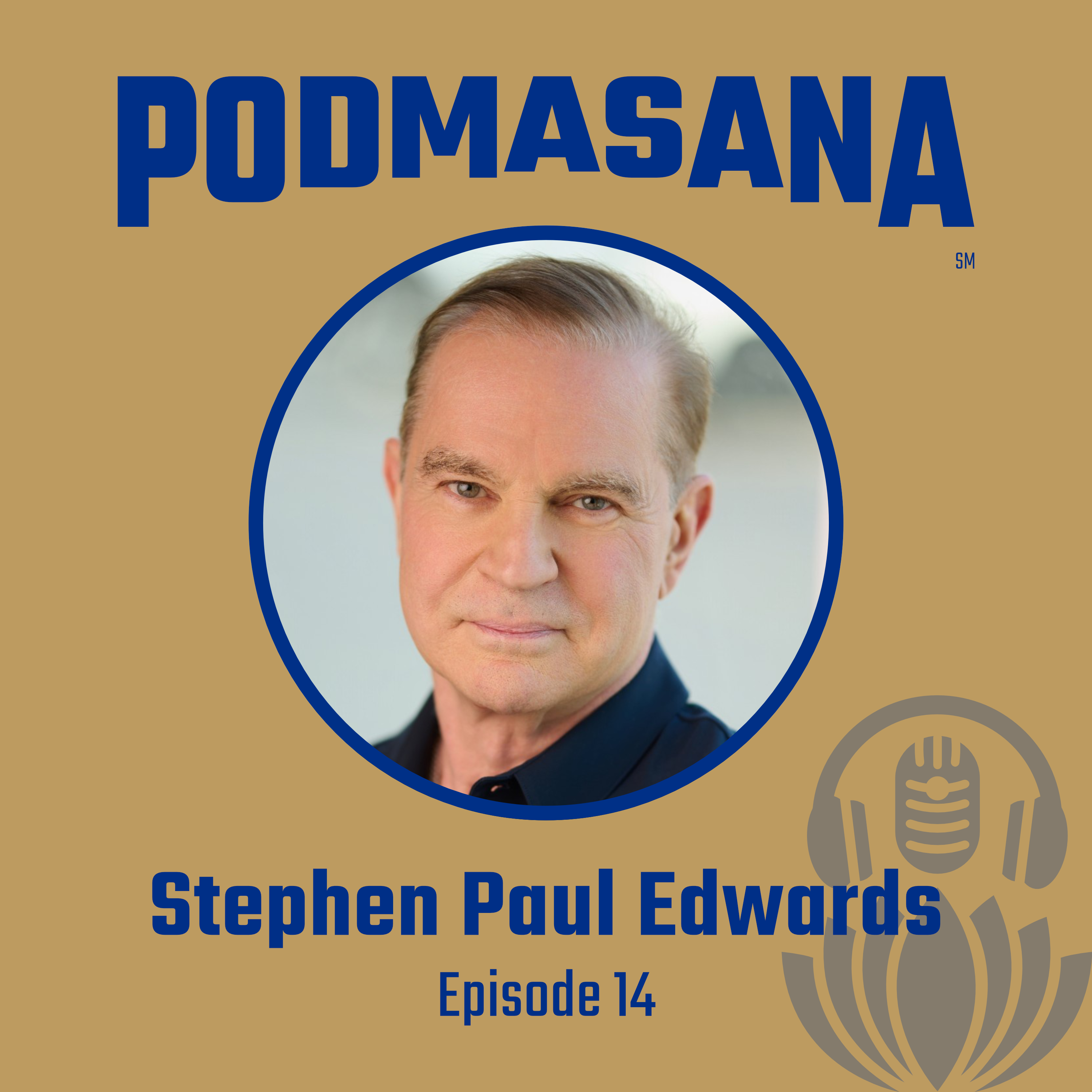
Today we're exploring these provocative ideas with Stephen Paul Edwards, spiritual counselor, Ph.D. and author of the raw, unflinching memoir, the Venus Flytrap.
Sex, Lies, and Repercussions.
It's been described as equal parts 50 Shades, Gone Girl and a therapy session with the devil.
A seductive story of a wealthy English businessman and a rebellious former supermodel whose love affair spirals from rooftop cabanas to mansion sex rooms and into obsession, the trail and madness.
But this isn't just a scandalous tell all.
It's a spiritual awakening wrapped inside luxury, desire and chaos.
Born in Blackpool, England, Stephen grew up on the windswept coastlines of the United Kingdom, a place that instilled both resilience and a restless curiosity about life's deeper currents.
In 1989, he left his homeland for Florida, seeking new horizons and the chance to explore his own potential.
His journey has been anything but conventional, from selling kitchens in the UK to owning a licensed sporting goods store in Tampa, Florida, to working with Tony Robbins and Robert Kiyosaki.
Each challenge, heartbreak and unexpected twist became the crucible in which his understanding of the human spirit deepened.
With a PhD in spiritual counseling, Stephen has spent decades guiding people toward alignment of mind, body, and soul.
As an international speaker, he shared insights on stages around the world, helping audiences break free from illusion and reconnect with their higher consciousness.
Yet for all his teaching and guiding, there remained one story that needed telling.
His own.
The Venus Flytrap chronicles his tumultuous relationship with Tomasz, a complex, magnetic woman whose captivating yet destructive nature mirrors the book's title.
Set against a backdrop of luxury and opulence, the memoir explores the messy reality of addiction, mental illness, codependency, and the human struggle for connection.
Stephen doesn't hide behind spiritual platitudes.
He lays bare the chaos, the wild adventures, emotional roller coasters, and inevitable consequences of their intertwined lives.
He confronts his own bipolar disorder, childhood trauma, and the patterns that kept him trapped in toxic cycles.
Through brutal honesty and dark humor, he reveals how relationships often serve as our hardest spiritual lessons and how pain can be a catalyst for consciousness.
The book explores what Stephen calls soul contracts, the idea that certain relationships enter our lives to wake us up, to show us where we're stuck, and to force us to evolve, even when those relationships look like disasters. From the outside, they may be exactly what our souls need to grow.
On this episode of Padmasana, we explore the spiritual purpose of heartbreak, why nothing happens to you, but rather for you, and how ego death becomes the doorway to freedom.
We discuss soul contracts and relationships, the difference between desire and love, and how thoughts, energy and words shape our reality.
Steven shares what it really means to wake up and why the most painful relationships are often the divine invitations to evolve into our highest selves.
Hello listener, Brendan here.
If you're enjoying the show and would like to Support it, visit podmasana.comsupport to learn about all the great ways that you can contribute.
You can become a Podmasana plus member at three different tiers with a variety of perks and also make monthly and one time donations to help support the show.
Any support is greatly appreciated.
Again that pages podmasana.com support thank you for listening and thank you for your support.
Part 1 the Journey into the Venus Flytrap Steven, thank you very much for being on Padmasana. It really means a lot to have you on the show today.
[00:06:21] Speaker B: Well, thank you for having me, Brendan. It's a pleasure, an honor and I'm really excited for this interview because I've already listened to some of your podcasts, so I think we're have a great time.
[00:06:32] Speaker A: Nice, nice. So, Stephen, you grew up in Blackpool, England, with what you describe as a restless curiosity about life's deeper questions.
What were those early questions and how did they shape the person who would eventually find themselves in the relationship? You detail in your book the Venus Fly Trap.
[00:06:55] Speaker B: What was it about? I don't know that it was about the area. I think it was what I was going through as a child that I didn't understand.
So for example, I had this voice in my head that would talk to me. Now it becomes apparent later that I had a mental illness and maybe that was part of it, but I don't necessarily believe that. And even, you know, I had, you know, as it comes out, a manic depression, as they call it, bipolar today, right? In England it was called manic depression back then.
And that was like to me going through that experience, although I never said that to anybody, it was like an awakening.
And later on I heard psychologists say that is very often how people become awakened.
And so I had an experience which is something now I actually believe, and I had no reference to it. You know, I went to a Christian school, you know, studied the Bible, learned about Jesus, all those things.
And for some reason I remember a day I was in My bedroom, I was looking out the window and this voice in my head said, not exactly like this, but I became aware of it. So it wasn't really a voice, it was more just an understanding.
That scared the heck out of me, really, because I couldn't tell anybody this, right? That the Son of God is the Son, which is why it's called the Son of God, right? And it just seems so rational. So that makes total sense, Right.
And I later obviously learned that we personify things that are in nature, right? And so that was a huge thing for me to carry without being able to tell anybody. In fact, you might be the first person I've told that to. But, you know, it's still a little scary to this day, right, to come out and say things like that, because that can easily offend people. And it's definitely not meant to offend. It was just something that happened to me. So I lived in a seaside town called Blackpool, as you say. And it's a holiday town, or it was really, was in its heyday during the 1950s, and people would all come from the north of England to take their, what we call holidays, Right? As we call an American vacation, right? Yeah. And so it was just packed with people all the time. It was amazing. So I learned a little bit about how to live on the streets, how about take care of myself. It became a very violent town during the summer months because a lot of these people that came there were from Scotland and they were really, you know, they loved to drink. They would go into bars, wreck the bar fight in the town, you know, so we had to learn how to circumvent all that stuff. And it was also a place where there was a lot of crime, there was a lot of con artists that were doing things to get the money off what they would call the punters. Right. So it was an interesting place to grow up. And I just had a natural curiosity for things. You know, how did things work? How did this world work? Why were we here? All those. I think most, you know, young people have those questions and sometimes they give up on them at some point in their life. And so that was my early upbringing and then through a childhood that I would say was traumatic.
Although I think most people would say their childhood was traumatic when they asked about it. Right?
[00:09:58] Speaker A: Yeah.
[00:09:58] Speaker B: But it's also personal. You don't know that everybody else went through a traumatic childhood, Right? You just assume you were the only one. Right. But I, I, I. That's what contributed to my manic depression in a very controlling environment that caused me to be angry. And of course, they say that depression is suppressed anger. Right. I mean, I used to go to bed at night, and I used to bang my head on the pillow until I fell asleep, which might have a lot to do with my madness, I don't know.
But all I wanted to do as a kid was to get away from home, to run away from home, which I did numerous times.
And you soon learned it's not that easy. Right?
[00:10:43] Speaker A: Right.
[00:10:44] Speaker B: The first time, I was about 8 years old, and I got to the end of the driveway, and then it came back. You know, the only thing I took was my cat in a suitcase. Anyway, finally I got to be able to run away from home. But what I realized, and you already know this, I know I wasn't running away from my house. I was running away from myself.
I. I couldn't face my own reality. Right. Because it was painful.
[00:11:06] Speaker A: Yeah.
[00:11:07] Speaker B: So. And that continued for most of my life, Brendan. Right.
So I travel far and wide. You know, I've been in 48 of the 50 states.
I lived all over England.
So, you know, wherever I went, unfortunately, there I was, right? Wherever you go, there you are. And so. But I never looked back, you know, And I've worked for some pretty powerful luminaries who teach all these wonderful principles, and I did my best to live them. And I used to journal, but you know what I never did with any of those journals? I never read them. I never read them.
Right. So I had a stack of journals, Right, that I never read.
So that was my early upbringing. And then to bring it a little bit more up to date with the Venus Flytrap, you know, I'd worked. I had a PhD in spiritual counseling. I'd worked with Tony Robbins. I'd worked with Robert Kiyosaki. And those were amazing times, and I learned a lot from them, but nobody taught me more than Tomas.
She was my greatest teacher.
She was a master teacher for me, as I was for her.
And, you know, what we see outside of us is a mirror of ourselves. Know that.
And so she was a mirror of me in so many ways. She was in a mental institution when she was 16, as was I.
She was angry at her father, as was I.
I was looking for a home, as was she.
And so I had tremendous shame from my childhood.
Part of that was because I was a manic depressive, and I could never tell anybody. Right. I mean, I couldn't. If I went for a job, and they asked me on the application form, did you have any mental Illness, what was I going to say? Yeah, and then they wouldn't hire me, right. So I had to keep it a secret.
And same thing with girlfriends. I mean, if you just turn around and say, hey, listen, before we get into this relationship, you should know I'm crazy. Right, because that's how it was looked upon then. Right. You know, mental illness was just not considered something that was acceptable and you were an outcast.
Obviously. My parents and my family knew when I had that episode when I was 16, but after that I just pretended I'd got back to normal and it was over.
And I spent most of my life because, as you know, with bipolar, you can tend to be one or the other. Right. You can tend to be in mania or you can tend to be in depression. My tendency was for depression.
So what that gifted to me, although I didn't know it at the time, was compassion, understanding for other people's condition and always being on the side of the underdog because obviously that's how I felt.
And the downside of that is I was always trying to save everybody and the world because I wanted someone to save me.
[00:14:03] Speaker A: Yeah. And so the book, Stephen, chronicles your relationship with Tamaz, a woman you describe as both in irresistibly beautiful and ultimately dangerous. Much like the Venus fly trap itself. Right. When did you first recognize this dynamic? And why did you keep going back, maybe despite knowing the risks?
[00:14:25] Speaker B: Yeah, great, great question. So how did it come about? Okay, so this is quite extraordinary because I met her online sometimes doesn't go very well, but anyway, I met her online and I was immediately, you know, it was an international website. Right. So I was immediately obviously struck with how beautiful she was and her background. You could see that she was, we would call it in England, a blue blood from high society. Her father turned out to be a billionaire and so she'd done the question show jumping. She'd lived in Paris and Brazil, Miami and la. She doesn't say on that. She didn't say that she was a model, but it was pretty obvious that she was. And she's 5 foot 11 in a bare feet, which she's never in a bare feet because she usually wears five or six inch heels. So when, when she had her six inch heels on, she towered above me, Right. Which actually I loved. But anyway, she's in this picture. One of the pictures is her in a museum, standing in front of a wall of antique typewriters, raising up above her head and pretending to type.
So anyway, here's how this plays into it.
I'VE been trying to get her to go on a date.
One day she agreed to go for coffee, the next day she canceled. So one day I'm like, yes, and the next day no. So finally I, I just take a shot in the dark. And my humor is my biggest strength, right? So I, I texted her, I said, listen, I'm looking for a high handed typist. Do you know anyone high handed typists, right? So she goes. So she goes, me, me, me.
You're a bit enthusiastic, aren't you? I said, look, why don't we do an interview over dinner? So she laughed, right? So we arranged dinner, right? And I was so enthralled by her beauty. I never ever imagined that I would stand a chance with her, right?
So I think I got to tie this down. I went to extreme lens for this first date, which was.
It was crazy, right? Like, yeah, I'm crazy. So anyway, and then I think, well, I'm gonna, I'm gonna text her and I'm gonna let her know I'm gonna buy her flowers as well. I mean, no one's gonna break, no one's gonna cancel a date when they know you're gonna get your flowers, right? That was my thought.
So I texted her, you know, in conversation, and I go, by the way, what's your favorite flower?
She texted back, bird of paradise.
So continuing to be playful, I said, nuh, it's mine too.
It's a bit expensive though. So what's your second favorite?
It's just a joke, Brendan, I kid you not. It came back within seconds.
Venus flytrap.
So she named herself.
So she was this dichotomy between this beautiful bird of paradise and.
And the Venus fly trap.
And when she said that, I intuitively knew that was dog, right?
And I knew intuitively that I was going to be the fly and she was the Venus flytrap. And that's exactly how it played out.
And me as the fly was constantly getting away from her, devouring me.
And that became the game we played.
And we both love the game, right? She would do something to me, I would do something to her. And around and around we went, right on this crazy ride. And so when you say, you know, why did you go back?
Because I loved it, right?
This is me, you know, I. Because of my mental illness, because of being bipolar, your life is just ups and downs, right? Extreme highs and extreme lows. And so that becomes mirrored in your life, what it did for me, right? So I. I've made and lost many millions of dollars But I never did any of it for money. I did it all for the excitement, for the win. And then when I would win, I'd lose interest and all fall apart, but it never bothered me, you know, so I'm constantly rebuilding myself, which is a great thing. Now, don't get me wrong. I don't want to keep losing millions and millions of dollars and I have to make it back because I'm going to run out of time. But my point is, like, to.
One of the benefits of living in so many different places is everywhere I went, I could restart.
I wasn't living around people that already had decided who I am and would hold me in that person.
So I was able to go somewhere else and literally rebuild myself into a different person. If you ask people in the different places I've been, how would you describe Stephen Edwards?
Probably every place would be different.
And then you tell them some of the things I've done since, and they go, no way. Him. Right. You know, so like you said, everything has a positive and a negative side to it, just like we do. Right. We have light and dark.
[00:19:31] Speaker A: Yeah, yeah. And I mean, moving is obviously challenging, but it sure is an opportunity to grow or as you said, reinvent yourself. For sure. For sure.
Yeah. So, Steven, you write about your own struggles, and you've touched on them a little bit with bipolar disorder and Tomas's battle with alcoholism herself. How did mental health and addiction fuel the volatility of your relationship or this relationship? And what did you learn about loving someone while also managing your own demons?
[00:20:06] Speaker B: Well, I'm not sure that I managed my demons most of the story. I think most of my demons were managing me. But there's actually a chapter that talks about, you know, we all have demons. Right. And so what we're looking for is someone whose demons will play well with our demons. Right. So when I say that, I mean that are going to help you draw out your demons and take a look at them. Right. Which is what I had to do in order to survive through it and also have compassion for her because she had a mental illness way worse than mine.
An incurable mental illness. Right. I didn't know that until long after we got together. But when I discovered what it was, it helped me understand her at a much higher level and have more compassion, more understanding. Yeah. And in the end, Brendan, you know, as people are reading the book, they go, this guy's crazy. This woman's going to kill him at some point. Right. But she's going to devour him.
It was never like that. It was. You know, we were both. We were both volunteers, like I said.
And in the end, through all the madness and mayhem, and I have a book called Madness and Mayhem, which is kind of a sample for the book.
I never thought of it in terms of leaving, but we used to break up all the time. But, you know, couples do that anyway, right?
[00:21:27] Speaker A: Yeah.
[00:21:28] Speaker B: You know when you tell people you've broken up with someone, they go, yeah,
[00:21:30] Speaker A: that's not gonna last.
[00:21:31] Speaker B: You're gonna go back. Right. But in the end, it wasn't anything to do with anything she did.
It was to do with the fact that this mental illness that she has is incurable.
You can treat it, but you can't cure it. And you see, after her experience at 16 years of age, her father putting her in a mental institution that she couldn't get out of, she was never going to go to therapy, not in a million years, because that would be putting herself in danger of being put in a mental asylum. And number two, they would have insisted that she give up alcohol, she give up drugs and her addiction to sex, and she could never, ever do that. It's actually impossible for her. And the reason it's so impossible is, I mean, we all want to escape reality sometimes, but she cannot live in reality. She has to have an escape that can even be physical abuse. Right. She used to want me to physically abuse her, but I couldn't. Right. Because I loved her so much. I'm not going to hurt you, whether you like it or not, you know?
[00:22:41] Speaker A: Yeah.
[00:22:43] Speaker B: And. But pain and addiction were a way for her to escape. You take those away from her. She would rather die.
She would have rather been dead.
So in the end, she got to the end pretty quickly. But the end, I had to give her up. I didn't want to give her up. It was probably the hardest thing I've ever done in my life. Right.
I loved her that much, and I still love her that much, but she's my heroine.
If we were to ever step foot in the same room, it would start all over again.
And I probably wouldn't be able to resist. Brendan.
And my therapist said, in the end, she says, stephen, look, you're losing everything.
You're losing your home, you're losing all your belongings.
Your business is a mess.
But more important than anything else, you're losing yourself and you are becoming insane. You're losing your mind.
[00:23:40] Speaker A: Yeah.
[00:23:41] Speaker B: And when I did go back and read those journals, I was writing the same thing over and over again.
I don't know if you Ever saw the movie the Shining with Jack Nicholson?
[00:23:51] Speaker A: Oh, sure.
[00:23:52] Speaker B: And he was writing all the time.
And then his wife finally went and opened the book where he was writing and he was just riding the same line over and over again. And that.
Not the exact same line, but I was doing the same thing. You know, I was fighting with myself about this situation, but it always came back to, she's the most amazing woman I've ever met and I'm not going to let her go.
And she truly is incredible. Her father is a genius and she inherited his genes. Right. So she was incredibly intelligent.
I thought I was pretty smart. Right. But she used to run rings around me. And also her points of view was so extraordinary that I learned a lot from her. So we would spend literally days together in the sex room.
And in between the sessions that we had, we would sit outside by the pool, on the sofa, by a fire pit, playing backgammon and just talking about all. We talked about everything. Right?
[00:24:55] Speaker A: Yeah.
[00:24:55] Speaker B: And that was our social time. That was our time. And we really got to know each other, not just mentally, but spiritually in our hearts. Right.
And initially, what she wanted to do, as you can probably tell from the book, is she wanted to destroy me because she thought that she hated her father for putting in her asylum and never loving her the way she wanted or needed to be loved.
And so when your father doesn't love you in your mind, then you know who's going to love you. Right?
[00:25:29] Speaker A: Yeah.
[00:25:29] Speaker B: And being as beautiful as she was, I mean, her beauty in her teenage years was absolutely incredible. It makes you almost want to cry just looking at her. Right.
And so she had men around her all the time, but without realizing it, she would push them away, they would leave, reinforcing her belief that men only wanted her for sex.
[00:25:52] Speaker A: Yeah.
[00:25:53] Speaker B: You see?
[00:25:54] Speaker A: Yeah. Kind of a vicious cycle, perhaps.
[00:25:57] Speaker B: Yeah, yeah. And so she learned, which we get into in the book, ways to survive. She ran away from home when she was 16.
She had a very successful modeling career, but she lost it because of drugs, sex and alcohol.
Right. And so the bookings, you know, the gigs got less and less until she had to live on her wits and her intelligence. And she started to meet people on this, you know, very street wise.
And so she learned a mode of operandi that she could get men, get them back, show them that she was smarter than her, take them for everything they had, and then move on to the next guy.
So she'd learned some really crazy things about the law and how to get everything off you.
And so as you've read in the book, there are some pretty funny situations that happen that are quite extraordinary.
[00:26:50] Speaker A: Yeah, yeah. And kind of touching on some of those situations, you know, you've meant you mentioned the sex rooms. But the memoir is set against a backdrop of luxury, writ large, mansions, exotic travels, rooftop cabanas.
How did that opulent lifestyle contrast with the emotional chaos you were experiencing at the time, Stephen? And what did it teach you about the relationship between wealth and happiness?
[00:27:17] Speaker B: Yeah, wow, great question.
So, first of all, yeah, if you. I mean, if you look at the front cover of the book, it looks like an erotic romantic novel, right? Which it is at the surface, but it's so much more than that. And having read the book, you know that the sex is a very tiny part of the book, really. So what did it teach me about wealth and happiness? Well, nothing that I didn't already know.
The. The material world can never make you happy, right? It's never going to make you happy.
It's fleeting at the best.
So it was valuable. You know, I say in the book, listen, if I was broke and three and she was £350, none of this would have probably happened, right? Let's be real about that, right? So we were drawn together by those things. I was drawn to her beauty. She was drawn to my material or financial success because she wanted to take it off me, right?
She really. Neither of us really cared about money, which sounds crazy. The money for me came as a byproduct of me doing what I was really passionate about. I didn't come right away. I spent most of my life broke, right? What do they say, you know, it takes 10 years to become an overnight success, right?
So while I enjoyed all those things, I enjoyed all the accoutrements and everything. And people were saying, well, what if you didn't have anyone? I said, I'd be the same person. Maybe I said that too many times because I ended up, you know, it all went away, but I was. And I'm the same person. I'm happier now than I ever was then because it's a lot easier, you know? And you've heard the saying, less is more, right?
[00:28:53] Speaker A: Yes, yes.
[00:28:54] Speaker B: So now I have more of myself. I have more freedom. I don't have to worry about having to make all that money to pay all those things and keep this image, right?
So it's a lot easier. But she was the one that gave me freedom, because by writing this memoir and, you know, putting these things out, like I'm talking to you, like right now, like, it's nothing. I had manic depression. I could never tell anybody that. You know, I was ashamed of it. Right.
I also have other things that I write in the book that I was. I was carrying all that shame.
So by getting me to really take a look at all this, finally turn around, start running away from myself, take a break from being in relationships, which I'd always been in a relationship, and went from one to another pretty much all my life, and actually taking a look at my life and owning it all, putting it out there, like, how could you go back? How could you do that? Were you crazy, you idiot? You know? Well, there you go. That's what happened, right? So there's nothing left to say that could take that freedom away, because I've laid it all out there. I bared my soul.
Now, just to be clear, I haven't told the whole story in this book. Right. There's a lot more to tell. Right. Which I will in future books. Now, by the way, this is a trilogy. I've already written book two and there's a book three. But a lot of things happened when I was a kid, you know, in my teens and my 20s, that I haven't told yet, but I will. I'm going to tell that story as well. It'll be called something like before the Venus Fly Trap. Right. What happened to me in my life that led up to it. But here's what I would say, you know, no one's healed, right? No one is fully healed. That's going to take your whole life and maybe a bunch of lives, right? But what I would say from all this is I'm further along the journey to being whole, healed and loving myself than I ever was before all this happened.
[00:30:52] Speaker A: Yeah. And, you know, you've touched on some of this stuff, Stephen. You've described the cycles of codependency, control, denial and justification that kept repeating throughout the relationship with Tomas. What kept you trapped in some of those patterns, Stephen, and what finally helped you see them for what they were?
[00:31:12] Speaker B: Yeah.
What made me finally see them for what they were? Well, I know along the journey, Brendan, that there were times, a lot of times, maybe even most of the time, I knew what was happening. Right. And if you read the book, it's the same thing happening over and over again. And you go, what's the definition of insanity? Right.
[00:31:33] Speaker A: Yeah.
[00:31:34] Speaker B: Well, I've already said I'm insane. Right. That's not a surprise. But also, I craved it. I wanted it. I wanted that.
I've never wanted a normal life. I'M not. Well, first of all, I'm not normal. Second of all, what is normal, right? You know, we have a certain idea in our minds that we're supposed to get married. We get a house, we have a job, we have kids.
And that was just never for me. Just was never for me. And so I was always looking for excitement, adventure, adventure. I'm a risk taker.
And so she brought a lot out of me because so was she, right?
So I'm an adrenaline junkie. I love to go skydiving, whatever you want to think of skydiving, parasail, whatever it is, you know. So I love that, you know, walking on fire as I did with Tony Robbins and that used to do events and all those kind of things. So she was a source of those things for me, right? And when I thought about.
And I did this a lot, so I would ask myself, is this what you really want? You know, And I would say, right now? Yeah, this is what I want right now. So I wasn't prepared to give her up.
Now, in the end, my therapist asked me the same question.
And she said, steven, is this really what you want for the rest of your life?
Yeah.
Because you can't save her.
What do you mean?
You can save everybody. Can't I? No. So she said, you can never save her, but you can save yourself.
She's never going to get therapy. She's never going to get a handle on this.
And so you're losing everything, including yourself. You're losing your sanity.
So you got to decide if that's what you want for the rest of your life, fine. But just know that isn't going to be the rest of your life. It's not going to go away, right? Or can you let her go and get yourself back?
So I chose to let her go. It was so hard, even now, when I think about it, right? And it took. It. It wasn't like an oversight thing. It took some time to be able to come to terms with what I had to do and actually doing it, because I had to do it physically.
And then, you know, so we had one amazing last night together. Nothing was set. But we both knew. Yeah, we both knew.
And so after that, Brendan, I had to just cut every tie I had with her. Everything. Social media, phone, everything, right? Because I, you know, she's my heroine.
Any addict, when they're in the process of healing, can't, you know, if you're an alcoholic, you know, you gotta go to a bar, right? You know, the best place for you to go at least for a while, right? And so I had to stay away, even though the temptation to call her was intense. And I knew whenever we broke up, we had a pattern, right?
So she would always call me. I never called her.
And I'm not saying that to brag. Why didn't I call her? Because I was too weak. I was too weak, right? Because I had this belief that if I called her, she knew she had me.
She would call me because she didn't care if I thought that. Because she knew I didn't have her. Right? Do you see what I mean? Which is interesting. But she would always call me and she'd always say something first, which always just immediately had me back under a spell.
And around and around we went.
Sometimes she would not call me for a couple of months, but she would call me and then we'd be back together like nothing had happened. Sometimes she would call me right after something happened and she was able to talk me around. She would be very submissive, you know? Oh, baby, I'm so sorry. I can't believe that happened, you know? But within two minutes, she would turn it around and it was my fault. She turned it around in two minutes. But if you hadn't done this and you hadn't said that, then I would never have done that. You know, the whole thing.
But I. I wanted her to convince me. I wanted to be convinced. And I'd already decided I was going to get back to her the moment I picked up the phone.
[00:35:46] Speaker A: Hello, listener. Brendan here.
Do you or someone you know have an article or book to share, a work to highlight or story to tell that would be a good fit for Padmasana?
If so, feel free to reach out via
[email protected] that's ideasodmasana.com and we'll be sure to get back to you.
Thank you.
Part two, Spiritual Awakening through Chaos.
Stephen, you say that the Venus Fly trap is more than a love story gone wrong.
It's a spiritual awakening wrapped inside luxury, desire and madness.
How did this devastating relationship become a path to spiritual growth rather than just destruction?
[00:36:47] Speaker B: Yeah, well, I mean, I believe, and I think you do, too, that even in destruction, it's a path to spiritual growth. Know what happens to, you know, you said nothing happens to you, happens for you.
And I think that's.
Adopting that belief is not as easy as it sounds. Right. Because not only do you have to say it, you have to really believe it at the core of who you are. What do I mean by that? Well, it means it's easy to believe that when you know something great happens to you, right? That you've like. And people say, oh, I manifested that. Yes, you did. But you also manifested the part that you don't like. You're manifesting it, all right?
So holding that belief to be true is not easy because that means facing ourselves, right? And taking responsibility and accountability for everything that goes on around us. Not always easy to do. And I'm going to tell you right now, I don't do that every time, right. Sometimes I forget, right?
[00:37:42] Speaker A: But
[00:37:44] Speaker B: within, usually a few hours, I'll calm down and go, all right, yeah, I created it. Why did I create it?
How's it helped me? And what's the learning opportunity there?
And the time between me getting upset, getting out of balance and taking responsibility is getting shorter and shorter.
I don't know whether I can ever get it down to immediately, but, you know, it's shorter and shorter. And that has been a. A saving grace for me to, you know, I mean, things happened in this story. Like at one point, we were fighting. I thrown her out of the house. So she stole my car. I had to go away for the weekend. She comes back to the house, breaks in, the.
The police come, six squad cars, the dogs, the whole thing come around.
She's sitting in my Bentley outside my house.
And of course, all these police officers just fall in love with her, right? So.
And they're. They're getting me on the phone and they're saying, what's going on here? I said, listen, whatever you do, do not. Do not let her in that house, right?
Well, they did let her in the house.
So she cut up on. I had an unbelievable wardrobe of clothes, and she cut on all my clothes, right?
Now, when I first came back to the house after my trip, she was gone, right? She was like, I'm out of here, right?
She took the Bentley, but she was gone.
So I'm thinking, all right, I looked around the house, everything looked fine.
I go in the kitchen to make myself a cup of tea, you know, being English, and I flip the switch for the kettle.
It's not working.
So I turned the kettle around and she'd cut the wire on the back of the kettle.
So now obviously, what you're thinking next, now you test the next electrical appliance that's been cut at the back, right?
So then I go into the bedroom, into my closet, right?
And I've always, always been into clothes, right? So I. Some really outrageously expensive clothes in there, right?
So she'd cut them all up, but in strategic places, like she cut the back of the jacket up.
[00:39:54] Speaker A: Right?
[00:39:54] Speaker B: Right. Or if you cut the corner of the shoes or all these. The pocket on a suit or whatever.
And so obviously I was upset. Right? I was upset about that.
But then after being upset for a while, I mean, I didn't take this in. In five minutes. But eventually, just a thought came into my mind.
It's only clothes.
It doesn't matter.
It's a material. It's materialistic. Right. And I can't replace her with materialism.
And then I started to think, well, you know, you did throw out of the house. You took her home away, you abandoned her.
Right. What do you think she's gonna do?
Right.
[00:40:44] Speaker A: Yeah.
[00:40:44] Speaker B: Especially knowing her.
So that I. I had to take responsibility, Right. That I had created it and I understood how.
So when she finally came back to the house, she was kind of cap in hand. You know, I was sitting outside by the pool on the sofa, by the fire pit.
And she came in, she came outside and she just threw the key fob for the car on the table. And she turned around and she was going to leave. I said, where are you going?
She said, what do you mean, where am I going? I'm going to get an Uber. I'm going to go over to her friends to stay. And I said, no, you're not going anywhere.
She said, what do you mean? I said, listen, you just cost me $200,000. You're not leaving until you pay me back.
So she says, how am I going to do that? I said, I got some ideas.
And that was it. You know, we were back together again, and everything was hunky dory.
[00:41:41] Speaker A: So, Stephen, you teach about soul contracts and the idea that certain relationships enter your lives specifically to wake us up. And it sounds like there was many wake up moments that you've described. When did you recognize that your relationship with Tomas might be one of these contracts? And how does understanding this change how we view painful relationships?
[00:42:05] Speaker B: Well, again, it's kind of that core belief that things don't happen to you, they happen for you.
Which causes you then to ask, well, what is the role of this person in my life? And, you know, I have a PhD in spiritual counseling. I've done a lot of work in the spiritual arena. And, you know, we hear all the time about some people are master teachers.
And I know that she was a master teacher for me.
And not just for me, probably many other men that she's met.
[00:42:36] Speaker A: Right.
[00:42:36] Speaker B: And that's what also made me realize something, that sometimes you can't change people because they're not meant to change.
They've come into this life to play a certain role, you know, And I'm sure you're familiar with Neale Donald Walsh and some of his books, A Little Soul in the Sun. That story just always stuck with me. Right, right. That we're all points of life.
And when we come down here, we have a contract of how we're going to live that life and how we're going to help other people. And sometimes that's by smiting them, right?
And as those two little souls come down to earth, one of them says, always remember. Well, God says, always remember I have sent you nothing but angels.
And I tell that story.
And so part of me says, okay, she's an angel.
Now, sometimes she's the angel of light, and sometimes she's the angel of darkness. But either way, right, she's here to teach you. And so I recognize that now. Again, you know, not every time things happen did I just suddenly go, oh, it's fine, you know, no problem. Right. I was in it emotionally, physically, mentally, and spiritually. But by going through the pain that I went through there also helped me come to an understanding of it. And also, I've just got to say this. It wasn't all bad. I mean, we had amazing times together, you know, incredible fun. And in some of the chapters, you read such incredibly loving stories, you know, about what we did for each other, what we did with each other.
So it was a combination of, like I said, extreme highs and extreme lows.
[00:44:17] Speaker A: So we've touched on this concept, Stephen, of nothing happens to you, it all happens for you.
How do you help people shift from victimhood to seeing their suffering as part of their spiritual evolution, especially when they're in the midst of heartbreak, which can be so challenging to navigate.
[00:44:35] Speaker B: Yeah, well, I mean, you know, I can't tell anybody, but I ask questions that cause people to think about it, you know, because I do coaching. It happens. Build your coach. And I'll say, well, let me ask you this.
I know this happened to you, but what if it didn't happen to you?
What if it happened for you?
What if there were some gifts in this experience that you haven't noticed yet?
What would they be?
Now, initially, people don't want to go there, right? They go, no way. You know, he's just a terrible person. You know what I mean? Well, yeah, okay, but that's him. You can't control him or her.
The only thing you can ever control is yourself.
And nothing in this life has any meaning except the meaning you give it.
But the meaning you give it has a profound effect on your life.
And sometimes I tell a story about two young boys that lived with their father, who was a drug dealer.
And they're all sitting in the living room one day, and the stash of their father's stash was under the seat of the sofa.
And as they're watching a movie all together, the front door bursts open and the SWAT team comes in, guns pointing.
And their father went to grab for his gun and his stash, and they shot him and killed him in front of his two boys.
Now, that's tragic, right? But here's what happened. One of those boys decided what that meant was the police are killers, and I'm going to become a better drug dealer than my dad, and they're not going to catch me.
The other brother decided that it meant I'm never going to get involved in drugs.
One event, two meetings that completely change the trajectory of both of their lives. Right.
So if we can control the meaning, would it be better to give this meaning that this happened to you, or would it be better to see if you can find how it happened for you?
So why don't we just spend a few minutes seeing if we can figure out some things that happen that will benefit you in the future. What do you think?
You know, because that will turn you from feeling like you're a victim.
[00:47:07] Speaker A: Yeah.
[00:47:09] Speaker B: To realizing that you're in control.
However, if you don't realize that you're in control and you're a victim, guess what's going to happen?
The same thing over and over again until you come to the realization that you're creating all of it, the good and the bad. Right. And if you don't want that to happen anymore, you got to change what you believe.
You got to change your thoughts, you got to change your words, and you have to change your actions in relationship to that.
[00:47:39] Speaker A: Yeah, I love that. And I think that is just the right amount of words to maybe go on a bumper sticker.
[00:47:46] Speaker B: Thank you for that. And I should go down that road.
[00:47:50] Speaker A: Yeah.
[00:47:51] Speaker B: That's awesome.
[00:47:51] Speaker A: Yeah. Yeah.
Thanks, Stephen. So the. The book explores intense sexual chemistry and some explicit scenes that illustrate what you call the new sexual revolution.
How does sexuality fit into spiritual awakening here? And where's the line between liberation and the complications you experienced?
[00:48:13] Speaker B: Yeah. Wow.
That's a lot to take in. A lot to chew on there. So, first of all, I wouldn't say that necessarily.
The sexual, sexual.
Trying to think of the Right.
[00:48:26] Speaker A: Word.
[00:48:26] Speaker B: The sexual exploits that we went through. Exploits isn't the word I was looking for. But anyway, we'll use it unnecessarily. A sign of the new sexual revolution. You know, a lot of things that Tamaz would speak about to me and get me to look at that, challenge me, were more in alignment with how I think sexuality will be seen in the future and is beginning to be seen now.
So it's being. She didn't believe in monogamy. She didn't believe in monogamy, right? So. And she would tell me, stephen, monogamy is a huge part of the problems we're facing in society today.
It's a man made idea that was designed to make sure that children had a father and a mother to raise them. But it's not natural.
If it is or it isn't, I don't know. But I'm going to tell you right now, I'm monogamous, right? And that's how I want to be. Right.
But I understood what she was saying. Does that make sense? I grasped and as I look around and I look at how younger people are so much more open sexually, I'm not saying necessarily that's always a good idea, like anything, right? The Internet is great and it's also bad. Anything can be good or bad, right?
But when we look, when I look at, you know, even growing up as a kid, when they would show aliens, right, and they would look androgynous, always, you could never tell their sex, right. If they're a man or a woman.
And so I believe this revolution is taking us more towards that androgynous reality.
You know, when you look at, you know, this is strange to me that I, you know, a good job, I'm going to die at some point, so I don't end up holding people back. But for me, there are men and there are women. Now, I know that isn't true. I know that we're all on a spectrum of sexuality, just like we're on a spectrum of sanity or insanity, right? There's nowhere in the exact middle. We're all somewhere on that spectrum. And what has happened through technology, through social media, that that spectrum is being seen more.
Whereas before those technologies, before social media and all these things, nobody knew, right? So if someone felt that they were a man in a woman's body, they had no to tell about that and they had no technology that could help them make that transition if they wanted to, and vice versa, right? But it's here now.
It's like, you Know, when you look at homosexuality, being gay, men have always been gay. It's not new, Right. It was kept such a secret for so long. I mean, for literally centuries. Right.
But it was happening, right? So all these things have always been there. They're just now having the light shined on them. But what it's doing is it's encouraging people, allowing people to. What do they say? Come out? Right.
To admit it publicly, to be.
To not be ashamed. Right. No shame about it. Right. And then, you know, people looking at, well, why would you be ashamed about that? Well, you weren't alive when they first realized they were homosexual or gay. Right. Because back then they could have been killed.
[00:52:00] Speaker A: Yeah.
[00:52:00] Speaker B: You know what I mean? I mean, the terror that went along with that and the social.
What would you say? Acceptance of it? That's not even a word. I think I just made it up. But, you know, society wouldn't have accepted them. It would have held them back in their lives in so many ways. Easy for you to say, right? Well, just come out and tell everybody it wasn't that easy. Right. And even to this day, there's a lot of people that still find that difficult to do. So this sexual revolution is actually just a coming out and bringing it out into society and challenging people not to judge it. Right. Hey, it's not right for you, but it can be all right for somebody else.
And so one of the things we're learning through all this stuff, whether it's sexuality, whether it's politics, whether it's. It's religion, is we've got to learn to accept that everybody has the right to be who they really are.
And just as you, everybody has a right to be that way. You don't have to agree with everything they're doing.
But why would you want to stop them from doing that? Why would you want to control the external world, which you're never going to do anyway. Right.
And so we're being asked to forgive.
Right. And so often we think we got to forgive, you know, a mom or dad or a brother, a sister or this guy or this girl or this relationship.
But actually when you do all that, what you come to realize is the only person you really need to forgive is yourself.
It's all about self forgiveness, right?
And the only reason you can't forgive everybody else is because you can't forgive yourself.
But if you do that, all those relationships that are negative or these feelings you have towards those people, they go away because they're no longer needed anymore. You don't need them Anymore. And when you've learned the lesson, when you've realized, seen with your real eyes.
Right.
That it's just a manifestation that's not even real, you can let it go and you won't come across that. And if you do, you won't have judgment on it, so you won't magnetically pull it into your life. You'll just observe it and move away.
Yeah.
[00:54:17] Speaker A: Thanks, Stephen.
So you write about ego death as the doorway to freedom, and I'm wondering, what does ego death actually feel like? Or maybe you can walk us through that and listeners through that. How did your relationship with Tomas bring about the death of older versions of yourself?
[00:54:38] Speaker B: So. Because they made, you know, they encouraged me or made me look at parts of myself that I had not healed, that I had not come to terms with. And a lot of that was shame.
A lot of that was shame. You know, there were a number of things that happened in my childhood, in my early teens, that I was ashamed of, including, you know, my mental illness.
And so she helped me look at those things, own them, and forgive myself and realize there was nothing to be ashamed of.
So that doesn't mean I don't have an ego. Right. But it means I let go of some of my ego in terms of those things that happened, which enabled me to let go of a lot of my guilt and shame, that had I not done that, Brendan, I would have still been stuck in that prison.
Because what I realized is until I could embrace those things, look at them, you know, and whatever. Whatever we look at disappears, Right?
So when I could look at them and realize what they really were and how they helped me, I was in a prison I was always going to be afraid of if people discovered who I really am.
And if they did that, then maybe they wouldn't love me anymore, and then I'd be abandoned, Right?
[00:56:07] Speaker A: Yeah.
It's a very human thing. I think you just described.
[00:56:12] Speaker B: I think so, too. Yeah. But, you know, you don't know until you reveal yourself, Right.
And that so many people feel the same way. And one of the things I've observed as people read the book is it connects you, right. And people don't feel as alone anymore.
And that's. I mean, that's one of the worst feelings, Right.
They feel that nobody understands you.
You know, when soldiers come back from war and they experience atrocities and sometimes commit atrocities, and they come back to America where everything is so beautiful, wonderful, and people live these lives, they can't relate.
They just can't relate to people. You have no idea what I went through. And no, we don't. We don't. Right.
And so they feel disconnected and they feel alone.
Right.
Many of them end up on the streets homeless and that nobody cares. Right.
And that's tough.
[00:57:23] Speaker A: If you're a devoted listener of the show, becoming a Podmasana plus member is a great way to provide ongoing support of the show and get extra perks across three tiers, such as early access to ad free episodes from the growing Padmasana archive, discounts on merchandise, and optional recognition in show notes and on Padmasana's website.
Higher tiers also get access to bonus episodes, a private chat group, live video Q&As with featured guests, a personal thank you mention in episodes and more.
Listeners can support the show via monthly or yearly subscription starting at just $3.99 per month.
A 20% discount is applied to all yearly subscriptions.
Yearly Podmasana plus subscribers even get free merchandise.
Subscriptions automatically renew and there are no contracts.
For more information, visit podmasana.com/ you can also make a one time or monthly donation to support the
[email protected] support.
1% of all revenue from Podmasana+ memberships and donations are committed to carbon removal.
Thank you so much for considering a Padmasana plus membership.
Your support means a great deal and your subscription helps to cover the research, writing and audio production that go into every episode of Padmasana.
Part 3.
The path beyond the Trap.
So, Stephen, the book includes philosophical insights like the parables of the scorpion and the butterfly, situating personal pain within a broader human experience.
How do you help people find meaning in their suffering without spiritually bypassing the real pain they're experiencing?
[00:59:35] Speaker B: Yeah, well, it's a great question. It's a lot to take on, but let me, let me explain it from my perspective the best way I can. And you know, when we are born, our mother goes through a lot of pain, right? To give birth to us, right? But through pain miracles can happen.
And I don't know if this is true. And you know, some women might agree and some women might disagree. I have never been pregnant, so so far. So I don't know these things for sure, right? But part of me tells me that, you know, or got me to ask the question, why would our creator make it so painful for a woman to give birth?
And the only thing that I could come up with that made any sense to me, and maybe the ladies in the audience can explain it better than me, was the that in some way that pain bonds you with your child.
Now, I can't say for sure that's true, but that would be my guess.
And so that's nature. Through pain, we can gain love, powerful love. Right. I mean, I don't think there's anything stronger than the love of a mother to a child.
And in the book, and I talk about the butterfly getting out of the cocoon, and the man sitting there in his deck chair tries to help the butterfly by putting a slit in the cocoon so it's easier for it to get out.
But what he doesn't know in his innocence, is that the butterfly needed to squeeze through that hole. It needed to be difficult to push the blood into its wings so it could fly.
And by him making that slit, the butterfly couldn't do that.
And so it just moved around a little bit and then died.
And I do believe that, you know, going through some pain will certainly wake us up if we choose to accept that we created the pain. Right. You know, otherwise we're just going to have more pain.
And again, you know, things tend to intensify if we don't wake up, if we don't see the opportunity. The next time you feel that pain, it's probably going to be worse. Right.
And that's why, you know, I encourage parents to let their kids fall over, right, to experience some of the pain in a safe environment. Because if you don't let them do that when they're a young child, then they're going to experience it a lot worse when they're a young adult. Right. If you don't help them to face their consequences or the consequences of their behavior, their actions, they are going to face that one day, and it's going to be a lot more painful.
[01:02:45] Speaker A: No? Those are some powerful examples and frameworks. Stephen, thank you. You say that the memoir reveals a profound hope and willingness to embrace imperfection, vulnerability, and the messy, beautiful chaos of being human. I like how you describe that. How do we cultivate that willingness when perhaps we are programmed to seek perfection and control?
[01:03:10] Speaker B: Yeah, well, depending on where you're from, I would say most of us, you know, are taught from a very early age that we have to be perfect.
And sometimes that's our fathers who don't want to give us too much praise because they think we're going to get too cocky and then not learn and grow and keep getting better. So they're always telling us it's not good enough. You got to do better. But inadvertently, it does teach you. You got to be perfect.
And that would say, well, go Ahead. And just do me a favor right now, just go ahead and show me a perfect person, right? People like.
[01:03:42] Speaker A: Yeah, maybe plenty of people who think they're perfect.
[01:03:44] Speaker B: Oh, yeah. Oh, yeah. There's plenty of those, too, right.
So I'll quote Joseph Campbell, right?
And I went. I was in a bookstore. I was actually in Barnes and Noble one day, and I'd been looking to find a book by Joseph Campbell, because in one of Tony Robbins workbooks, quotes with Date with Destiny, it actually has a quote from Joseph Campbell. And he says, some people think we're here for a reason, blah, blah, blah. He said, but what we're really here for is to live who we really are and live in rapture. And rapture is when you live in past. Anyway, bottom line is, I thought, wow, that's powerful. I would like to read a book of his, right? So I hadn't found any because I was looking in the wrong place. Whenever I would go to a bookstore, I'd look at spirituality, personal growth.
And anyway, he writes about myths, right? And how they affect society today. And so I saw a book of his called Myths to Live By.
And whenever I'm going to buy a book, I always sort of sift through it a little bit and find. See if there's something that just comes at me that really is powerful. And what he wrote is this.
It is not the perfection we love in other people.
It is the imperfection.
And he said, and he goes on to say, who would want to live with a perfect person?
How boring would that be? Right? And I thought, wow, that makes total sense. And I'd never looked at it that way before, right? And so I picked up the book and I bought it. But anyway, so he is a powerful teacher, and he has been a powerful teacher to me. And it's true, man. You know, we always. We want to be perfect, but there's no such thing. And when you can let go of that idea, that's when you become free as well, you know? And, you know, Tony Robbins used to say, people with the lower standards are perfectionists.
And I go, what? And he said, because a perfectionist knows that there's always more to do and you can never get there. And so they don't try.
I thought, wow, that's pretty profound, right?
So, you know, and Robert Kiyosaki talks about fail forward. You know, there's no such thing as failure. There's just learning from the things that don't go right. And Tony used to say, listen, you can't fail the only way you can fail is you give up or you never try.
As long as you are moving towards what you want, you can't fail. You're just going to learn, right?
You know, there's that famous story, and I don't know if this is true, but it's. It may have got exaggerated over the years, but there's a story of Edison when he was trying to create the light bulb.
And apparently a friend of his was in the laboratory and he wanted to go somewhere with him and Edison said, no, I got another experiment I gotta do. And his friend said, what? How many experiments have you done?
And the story goes, I've done 4,999 experiments.
He said, but why would you want to fail again? He said, I didn't fail.
I just learned 4,999 ways not to make a light bulb.
You know, so if you can. Again, not an easy belief to adopt. I'm not saying it's easy, right? Because as you said, we're programmed to believe certain things.
And sometimes trying to shake those beliefs almost feels like the floor is being taken from underneath you because we believe those things for so long.
And if I don't believe that my world has imploded, how do I know if this belief that you're proposing is real?
I got evidence to prove the other belief is real. I'm broke. Check with my bank.
You know what I mean?
So you're saying if I believe I'm poor. Sorry, if I believe I'm poor, then I'm going to be poor, but if I believe I'm rich, I'm going to be rich? Well, yeah, maybe. But I don't say that you're poor because poor is a state of being broke is temporary, right?
So when you become, when you label yourself, your identity. I'm a poor person.
The strongest force in the human psyche is the need to remain consistent with who we believe we are.
And that becomes our identity.
And people want to hang on to their identity. No, you don't understand. It's not my fault. Because people don't want to be at fault because they want to be perfect.
So I teach. I also teach wealth building, right? I got the wealth in the first place. And I say, look, what I'm going to teach you today, if you apply it, it will make you wealthy.
These are not ideas, they're not guesses, they're facts, right? They're born out of facts. If you follow through with these things, you will become wealthy. The first thing you have to realize is if you're not wealthy right? Now, it's not your fault because you were programmed to not become wealthy so the wealthy could use you for their services, right?
However, once you leave here today, if you do not become wealthy, it is your fault.
Now you got to take responsibility. And of course, how do we measure wealth? So wealth is not measured in money.
Wealth is measured in time.
How much time can you spend living in the lifestyle of your choosing without having to work?
And then you free.
And that doesn't take as much as you would think, Right.
Most people think of wealth of being millions and millions of dollars, which causes them to give up before they say, I'm never going to make billions and millions of dollars. Right?
But what if you could just have enough money coming into your household every month passively that would provide for you all the bills and the living expenses and you didn't have to work anymore, and then you're financially free.
So it's breaking it down into reality rather than what you mentioned earlier is we're programmed to believe these things that are simply not true. But because everybody else believes them, you think, well, they must be true.
[01:10:01] Speaker A: Yeah.
[01:10:02] Speaker B: Yeah.
[01:10:04] Speaker A: Wrapping up, Steven, for someone reading the Venus Fly Trap, who recognizes themselves in the dynamic of being caught in a relationship that feels both in intoxicating and destructive, what's the first step toward waking up? And how do they know the difference between the soul contract that's here to teach them versus a relationship they simply need to leave.
[01:10:31] Speaker B: Okay, man, you have tough questions. All right, so, well, first of all, if we go back to the original belief that nothing happens to you, everything happens for you. Right? So you're not a victim. So you already recognize there's something in it for you to begin with. Right. And then how do you leave the relationship? Right. Well, what I would say is when you've had enough, you've had enough.
And until that time, no one can reach you.
It doesn't matter what logic and reason they give you.
It doesn't matter how they get you to see where this is going.
Doesn't matter. They can show you it's never going to change.
You're going to stay, and all anybody else can do is give you the best advice. Right? Nothing wrong with saying to someone, listen, I think this relationship might be bad for you. What do you think? Right.
You know, and then rejecting that and moving on. You can say, okay, she wasn't ready to hear it yet, or he wasn't ready to hear it yet. I'll be here.
Hold that space.
That when they finally say, and they're finally ready to let it go, to help them through that process.
And it's an individual thing, Brendan. I don't think there is a particular time. I don't think there's a particular way. Sometimes, maybe all the time, things happen for a reason.
And if you go back, hey, it's okay, it's okay. You know what I mean? You're just not ready yet. That doesn't make you a bad person.
Nothing to be ashamed of.
We've laid out what's going on. You've agreed, and now you are choosing to go back. That's okay. That's your choice.
And just know if and when you are ready to go, I'll help you in any way I can.
And don't put, you know, sometimes people put restrictions on it. Well, if you don't do it this time, I'm never going to speak to you again.
[01:12:32] Speaker A: Right.
[01:12:32] Speaker B: Or if you don't do it this time, I'm not going to help you. When it all comes down, just wait till I say, I told you so.
That doesn't help people. Right? It doesn't help them. It makes them feel even more ashamed, you know?
And who are we to really tell other people what is right or what's wrong for them? They got to make that choice themselves.
[01:12:59] Speaker A: Well, Stephen, it's been very meaningful to have you on Padmasana. Thanks for being on the show.
[01:13:05] Speaker B: Thank you very much for having me. I enjoyed all of it and thank you for your great questions. That was pretty awesome. You put me through the ringer a little bit there, but that was great. Thank you.
[01:13:15] Speaker A: If you enjoyed this episode, please share it with people you think would also enjoy it.
You can also leave a review or rating on your preferred podcast listening platform and be sure to follow the show to subscribe to future episodes.
You can also email
[email protected] or reach out to us on the socials.
We're on Bluesky, Mastodon, Instagram and YouTube. Catch you next time on Padmasana.