Episode Transcript
Introduction (00:00)
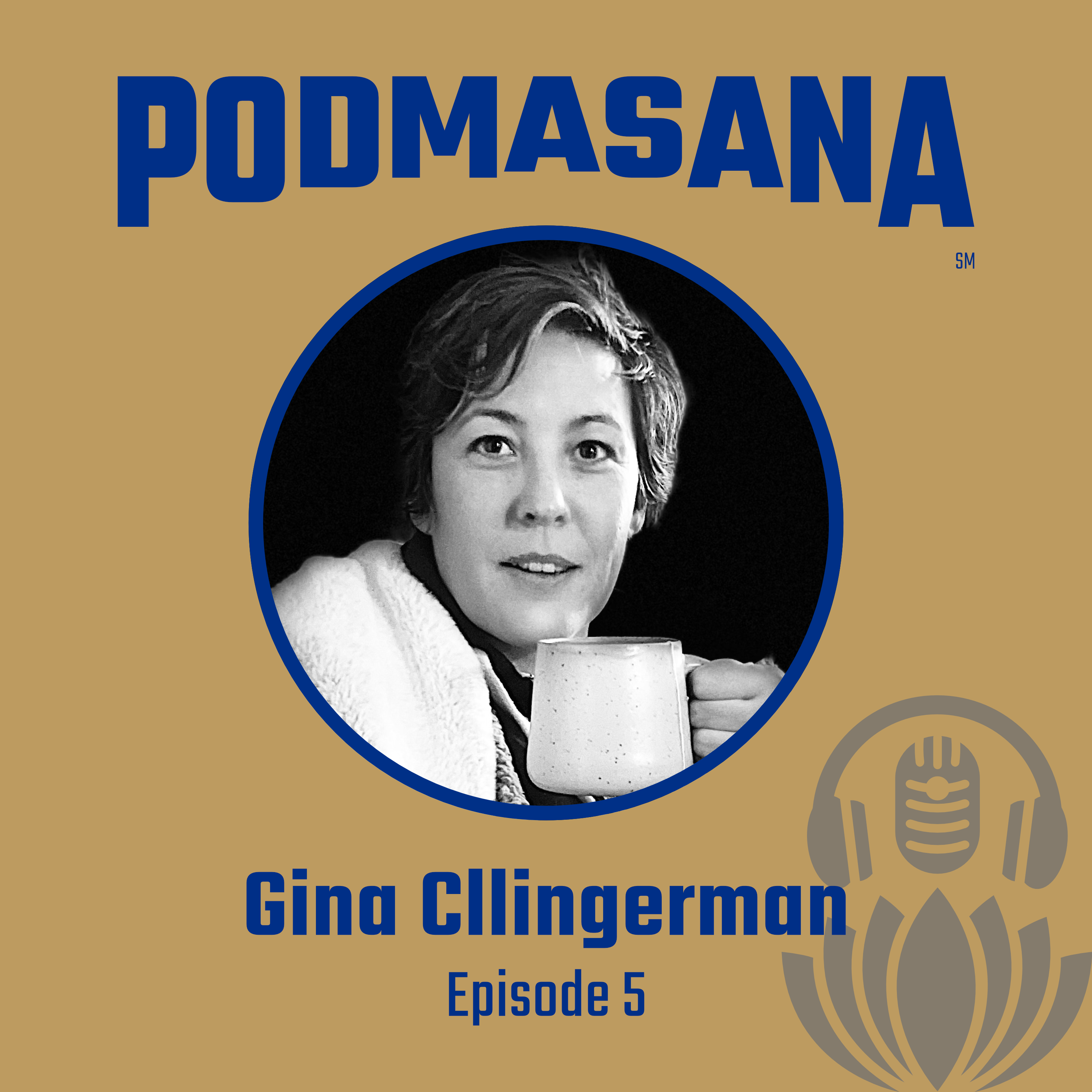
Sometimes the practices that save us begin in the most humble ways. A borrowed VHS tape, a weekend at the library, a small class about to be canceled. Today's guest, Gina Clingerman, discovered yoga through exactly these ordinary moments, never imagining they would become the foundation of a profound journey of healing and service.
Gina's path to teaching wasn't driven by ambition or career goals. She entered her 200-hour yoga teacher training while navigating what she describes as a profound and growing depression, simply hoping to find steadier ground within herself. Over eight months of intensive weekends, practice, and self-inquiry, something shifted.
When her favorite class at a local studio faced cancellation, she volunteered to step in. And that small act of service has now sustained her teaching for over 12 years. As the first in her family to attend college, Gina brings an inquisitive scholarly lens to her practice. Her academic background in English literature, Native American literature, and anthropology
informs a teaching philosophy rooted in curiosity, cultural awareness, and the profound question of what it means to be fully human.
Her ongoing studies in trauma-informed yoga, polyvagal theory, and somatic practice reflect a commitment to understanding how we heal, not through having all the answers, but through the courage to simply be with what is. She's trained with renowned teachers, including Bernie Clark, Scott Moore, and
Hala Kori, continually deepening her capacity to hold space for others. Gina describes her yoga practice as a refuge in an overwhelming world, a place to soften, release judgment, and meet ourselves with compassion. Her teaching invitation is simple yet profound. Pause, breathe, reconnect,
and discover what emerges when we let go of external expectations and drop into deeper presence.
Brendon (02:29)
in this episode of Podmasana, join us for a conversation about finding healing in unexpected places and the transformative power of simply showing up.
Part Transition (02:41)
Part One, Early Days and Coming to Yoga.
Brendon (02:46)
Gina, welcome to Pod masana
Gina Clingerman (02:50)
Thanks Brendon for having me on.
Brendon (02:52)
Gina, you discovered yoga through borrowed VHS tapes, interestingly enough, and ⁓ finds at the library in your late teens. What was it about those early practices that drew you in even without a teacher physically present? What were you looking for at that time in your life?
Gina Clingerman (03:13)
Well, I was really into martial arts at that time and I was taking taekwondo and I love taekwondo because when you're doing, so there's a couple of things that you do in taekwondo. You do Poggies, which are called forms. And then you also fight. And I loved the Poggies and I loved the forms and the fighting forms, but I didn't really like the fighting because
it took me into a place inside myself that felt like the best way to describe it is kind of like a berserker kind of energy where every time I would go to fight, I'd always be like, I don't want to hurt this person, but I would get really ramped up inside and
A couple of times I had some pretty intense fights where like I just could not, I could not come. I was a different part of myself that I didn't really like. And then I found these, friend of mine gave me a yoga tape and we did it together. And it was, it felt like the focus of Apagi.
without the fighting. And so in Taekwondo, would, when we would start, it would, you know, we would do a philosophy section, which I loved. We would do warmups, which are really great because you're moving your body and you're like in your body and you're doing things in your body. We would do forms and then at the end we would fight and I hated, I hated sparring. I did not like it.
I just really didn't want to hurt people. And when I would go into those crazy places where you're really ratcheted up and you just can't stop yourself from being kind of aggressive and violent, I just did, I did not like that. it felt too much, you know, it felt a little bit scary. Like, Ooh, I could just keep fighting. I could just become this, you know, and
Brendon (04:53)
Mm.
Gina Clingerman (04:55)
Yoga was like the grounding of the Poggies or the grounding of the forms. And in some of the videos, not all of them, but in some of the videos, you've got a little bit of philosophy, a little bit of meditation. And that's what I felt like my system really needed, not the violence, not the fighting. so yeah, so I kind of started to switch over into yoga and less into
the taekwondo and the fighting stuff. I just didn't like the fighting. Every time we'd have to do a tournament, we'd have to do these tournaments all the time and you have to fight to get your belts. I just dreaded it. I dreaded it. I didn't wanna go to the tournaments. I just wanted to do the philosophy and the forms. And so yoga was a way that I could have that same energy without fighting and being violent.
Brendon (05:36)
Mm. I can really relate to that, Gina. I, I've joked with friends and family over the years that my draw to the East probably began with Teenage Mutant Ninja Turtles and Karate Kid. Yeah. And interestingly enough, there's something with that Splinter character. So I really appreciate what you're talking about. And yeah, if I was still in karate, I'd definitely be more of a Miyagi-Do.
Gina Clingerman (05:48)
Splinter!
Brendon (06:01)
a pupil than a Cobra Kai one, I suppose. Yeah, yeah. So I like that answer. Yeah.
Gina Clingerman (06:03)
Totally. Yeah.
And I had teachers who were like Miyagi-Do and then I also had Cobra Kai teachers. And, you know, I did Judo for a while too. And I didn't know at the time, I didn't know that I was having a panic attack, but I had had a bad accident and I'd broken a bunch of bones in my body. And then when I healed, I went back to Judo and
Brendon (06:25)
Mm.
Gina Clingerman (06:27)
The first sparring that I had to do in judo, I got flipped and thrown onto the mat, which normally would not have bothered me, but I had a total meltdown panic attack. And I just, didn't know it was a panic attack at the time, but I was like, I can't go into this aggressive energy. Like it's just too much for my nervous system.
I didn't have those words at the time. These are 2025 words. This is 2025 knowledge. At the time I just knew I am freaking out and I cannot go into another sparring match.
Brendon (06:58)
in college, Gina, you studied under an instructor who's teaching, as you said, deeply reshaped your connection to the practice. Can you describe what shifted for you in that experience? What did she teach you that the VHS tapes couldn't?
Gina Clingerman (07:13)
Yeah, the VHS tapes were more like alignment based and kind of like a fluffy spirituality. Like, you're so good, keep going, you know? And you just do that, because that's what you have access to. At that time in the 90s, like yoga was not really a thing. It was like, here's a video. There weren't a lot of yoga teachers.
Then I had a yoga teacher at Sheridan College when I was going to school there and she was great but again it was really different and then when I was taking yoga in college when I went to ⁓ UW down in Laramie, I was going to blossom yoga studio and Emily Brown was teaching which of course, know Emily and I Don't know man. The way she taught
was almost like therapy in a way mixed with yoga. I mean, we would get into these poses and she would just say things like we're in this tree pose and she's like, feel yourself be grounded, but like feel all the stuff that's breaking away too, you know, and you're like, ⁓ yeah, I do feel that. The gentle nudging of awareness deeper in that class, more of an internal like, what is your experience?
in this pose, not just what's your body's experience, but like, what's your emotional experience? What's your spirit's experience in this pose? It kind of blew the lid off of...
off of me in that time because it just, I'd never taken a yoga class like that before. I'd never taken a class where someone asked me to be myself in the pose and to be inside the experience of myself and to have meaning there or to even think about there being meaning there. The yoga from the videos and the other classes that I had taken at Sheridan College,
They felt more like exercise, right? Emily's class felt like an emotional cleanse or an emotional cleanse slash a spiritual invitation to get to know yourself better, to be a more full human. That really changed my experience with yoga.
Brendon (09:17)
Hmm. And as the first person in your family to attend college, ⁓ studying English literature, I believe with an emphasis on native American literature, and then eventually anthropology, did these academic pursuits influence your eventual pursuit of yoga and, ⁓ spiritual practice in any way.
Gina Clingerman (09:36)
Well, I've always been super interested in humans. when I was a kid, had, there was a book at our house that was like, I think it was like native tribes of the Northern Plains or something. And I just devoured that book. And then I somehow I got my hands on an encyclopedia of humans and it was just like all of the cultures from across the world. And I just remember devouring that book. So I think.
I think the answer ultimately is yes, because all of the things that I'm interested in learning is like, what makes us human? From all different walks of life, all different cultures, we're all kind of searching for the same thing as, I think we're really ultimately searching for ourselves and maybe a reflection of ourselves in something bigger or broader or more.
spiritual is kind of a word you could use for that, but maybe mystical. books have always been a safe place for me, always. They've been a way to get out of reality. They've been a way to grow my knowledge and figure things out and
especially storytelling. think that's integral to who we are. I mean, that's how we evolved. have oral traditions, every culture has an oral tradition. Even quote unquote, you know, white culture has oral tradition, we that's how we evolved as beings. And so I think those things dovetail really closely together because yoga has such a rich oral tradition as well. the stories of how the poses come about or the stories of
how the cosmology of that viewpoint, of that worldview is also richly embedded in stories. mean, everything's a story. Being a human is a story. I don't know if I was really conscious of it at the time, but I think there's always these unconscious things that pull us along, and words and stories and books.
have always been there for me and they kind of build on to each other, you know, even now in my reading practice, which is funny to say that you have a reading practice, but I do, is, you know, I'll finish a book and as I'm contemplating what was happening in that book, it will either remind me of a book that's that I want to read or it will remind me of a book that I read that I now want to revisit. And so there's always kind of a string or a thread moving through those stories that kind of pulls me along.
Brendon (11:58)
Yeah, it's almost as if, although you're probably trying to choose what books you might be reading, it's almost kind of like something's guiding you from book to book.
Gina Clingerman (12:07)
Yeah, like an energetics of ideas and connection and collectivism.
Brendon (12:14)
Mm-hmm. So you entered your 200 hour yoga teacher training while navigating what you describe as a profound and growing depression. And I'll say that takes tremendous courage. What made you decide that yoga training might help you find steadier ground? What were you hoping to discover?
Gina Clingerman (12:37)
yeah, that was a really intense time in my life. I had just been diagnosed with depression. I knew I had depression. I mean, I've had it since I was a little tiny kid, but it always felt like a friend and it felt manageable. It felt like, yeah, this is just how I am. A deeper kind of way of living that's sometimes melancholy.
But in my 30s, man, things just got overwhelming. You know, I got married, I moved to a different town. I had ⁓ my first really intense professional job. Didn't have a lot of connection in my life in terms of friends. Like had long distance friends, but not a lot of close friends in the town that I moved to. And...
started losing my memories weren't working right. Like I would just lose stuff and I started to feel like I was kind of losing my mind a bit. So I went to the doctors and thinking that like, you know, I had something wrong with my memory or my brain. And after a couple of appointments with this really great doctor, he just sat me down. He said, look, you have depression and anxiety and
you're going to have to figure this out if you want to get back on track. And I have never been a medicine person. I mean, I've never been like a person who takes medicine or pills, you know. So to me, just taking a pill didn't seem like a great solution to what was going on in my life. And my
I did have one, my best friend in town, she started taking me to yoga classes again. kinda, after college, you know, there was not a lot of studios. This was at a time when yoga was maybe on the East and West Coast really big, but not in the West, not in Wyoming. So there was one little tiny yoga studio in our town.
and I started going and we went like once a week and it was great and I started to notice I feel a lot better I feel more steady and then I started to go every single day and the studio owner
she was really struggling because it's hard to run a yoga studio. It is not a money making deal here. And she kept saying things like, well, I don't know if I can keep the studio open and I'm struggling. And I thought if I don't have this practice, I'm not going to be here. Like I'm not going to be safe.
And I was doing a work trip. went to Saratoga. I was on a work trip to Saratoga. And I thought, let's Google yoga around here, see if I can find a yoga studio. And there was Blossom. And they had just started their 200-hour teacher training. And I thought, who better to train with than Emily, who'd already kind of opened me up into this different way of experiencing yoga, more of a mystical, spiritual, emotional growth way.
And so I just signed up on a Lark. mean, it was, my journey to yoga was not like, I want to be a yoga teacher. It's like, I just want to survive my brain. I just want to get through a day without thinking about not being on this planet.
And it was, a real experience for me because I did feel like I was on the fringe, you know. And I think now it's more common for people who are going through mental health issues to sign up for yoga teacher training, but I didn't sign up to be a teacher. I signed up because I needed to teach myself how to be more steady in my brain, in my body, in the connection of those two things.
Brendon (15:36)
you
Gina Clingerman (15:55)
I really didn't mean to become a yoga teacher. And that experience at Blossom was, who it was a gauntlet. It was a real time of deep transformation, but also like excavating a lot of sadness and a lot of heavy feelings that are hard to carry with you.
And that was a real hard time for me, but it was also an incredibly beautiful time full of a lot of growth. But I will say that growth is not an easy thing, right? Like it is, it is work.
Brendon (16:29)
so you're hinting a little bit at that training experience and it was over eight months unfolding over one intense weekend at a time with practice happening in between. said it was equal parts illuminating and challenging, much like life itself. Can you take us into one of those challenging moments and what you learned from pushing through it?
Gina Clingerman (16:53)
Yeah, I think that the biggest challenge for me was we did a weekend on trauma sensitive yoga. And I mean, I was raised in Wyoming by two really stoic people. And I always considered myself like a very tough individual, like I can get through anything kind of mentality. And so we're learning about trauma.
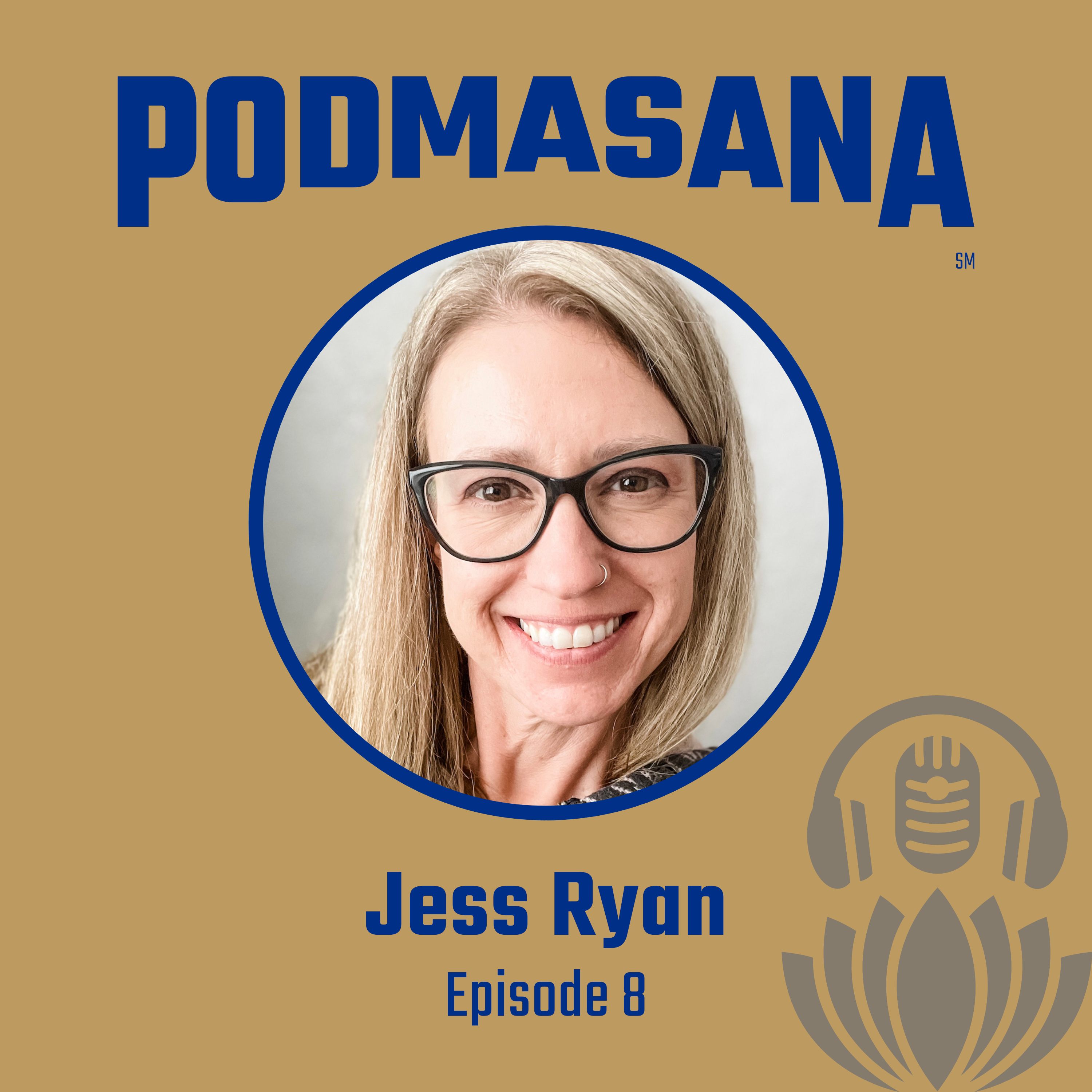
And I'm like, oh yeah, I fell off a cliff. have trauma. have trauma in my, physical trauma in my body. I broke my back. I broke my pelvis. I went through that experience. It was incredibly painful. The most pain I've ever been in in my life. I've had chronic pain from that. So like, know, I know trauma. I'm thinking this as we're going through this, through the lessons of that weekend. And Jess Ryan, she had a list up that was like, here is how trauma manifests and
As we're going through that I just I felt like my like the bottom of myself just fell out because it was like ⁓ check ⁓ Check to that. check to that by the time we get through the list. It was like Trauma isn't just getting hurt. It's not just having a physical injury. It is like encoded in your cells now and
the words, what word would I use? Amazed, bottomed out, like absolutely saddened to recognize that like, I probably have PTSD. That recognition, it kind of in a way broke something inside of me, this idea that I was super tough and that I could handle anything. In seeing how
here's the ways that trauma manifests in a life. And it was like, I have like all of these but two. It was like, maybe I'm not as tough as I thought I was Maybe my struggle is actually like my body's trying to process this and the way that it comes out is like PTSD hypervigilance, like an inability to just be comfortable in any situation even in my own home, right? Like,
Brendon (18:51)
Hmm.
Gina Clingerman (18:57)
a loud noise goes off and I'm jumping up and looking for, a weapon, which is a weird reaction to have. So that really rocked me to the core. was like, damn, there's more going on here than I was aware of. And like I came to yoga to help with depression and mental health. And I
I'm in this intensive weekend realizing that like I might have more going on than I actually knew from an intellectual standpoint. Yeah, that really shook me really shook me and ultimately my path in yoga and through yoga led me to go to therapy. Thank God it did. ⁓ But it took me about, you know,
Brendon (19:38)
Hmm.
Gina Clingerman (19:43)
I've been teaching yoga for 12 years. it took me about five years to get to the point where I was like, I need to go to therapy and I need help that isn't just yoga. Because I think I thought naively as I went into yoga teacher training that like, if I just know enough, I can like save myself. And that is true to a certain extent.
But I don't think it's just through yoga that you can save yourself, right? Like I think there's other things that some of us may need to do, like maybe go to therapy or, you know, do other modalities alongside yoga. I think yoga is a really powerful tool for helping us heal. And it's just one of many tools.
Brendon (20:25)
was thinking something along those lines as you were saying those words and how it's a tool set that maybe helped to give you the awareness to maybe investigate, other avenues, of healing and maybe absent that awareness. Maybe it's hard to say what that might've looked like, understanding that there's multiple tools out there for sure.
Gina Clingerman (20:44)
Yeah, and I think the physicality of yoga, the invitation to awareness of the physical body and how that manifests with the emotional body and then also the mental body. And this is something I teach to in my classes, you know, like.
I like to draw my students awareness to like, what's going on physically for me? How does that feel emotionally? Or is the emotions affecting how I feel physically? And then can that be linked to where my mind is? That invitation into that, you know, mind, body, spirit, and a lot of yoga teachers talk about that this is all integral and it's all related, mind, body, spirit. It's not three separate things. It's one thing.
that that invitation to that can open you up to a place where you're like, ⁓ I might need more help outside of myself. Like maybe I can't do this alone. When I first started yoga, I thought I can do this alone. I can be on this journey. I can heal what I need to heal on my own. And then five years in, it was like, no, I can't do this alone. Like I need help from other people who have more training and more tools than I have. yoga is an excellent tool.
but it's not the only one.
Podmasana Plus Promo (21:56)
Hey listeners, Brendon here. If this conversation is resonating with you, imagine going even deeper. Podmasana Plus members receive early episode access, weekly spiritual insights through our bonus Podmasana Portal Show, and connection with a community of like-minded listeners. Our enlightened circle includes monthly live sessions with guests, personal shout outs,
and discounts on yoga classes with me. There are three membership levels starting at less than $5 a month 20 % off annual plans and some include free merchandise. If this feels right for where you are in your journey, visit podmasana.com slash plus. That's P-O-D-M-A-S ⁓
Thank you.
Part Transition (22:48)
Part Two, Teaching Journey and Evolution.
Brendon (22:53)
Gina, you didn't set out to become a teacher, but when your favorite class was about to be canceled,
You volunteered to step in. What was that first class like? What did you discover about yourself as a teacher in those early days?
Gina Clingerman (23:11)
Yeah, that first class felt rough. my goodness. Because I wasn't even done with teacher training yet. Like this was about maybe three quarters of the way through my teacher training and my favorite class at the studio that I practiced at in my town.
Power flow, of course. If you have a lot of trauma, power flow is such a great way to start because you're just, a person who is trying to get through a trauma load is just like, I need to move my body in the most intense way possible. So I loved that class and the idea of it not being available was super scary to me. And the studio owner was well, you could just teach it. And I was like, I could not.
And she's like, well, it's either that or it doesn't exist. And so I was like, OK. So my first class had two students in it, both of whom had been practicing Power Flow with me for the whole time we were there. And so it was lovely in a way that these two individuals who are just magic were like,
they were they were just like yeah we're gonna do this with you like we recognize that you're not even done with your teacher training and we also don't want this class to go away so we're just like here for whatever happens and i was so nervous my gosh i tell you what when
people who are taking a yoga class and are not teaching it, they do not know how hard that is. You have to breathe and talk at the same time. You have to do alignment cues and breathe and talk at the same time. And you have to do that in your body sometimes and show and demonstrate. It is so hard. I just remember feeling like I couldn't breathe the entire time. I was just thinking like, I'm supposed to breathe and I'm telling them to breathe, but I can't breathe and I have to talk. And now I've got to have the most perfect alignment in my body. It is
so intense. It's so hard. I felt like a total failure at the end of that class. I just felt like what am I doing? This is ridiculous. I don't I don't know why I'm doing this. And they were so gracious and kind and it was my friend Maggie and my friend Dennis. They were just so gracious and kind to me and they were like that was great and it was not great.
But also I wonder if that's the inner critic because even now as a teacher, I teach a class and I think, what am I doing? And afterwards people will be like, that was exactly what I needed to hear. And you're like, well, I'm glad because you come out of a class sometimes and you think that was the worst class I've ever taught. But yeah, I think that it is very difficult to teach a class, but it's also.
When you can see the look of relaxation on your students' faces or when you can watch them move through something difficult, like a Power Flow class, and at the end, it's like their faces are like smooth and you feel their vibration and you're like, you got smoothed out from that. You got what you needed from that.
That is a powerful feeling and that has powered my teaching for a long time. being able see people's transformations from an hour long class.
Brendon (26:12)
I think there probably isn't a yoga teacher out there who couldn't deeply connect with what you've been saying. On a host of levels. So over 12 years of teaching, you've evolved and deepened your relationship with yoga. How has your teaching changed from those first classes to now? What have your students taught you about the practice?
Gina Clingerman (26:36)
I learn as I teach right it's so one of the things that I learned after teaching power flow for a really long time was that
It's a great practice when you have a lot going on internally and you need to get that out of your body. But as you get more refined in your practice, it's not as powerful anymore. me, it wasn't. I started to slow things down. I feel like when I first came to yoga and I had so much trauma and PTSD that needed to be exercised literally and figuratively.
Powerful was a great place to start, as I started to get more refined and my awareness became more refined as well, I had to start slowing things down so I could feel more and I could get, I hate to use the word deeper, but it is deeper because it's a deeper awareness of inside what's going on.
And as you start to slow things down, you can actually feel the alignment happening in your body. And it's your alignment, right? So another thing that happened and changed for me was I stopped believing in an alignment-based yoga because all of our bodies are different. I started to take more anatomy classes and I was realizing that like my anatomy is not the same as your anatomy. Like you're a really tall guy.
what's going on in your spine is different than what's going on in my spine based on the shape and size of your bones, the shape and size of my bones. I also have a broken back. I still have a broken back. So what's going on in my broken back that not everyone knows about is going to be different than what's going on in a person who doesn't have a broken back.
For a while I trained with some alignment based teachers who were very into this is how a pose has to look every single time in every single body. And it didn't work with the body that I have.
after my accident, things aren't symmetrical. A body isn't symmetrical anyways. That's just the one thing we, as yoga teachers should always be, I feel like should always be telling our students is like, your body's not symmetrical. You use one half of your body differently than use the other half. And so,
But bringing that awareness to it means that you can not make it symmetrical, you'll never make your body symmetrical, but you can even out how sensation moves between the two different sides of your body. And that can bring more cooperation between the sides of our body and how we use it, but also more continuity between the fluidity of the body.
So I started training with folks who were less into alignment and were more into like the sensation of the pose and how does that feel for you and teaching people how to be in their own unique bodies. And that's really where I've landed now as a yoga teacher is that if that doesn't feel good, don't do it.
sure there's a level of discomfort in every pose or every shape that we put ourselves into especially I mostly teach Yin in right now so in a yin class you're not going to be super comfortable you're going to have a little bit of discomfort discomfort is okay pain is not and so working through that and working with a lot of students who are of all different ages and all different mobility types you start to recognize that not all
cues land with everybody. You can't cue a pose and everyone's going to get there in the same way. ⁓ What's more important is watching my students, seeing who's struggling, seeing who's doing okay. If someone's really fidgeting or can't or you can just tell it's not good, getting over there and being like where what's going on? What are you feeling? Where are you? Where is that in your body and how can we make this better for you? Because your body is unique and
Brendon (29:55)
Hmm.
Hmm.
Gina Clingerman (30:20)
some people, I know we have this thing in yoga where we want to be like, you can do all the poses. Well, maybe you can, but maybe you have a certain shape of femur head and you will never be able to do lotus pose for example. There's a lot of people who do not have just based on the shape of their bones. The their bones will not allow them to go into that pose. It's just how it is. I remember in our yoga teacher training, my friend Sarah was there.
I met Sarah at yoga teacher training. had one weekend where we were talking about compression and tension and proportions of the body. And our teachers had us sit on our butts in Dandasana. So your legs are straight out. And then they said, put your hands on the floor and then lift yourself up, lift your butt off the floor.
I have really long arms. I have incredibly long arms for a human being. My APE index, my APE index is very, very long. I have long arms. My friend Sarah has the tiniest arms. When she was sitting on her butt, her hands couldn't even touch the floor. My hands were touched on the floor and my elbows are bent out to the side like wings because my arms are so long.
Brendon (31:16)
Mm-hmm.
Thank
Gina Clingerman (31:26)
And so to push myself up off the floor and get my butt off off the floor is super easy. But for her, she couldn't even do it because her hands couldn't even be on the floor or they could barely be on the floor. So for her, she's gonna have to use blocks, right? That's just because of the length of her arms.
And so moving through these trainings with other teachers as well, where you're like looking at proportions, you're looking at bones, I mean, we can't see the shape of our bones, but we can feel them through tension and compression. I just started to be like, yeah, it's not a one size fits all. Like it's very, very unique and it should be. And as a teacher, I want my students to know that because I think
Sorry, this is getting to be a long answer, but I think it's important. I think one of the downfalls of yoga is that as a capitalistic, patriarchal, comparative society, we're always beating ourselves up about how we are and who we are.
as we move through this life. And I did it myself, right? I went to yoga and I used my practice to beat myself up about how good of a person I was based on how I can move my body. Ridiculous now in a 20, 25 in Gina mindset now, that's ridiculous to me that I did that. But when you're a depressive person or when you're a person with mental health issues and you're just finding something that's good about yourself that you can cling to, you'll do it.
And so I think that like all humans, use whatever, our yoga practice or our personalities to prop ourselves up. there were just some, like I can do a great forward fold standing, but a seated forward fold, I can't because of the way that my hips are. I just can't do it.
Brendon (33:08)
Hmm.
Gina Clingerman (33:10)
So when I'm standing, yes, I can get a deep, awesome opening. But when I'm sitting down, that feels horrible in my body. And then I see someone putting their head on their knees and it's like, well, I'm not so good, you know, because I can't do that. And it's like, but my, shape of my femur heads will not allow me to do that. But when I'm standing, I can maneuver my femur heads to where I can get down into that fold.
Where I'm going with this is that I have relaxed myself in such a way as a teacher to, I don't want my students to judge themselves based on how deeply they can get into a fold or a pose or a shape. I don't even want to use the word pose in class anymore. I mostly use the word shape because I think the pose embodies much more than
Brendon (33:41)
you
Gina Clingerman (33:56)
we give it credit for, right? There's like levels of judgment within that. Like how flexible, yes, an idealized form. How flexible are you? How deeply can you go? Like that kind of stuff. And I just, I really think it's like, how are you experiencing the shape in your body?
Brendon (33:58)
Hmm. An idealized form.
Gina Clingerman (34:13)
When you go into this shape, how does it feel? Does it feel not okay? How can we move the bones, the structure of the body to make it feel more accessible to you with the body that you have? That's where I've landed now as a teacher. And the other place that I've landed as a teacher is more of an internal practice.
What everyone else is doing around you is none of your business. You're on your mat to do you. You are valid. You are here to be yourself. This is a space you can be yourself in. Whatever comes up for you is valid. If you're mad, that's valid. If you are sad, that is valid. If you are crying, that is valid. If you are ecstatic, valid. This is your experience of yourself through this modality.
And there's no judgment. Especially in yin yoga, I try to walk my students through a space where we can be in awareness of our bodies, in an awareness of our emotional state, and also an awareness of our mental state without judging it. Knowing that the ground is the body,
The self is the sky, say, the ground is the body, and the rest of it is the weather. And that we're showing up for these moments to be observant, but not to judge. And so that's where I've landed. It might feel a little woo-woo, but I think that it's really an invitation to have an hour, an hour and a half. I like an hour and a half class. I don't teach hour long classes if I can help it.
I really think an hour and a half is what the body needs to move things through and then to still have integration time.
And that is a space that's sacred where you just get to be you and you can let go of all of the stuff that's going on in the crazy burning world. You can let go of your personal to-do list. You can let go of the mental chatter that is in the background. And you can just simply exist for an hour and a half moving through shapes, experiencing the shapes in your body.
Brendon (36:23)
alluding to a slower pace or taking time, the pandemic shifted your learning online and which you describe as an unexpected gift in a difficult time. And it was a difficult time for, practically everyone that opened doors to trainings you otherwise wouldn't have accessed. What teachers or trainings during that period most impacted your approach to yoga?
Gina Clingerman (36:48)
yeah, the pandemic was really hard for all of us. And I don't think we're, I don't think we've digested that or even made our way through it. For me personally, it was a gift. I'm a deeply introverted person. I did not know that about myself until the pandemic happened. And when I got to stay home and work from home.
I didn't realize I was putting on the extrovert suit to go out every day. it was, mean, that's just been, as an introvert, that's a coping skill that you develop to be in the world. And I didn't realize
that I had developed that as a personality that I would step into every day. And so having, being able to drop that was amazing and step into a quieter version of myself that was more home-oriented was awesome. I've never gotten to experience my home in the way that I did through the pandemic where...
It was like an oasis, a safe place that just, it wasn't just a place that I went to eat dinner and go to sleep, you know, when you're working a regular nine to five job, you spend 40 hours a week doing other things. And then you come home and your house is kind of like your receptacle, but.
so it was great because Bernie Clark started teaching online a weekly class. He still does. Excellent. I highly recommend going into his class. So I got to practice with Bernie for once a week for a long time. I still do every once in a while jump in there. that was amazing just to have someone. What was so amazing about the pandemic was that I got to be a student again, I guess.
because you are taking classes from other people. So you don't have to think about what you're gonna do in your body or where you wanna go. Somebody else is doing that for you. And that's a real luxury. That is a gift, I have to say. That is a real gift. I started taking online trainings with Janet Stone, which I would have never been able to do in real life or life off the internet, let's say.
Brendon (38:30)
Mm. Mm.
Gina Clingerman (38:41)
and she had a lot of guest teachers who will do modules with her that were just phenomenal. Some of the things that I learned there was like a combination like there's a class in there in one of her modules and her trainings that's about
is basically like meridian yoga. It's like combining acupressure with like a slower flow class or even like a yin class where you're actually pressing on the acupressure points to achieve a certain thing as you're moving through a shape in your body that also corresponds to these meridians. And if you're a yin yogi, you know what I'm talking about.
those were awesome because it was just like, wow, how would I get to a training like that? it would cost thousands of dollars to fly, go find a place to stay while you're there. And then also trainings are not cheap. They're expensive. I, if you're a yoga teacher, you will never make back the money that you spent on your trainings. just will never, you never will.
Brendon (39:37)
Thanks
Gina Clingerman (39:38)
I do want to shout out to another awesome teacher who I discovered through the pandemic was Ada Lusardi. And she teaches in ⁓ the San Francisco Bay Area, I believe. I think.
if I'm right. See, sometimes you're kind of like, where is that teacher at? Because you're here in your place and they're in the interwebs. But she is an amazing teacher that I got to do a lot of classes with online. And she only offers one class a week online now, but during the height of the pandemic, I took a bunch of classes with her and what an enlightened teacher, super into anatomy and how to help you move through things in your body. Also
Brendon (40:00)
Hmm.
Gina Clingerman (40:17)
does more integrative things like with facial release as well and yoga, which is such a great combination that we just don't have a lot of that in the yoga world. And I enjoyed every minute of it. She's a fabulous teacher. Her queuing is spot on.
The beauty of the pandemic was that you could go and experience these teachers that you've heard about. Like I took some classes online with Sean Korn, did some with Hala Corey throughout that time. know, just you can pop into a class and be like, here's a teacher who has a great reputation. I will never be able to go to a class of theirs. Now the internet allows that. It was awesome. It was so good.
Brendon (40:58)
Hmm. So you've focused heavily on trauma informed yoga and polyvagal theory in somatic practice. What drew you to this work, Gina? And how has understanding the nervous system changed the way you teach and hold space for students?
Gina Clingerman (41:16)
Well, clearly it's personal, right? When I started going to therapy, my therapist was like, yeah, you have PTSD. And then as we dug deeper into things, she was like, yeah, you have, they call it C-PTSD. It's chronic PTSD. just means you've had a lot happening from the time you were a kid.
And so your system, your nervous system has never really known a place where it wasn't looking for safety.
That first teacher training, my 200 hour, so I'll have to say I did the 200 hour. We had that trauma informed weekend where we did all the trauma stuff and that really broke me apart. And then the next, know, then I'm teaching and then.
the following, not the next year, but the year after that I became a mentor. So I went back to the same teacher training that I had gotten my teacher training and I helped mentor for students through the training. The training had gotten larger, so there were a lot more students. And it was also a really good time for me as a person to just go back and revisit all of these, all of the material and do all of the practices again and see how things had changed over time. so being a mentor and helping
those mentees through that process. Also,
gave me more knowledge about trauma and their curriculum had changed. And so the trauma weekend, there was more about trauma informed yoga. And as I'm going through that, it's like, yeah, I don't want to be a teacher in a class. I've been a student in a class where someone comes and puts their hands on you and starts telling you this is how your body should be. And it's like, dude, I have a broken back you don't know about. Don't put your hands on me.
I love that now as teachers were in a landscape of consent where it's like, can I touch you? No, OK, cool. Or yes, fine. But in that time frame, was really like there was this ideal that teachers could just come and put their hands on you. That can be incredibly triggering for someone who's dealing with trauma. And let me tell you, there is not a human being on this planet who doesn't have some form of trauma.
in their bodies or their brains. And so having gone through those experiences myself, I did not want to be that kind of teacher. I didn't want to be the person who comes into class and starts telling people that they need to dig through their trauma and excavate it in a yoga class and then move through it in a yoga class. That's not how it works. Another great teacher, and I don't know if she's teaching anymore.
but Paisley Ann Close, she did a lot of polyvagal theory courses that I took with her.
and we did this all online. She came and taught in ⁓ at our studio and she's amazing. I found her online and was following like her writings, her blog and her. She wrote a couple of ebooks and then she would have like this was before we had zoom really, but she had some podcasts you could download, which was just her queuing you so you could put them in your headphones and you could do a class with her through your headphones. It was
Paisley is amazing. Seriously, if she's still teaching, I highly recommend getting some classes with her. She's an awesome teacher. But she did a small group cohort during the pandemic where we did a couple, I can't remember if it was four weeks or six weeks on polyvagal theory and how you can work with the vagus nerve to help PTSD or chronic PTSD, CPTSD.
to retrain the nervous system really. If you have CPTSD, so you've experienced traumatic experiences as a child.
that's during a formative process of your brain. So your brain is still forming and those chronic traumas as a young child, they impact the formation of your brain. That's not something you can really undo per se. But what you can do is you can create safety in the nervous system through polyvagal practices. so Paisley taught that and that was amazing for me.
Brendon (45:09)
Hmm.
Gina Clingerman (45:14)
And a lot of just regular yoga does already do these things. But when you have the power of knowledge and the power of intention, and you can integrate that into a class that has polyvagal theory in it, or other practices that can help traumatized nervous systems find safety and balance, I think that can be really powerful. And your students don't necessarily have to know you're even doing that, right? Because sometimes,
a person who's traumatized and you're telling them how you're going to help them through these trauma practices that can traumatize them already. So, it doesn't have to be out in the open. But what we do know from the science is that these practices do help create safety in the system. They calm the system down. They create a place of balance. They create a place of grounding in the system. And that helps everyone, whether you have trauma or not.
Brendon (45:46)
Hmm
Gina Clingerman (46:06)
The fact of the matter is we live in a traumatic society. We live in a society that constantly hurts us. We do not live in a society right now that has the care of the individual in mind. And so when I come to class and when I'm setting up to teach a class, it's not that it's always intentionally in the front of my mind.
but it's present that like.
Everyone is coming to class with a little bag of stuff, right, with their baggage, and they're coming to class with their experiences. They're coming to class with what they've experienced through their body physically, what they've experienced emotionally and mentally. And you can't tell me that that bag doesn't contain some little T-trauma or big T-trauma in it. And so as a person who wants everyone to feel safe and held in my classes,
I personally believe that the only way I can be a really good ethical teacher to my students is to have a background in trauma-informed yoga, to understand how yoga does help with the negating of the trauma, whether you're aware of it or not.
But also if I don't know those techniques and I don't know how to integrate those into my classes, I can do a lot of harm to my students unintentionally and I don't ever want to come from that place. And I've been in classes like that where I've left and had to go out and cry in my car because shit came up that, excuse me, because things came up that I was not expecting.
Brendon (47:34)
Hmm.
Gina Clingerman (47:42)
I didn't know that teacher was gonna go to that place. you know, especially sexual abuse victims or people who are survivors of sexual abuse, yoga can be really triggering. And I don't ever want anyone to come to my class and feel like it was unsafe for them or to feel like I'm asking them to go in and open up a trauma or a wound.
that they cannot possibly handle in that moment. That's not the place for that. Therapy is the place for that, not yoga. Yoga is a place where we should always seek to make our students feel safe and held. And
or flight or fawn or freeze its entire life that there's safety to let the stuff be processed.
Brendon (48:24)
this.
I appreciate that in the discussion because, as someone with an anthropological background, it's interesting to think about how culture influences this too, there are some cultures that may be a little more demanding, with their approach to yoga. So I think this is a good opportunity to think about all that. And I'm curious, your academic background in anthropology and literature seems to bring a unique perspective.
to yoga teaching. How does your scholarly inquisitive nature show up in how you approach the practice and share it with others?
Gina Clingerman (49:02)
Yeah, I mean, I'm a constant reader. I read anywhere between 50 and 130 books a year, depending on what's happening in my life. I don't read to just read, like I read to be, if that makes sense. And so a lot of what I'm reading just gets, I get interested in it, get involved in it. And then I think about it in terms of well, how is this?
Like for an, here's a good example. I just finished reading this book a couple months. I just read it maybe two months ago called Raising Hair by Chloe Dalton. my God, what a good book. Such a good book. It doesn't seemingly has nothing to do with yoga, right? It's about her finding this baby hair.
and raising it to adulthood and that experience and what a gift nature is and how she, through this experience, is kind of more integrated into the natural world and starts to slowly, you know, kind of takes out these more technological things, like she's dimming her lights so that the hair has a more natural environment as it's moving in and out of her house. And she's finding herself that she's moving away from
bright, loud, et cetera, into a more grounded space. In one part of the book, she talks about, hares are very, very sensitive creatures. So if you try to raise them or domesticate them, they'll bash themselves to death on the cages. They will fight inside the cage that you imprison them in until they die. First of all, I found that to be incredible. She's like, this is why we don't have...
domesticated hairs because they refuse to be domesticated, which I think is absolutely wonderful in its own way. But then she talks about her experience of being with the hair and how she had to, even though she had great anxiety about the hair, the hair would go out. As the hair grew up, the hair would go out into the garden. And then finally it grows outside of the garden and it's going out into the world where it could be eaten by foxes. It could be run over by a combine.
It could be run over by a car. could be killed by a dog, right? And every day the hair leaves, she has all this anxiety and she's like, I just wanna keep this hair here and I wanna protect it and I wanna keep it safe and I wanna like make its world small.
This is sort of what's in the background of her mind. But then she's like, but if I do that, I'm actually making its life less rich, less full, less complex, less amazing. ⁓ And so she comes to this place where she's like, I just have to let go.
Brendon (51:28)
Mm.
Gina Clingerman (51:32)
and soften into this is how a hair is. This is the nature of a hair. And part of my nature is to want to preserve this hair and cling to this hair and create safety for this being. But if I want to truly experience this being, I have to release and let go of control. I can't control the environment. I can't control other animals in the environment. I can't control other humans in the environment. I can only control myself.
That struck me. mean, that's something I really want to write more about in my own for my own self. But I took that idea to my yoga class. And it's like, so if we're going to come into yoga, what are the parts of this that we can't control? are the parts? Where's the places we have to just let go?
And specifically as I was thinking about that idea, I was thinking about that in terms of myself is like, where in my life am I just gripping so hard? You know, like where in my life do I just have a death grip?
on all the things I think I control that really I can't. And can I treat myself like the hare? Could I let go a little bit more? Could I just let myself live in a way that's unpredictable, maybe scary, but knowing that like, this is a natural being in a natural world. And so these ideas work their way into my classes.
when I come in and and we're in a really intense pose, say we're in dragon pose in a yin class, that's a hard pose. Oftentimes we go a little too deep. So it's like, okay, what can we control here? Do we have to be so deep? Do we have to be so hard into that stretch that it feels like we're gonna lose our minds? Can we be softer? And that was really in what I took from Chloe's writing was really like, can we be softer?
And what does that look like? Does it look like coming out of the pose? Does it look like just letting the mind soften and not be so judgmental? Does it look like recognizing that when something bad happens to you, it's not the world out to get you. It's just life. So I'm a big thinker. I just like to think about stuff. And that's that's a coping skill that I developed as a child to get through some of the things I had to get through.
But it serves me a lot because it, I think in most books, almost every book, there are these underlying messages and because my intellect is the way it is, I can pull those out. And so it's not like I just read a book and put it on the red pile and it's like, great, that's off my list. It's like I read a book and then I start digesting it. And then as I'm digesting it, I'm bringing it to yoga with me because that's a place where I also do a lot of digestive work.
in my body, but in my mind and in my emotions. And part of what, when I first started teaching yoga, part of what I realized was that there's a bunch of people out there who need folks like me, who are not afraid to say, I don't know the answers. I'm also sad. I also have trauma. I also have PTSD.
and I'm a human being trying to be as gentle as I can with myself through this life. And you can also, you can either come and sit in that with me if you want, or you can also be like that if you want. When I first started teaching, I would just openly tell people like, I have depression, that's why I do yoga.
Brendon (54:38)
Hmm.
Gina Clingerman (54:54)
The amount of people who would come up to me and say, thank you for telling me that because I am struggling so hard or my God, the way you treat depression in your yoga classes and the way you talk about moving through things in your classes made me feel like I was okay. Made me feel validated. And I think as human beings, we live in a society that's like,
Ace the test, get the good job, have the kids, get your house, get all the things and then you're gonna be fine. But I don't think that's how it is. I think a lot of people deep down inside are searching for themselves or are suffering in silent ways and they don't know how to approach that within themselves or even with words outside of themselves.
And so when they see a person who can do that and like, I'm not falling apart. I'm not losing my mind. I'm also not ashamed of it. I think it shows people that there's a different way to be and that you don't have to be perfect. there's a saying and I can't remember who says it, but it's like,
Brendon (55:59)
Hmm.
Gina Clingerman (56:08)
You don't have to be perfect, you just have to be good. And so many of us are already good, you know? And we're trying for perfect and good is good enough. And I know that goes around in a big circle, but I think being an anthropologist, being interested in people,
Brendon (56:13)
Yeah.
Gina Clingerman (56:27)
has made my mind to be more open to all the things that we create and all the ways that we show up and exist. And how can we do that in a way that's life-affirming and validating and kind and compassionate and empathetic? We don't have to be perfect. We just have to be good. And I think stories help us understand that.
stories help us move into a space. And I just listened to a podcast the other day where they were talking about, I think it was Hidden Brain. And he was talking about they studied brains where there was a story involved versus reporting.
And when the brain was receiving the words based on reporting, there was just like a level of disengagement. And then when the story comes in, the brain changed in a different way to where the story just had a different impact. And I think that goes back to oral tradition. When we were prehistoric, we didn't have writing. We had stories. We are stories.
Brendon (57:17)
and I that goes back to all traditions.
Yeah,
Brendon (57:34)
Hey Podmasana listener. Yeah, you. I'm talking to you right now. Would you mind liking or starring the show or leaving a review on your preferred podcast listening platform? If you're enjoying this episode or the show, feel free to email us at feedback at podmasana.com. That's P-O-D-M-A-S-A-N-A dot com. Let us know what you think.
or share it with someone you know. Go ahead, hit pause. The show will be here when you come.
No, really. Go leave that review. Write that email or share that episode. It really helps out. Thanks a lot.
Part Transition (58:18)
Part Three, Current Practice and Modern Life.
Brendon (58:23)
Gina, you describe your yoga practice as a place of refuge where you can soften.
release judgment and meet yourself with compassion. In our current complex and overwhelming world, how does this refuge function for you day to day? And what does your personal practice look like now?
Gina Clingerman (58:42)
it's been a long journey to get to that place. Yeah, that's a good question. Sometimes I don't practice during the day. Sometimes the most compassionate thing is to not get on my mat. I do a lot less intense yoga now.
really exploring restorative yoga. And of course, I'm a certified Yin yoga teacher. I primarily teach Yin right now. And mostly those two things are serving me because I spent, gosh, I spent a good decade trying to beat myself up with my yoga practice. And I didn't know it was beating myself up. I thought it was in the guise of self-improvement, right?
until I started going to therapy and I realized, ⁓ I'm using yoga to judge myself. using the way that I can do yoga and how flexible I am to be just another measuring stick for how good of a human I am. gosh, this is making me get a little emotional, but
You're a good human whether you do yoga or not. Yoga's not gonna make you any better of a human than you already are. When I started going to therapy, I was terrified that what my therapist was gonna uncover was that I was a bad person.
I'm telling you this because I think it's important, even though it's hard and I might cry. I kept waiting for that shoe to drop as I was in therapy. I kept waiting to come to some memory or some place where I just realized, man, I really am a bad person. Like I'm just a bad human. I have never gotten there. I've never gotten there. Everything I have uncovered has been
Brendon (1:00:03)
Hmm.
Gina Clingerman (1:00:20)
things that were passed down to me, programming that's been societal or familial. And that doesn't mean that my parents are to blame for any of this. They just got handed what they got handed and they helped hand that to me, right? So this is intergenerational trauma. As I dig through these layers, what I find is that I am a kind human. I'm a compassionate human.
I care about people around me. Even if I don't agree with those same people, I still care about them and their wellbeing. And so what that looks like in terms of a practice as I move through every day is reminding myself that I'm good. Maybe I get on the mat, maybe I don't. Maybe that day it's not on the menu. Maybe it is on the menu and it feels really good in my body.
I'm also dealing with adrenal fatigue right now, which we don't call it that anymore. It's called HPA access. Dysfunction. So basically it's like your hypothalamus, pituitary and...
Brendon (1:01:13)
Hmm.
Gina Clingerman (1:01:17)
adrenal glands are not functioning right and it's it's a stress disorder basically it's like chronic stress can leave you feeling depleted and so that's been hard for me because old Gina would get on her mat and do an hour long class that's a flow class or whatever she would do whatever but the place that I'm at right now is like I don't always have that available for my body
And it's hard. And it's hard in a world that uses our practice to judge us, right? Or that we use our practice to judge us. I used to show up to yoga classes, do an hour class, hour and a half class, be kick ass at it, and feel really accomplished.
And now I'm in a place where like, what's really most needed in my body is a restorative class, is something that's restful, is something that allows my nervous system to be safe and held. And there's places in my practice still for flow, but it's not like it used to be. And that takes a lot of compassion to be like, it's okay to be in any.
yoga practice. doesn't have to be a flow class. It doesn't have to be power flow. It doesn't have to be an hour long, maybe it's a half an hour, like five restorative poses and you're done with your practice. But I also think we use that, idea of a personal practice.
to judge ourselves, hold ourselves to some standard, to say this is who we are. And honestly, Brendon, who I am as a human being that lives in a really loud, complex world that's constantly vying for my attention. And it's also constantly telling me that I'm not good enough, that I'm not cool enough, that I'm not sexy enough, that I'm not all of the things. And so
Brendon (1:02:50)
Mm.
Hmm.
Gina Clingerman (1:03:09)
It doesn't feel radical when you're practicing it, but it is radical to sit down and say, I'm actually a really good person and I can't do a flow class today, so I'm going to lay on the ground. Maybe I just do Shavasana.
Maybe I just go lay in the grass. Maybe I do some restorative yoga in the grass. Maybe I just put my feet on the ground today. And that's maybe all I can do. Does it make me less of a yogi? I don't think so. In some ways, I think it makes you more of a yogi. Well, less and more. What are those words even mean? I think what it is is that it's like each one of us has to decide.
Brendon (1:03:36)
Hmm.
you
Gina Clingerman (1:03:47)
Where does our practice stop being a tool of judgment and where does it become a tool of awakening? And maybe not even awakening, maybe it's a tool of healing, maybe it's a tool of expansion.
And what that's going to look like is different for everybody. But in the West, especially, I don't know about the East. I've never been to India. I also want to say I'm not an expert in any of this. I'm just a person who's incredibly inquisitive and will learn as much as I can about whatever I'm interested in at the moment. But especially in the West, we have these hierarchies of judgment that we impose upon ourselves as human beings.
We are organisms. We are nature. And I know if you're in the natural world or you're in the self-help world, you're gonna hear like, we are nature. We are nature. I am an organism with millions of billions of organisms inside of me, right? Like I am an ecosystem and I live in an ecosystem.
I also live in a system that tries to judge me and place me in a box and tell me that I'm not good in order to sell me stuff, in order to subjugate me, in order to extract resources from me in the form of attention and energy, right? And so it's like a practice that keeps you whole and sane.
can't also be participating in the system of subjugation that we already live in, right? So like, I've had to really deconstruct myself as a yogi. And that's been really hard. What does it mean to be a yoga teacher? What does it mean to be a yoga teacher in a colonial world that's taken a practice that's not from this culture and...
Brendon (1:05:27)
Hmm.
Gina Clingerman (1:05:37)
made it mainstream? Like these are questions I think about all the time. And so I don't necessarily have a great answer for it. But I think the way that I'm doing my quote unquote practice now doesn't really look like a yoga practice, right. And some people would say, well, that doesn't make you a yogi. But I think as a being, we're all kind of yogis, right? We're all looking for the thing that makes us whole.
Brendon (1:05:41)
Mmm.
Gina Clingerman (1:05:59)
And maybe that's a very formalized yoga practice like Ashtanga. And maybe it's a blend of like different kinds of yoga and therapy. I think it's different for everybody. For me, it's constantly changing. And ⁓ I just had a discussion with a nice yoga friend that I met this summer.
on a project that I manage and we were talking, he was asking me about teaching yoga and I said, yeah, I feel like right now I'm really negotiating a lot of things about being a yoga teacher. Right now in this moment, with the language that we have around consent and colonialism and cultural appropriation, it's a weird line. Not only as a teacher, but as a person who uses these practices in my life.
It's just different every day.
Brendon (1:06:46)
Yeah, it can definitely ⁓ manifest differently for different people. And earlier in the discussion you had talked about, ⁓ people just need to be good. as someone who came to yoga through depression and has spent years studying trauma-informed practice, what wisdom would you share with people who are listening and maybe struggling right now? And how could yoga practice serve?
them when life feels particularly difficult.
Gina Clingerman (1:07:15)
Yeah, that's a hard question because we are in a time where there is so much demand for our attention and there's so much suffering in the world right now and it is really hard to hold all of that.
And it's hard to sit still, right? It's hard to sit still because there's so much happening and we, I feel, I shouldn't speak for all of humans. I feel myself, like I need to find the solution and also be the answer. But also I don't have that much power, right? I'm just like a, I'm just a human. The most power I have is what I choose to give my attention to. So what I would tell people who are really struggling right now,
I know it's going to be hard. I know it sounds hard to do this, but like carve out 20 minutes a day to sit down and breathe. Shut off your phone. Make your space as quiet as you possibly can. Or if that's like triggering to you, put on some like calming music and just sit down and just feel your breath in your body. Close your eyes for a minute. Give yourself 20 minutes of silence or, gentle music.
And if you have to repeat to yourself during that timeframe that you are a good human, repeat that to yourself. that feels really difficult right now when we are so in touch with the 24 hour news cycle and the suffering across the planet. Like we are global citizens now and you, you, you cannot a.
know everything that's happening horrible in the world and hold that in your nervous system and still be a healthy human. You cannot. Our systems weren't set up for that. But also be knowing those things and knowing that you can't change that directly is really destabilizing to the system as well, to the nervous system, because it's so much disharmony. so, and not that we need to be, love and light all the time. That is not reality. I am not good vibes only.
But you need space. You need to create a little bit of a bubble around yourself so that you can get through the day and show up for yourself and show up for your family, your friends, your community in a kind, compassionate way. But we got to start with ourselves, right? Like, I can't hold space for someone else if I'm not holding that space for myself.
And that might be five minutes a day. It might be 10 or 20. It might be your one hour yoga class that you go to every week. a friend of mine who is so lovely, she was telling me that all of her friends are doing these political things, right? Then that she feels like they're doing this stuff and she's not doing that. She runs our local yoga collective.
but she's teaching two classes a week, two yoga classes a week. And all of these people who are doing these things that she finds valuable are coming to her classes. And I just looked at her and I said, you are doing something. You are holding space so these people can rest so they can keep doing what they're doing. And she was like, I didn't think about that. I didn't, I, she's like, thank you for saying that. didn't, I didn't. And I was like, you are doing the things.
It's hard to feel both empowered and disempowered in our lives, right? We're one person, but also so is Nelson Mandela. You don't have to be Nelson Mandela, right? You just have to be you. You don't have to be perfect. You just have to be good, right? And what does that mean for you? And I'm speaking not to you, Brendon, but to the collective you, to the listeners. What does that mean to you in your daily life?
What does being good mean? Is it picking up trash on the side of the street? Super awesome. Pick up that trash. You are that one person picking up that trash. You are doing that because it matters to you. I can't save the entire world. I can't stop all of the tragedies that are happening in the world.
I can just show up in the way that I show up. And that is enough. It really is. And I know that there are so many messages to people out there that's like, don't make a difference. You don't matter. It's not true. You do matter. You do make a difference. I have to tell myself this every day because I also struggle with believing that because I'm a human and being human is complex.
Brendon (1:11:15)
Hmm. Hmm.
Gina Clingerman (1:11:25)
So I don't know, I would say give yourself just a bubble of space. If you need to shut the news off, it is okay. You are not sticking your head in the sand. You're providing your nervous system some safety to move through this world right now and through the days. Give yourself that time. That's what I would say.
Brendon (1:11:42)
Hmm.
Honest and wise, honest and wise, Gina. Like it. After 12 years of teaching and continuous learning for yourself, how has yoga changed your relationship with yourself? If you could speak to that young teenager woman who borrowed those VHS tapes years ago, what would you tell her about the journey ahead?
Gina Clingerman (1:12:07)
your questions are gonna make me cry. my gosh, if I could speak to that teenager, I would say, boy, you're gonna face some hard things, girl. You are. You're not gonna see them coming. But you're also gonna get through it. And not because you're super tough and inhuman, but because you're vulnerable enough to recognize that...
that this is hard and that you are resilient in a way that doesn't feel like resilience.
Man, that kid, that teenage girl was so idealistic. I just talked about this and I was just having this talk with my therapist about idealism and nihilism because I have both of those things inside of me right now. And yeah, you know, she was so idealistic and so young and she just thought that the...
Brendon (1:12:55)
Yin and Yang.
Gina Clingerman (1:13:02)
The good would always triumph because that's the natural order of the world. And in some ways it is, but also there's a lot of entropy and decay, and that's also the natural order of the world.
I sort of wish I could warn her about the things coming her way, but even if we have forewarning, it doesn't change that we still have to go through the experience.
Yeah, that's a really good question and that's all.
It's hard to look back at her and think that this is who we are now. Her future is this person sitting here. I would say to her, you are not bad. You are never bad. You are never a bad person.
And I hope one day we all, me, her, future us, really can embody that in a way that is full and believable, because I still work at it.
Brendon (1:13:55)
Yeah. And I think we're, all going there, at our own paces. Sometimes that may take multiple lifetimes. And what I really appreciate is that there's souls like you, Gina, ⁓ out there who are so, ⁓ honest and open and vulnerable, because all those things take a tremendous amount of courage. So just thanking you very much for everything that you do and
Thank you very much for being on Podmasana.
Gina Clingerman (1:14:24)
Thanks, Brendon Thanks for those tough questions. Yeah, those are the good ones.
Brendon (1:14:28)
Yeah.
Brendon (1:14:30)
Well, what do you think of this episode? How did it make you feel? If you have your own spiritual journey and would like to share it or know someone else who would, please reach out to us at ideas at podmasana.com. That's ideas at P-O-D-M-A-S-A-N-A dot com.
We're always welcoming suggestions for future episodes. Thanks for listening. Catch you next time on Podmasana.