[00:00:14] Brendon Orr: This is Podmasana and I am Brendon Orr.
What if suicidal ideation isn't about wanting to die, but about needing an unhealthy identity to die?
What if the answer isn't just therapy or medication, but understanding yourself as energy, reconnecting with your sole purpose, and learning to walk this planet with tools most of us were never taught.
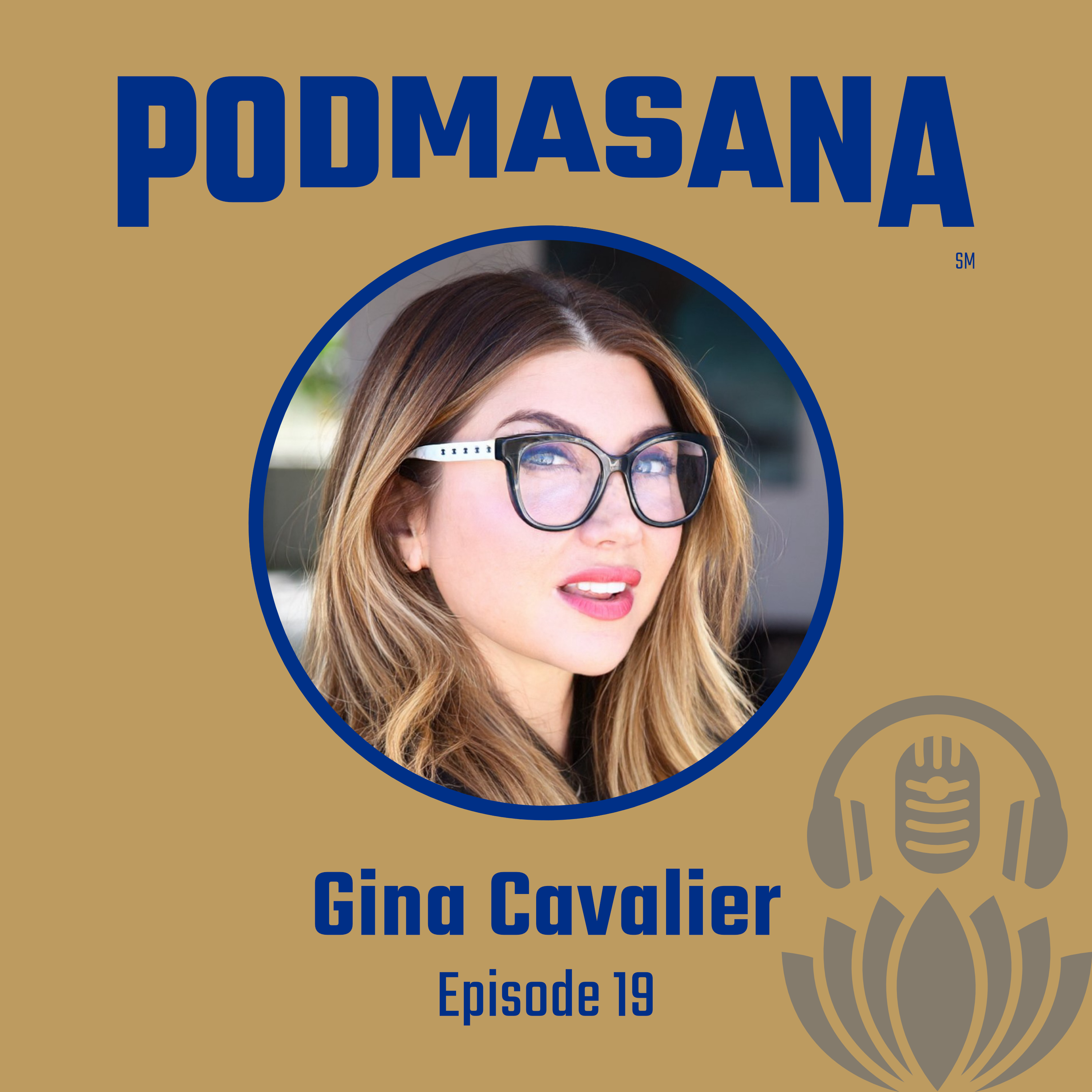
Today we're exploring these life saving questions with Gina Cavalier, author, filmmaker, public speaker, mental health advocate and wellness program Director at Sedona Mago Retreat Center.
Her book Planet A Handbook for the Living, released January of 2026, offers a six week energy healing program with specific guidance on healing suicidal ideation, a topic Gina knows intimately from lived experience.
Gina is a media veteran and former entertainment studio executive who contributed to over 300 film and TV titles including the Harry Potter and Fantastic Beasts franchises.
She began her speaking career at Warner Brothers where she established a business resource group that organized events for over 600 attendees.
But behind that successful exterior was a woman battling chronic illness and persistent suicidal thoughts that conventional approaches couldn't fully address.
Her breakthrough came through spiritual and energy healing practices not as a replacement for professional care, but as a bridge to something deeper understanding personal energy fields, chakras, soul contracts and the spiritual dimension of suffering.
As she healed herself, she realized she had to share what she's learned because the conversations we're having about suicide aren't saving enough lives.
Planet Walking is structured as a six week guided program each week anchored by a spirit animal, buffalo, elephant, white horse, bee, Hanuman, seahorse and the new monk.
It touches practical techniques like rose work, grounding, color flushing, chakra reading and pendulum work to clean, protect and strengthen personal energy.
It introduces concepts like soul blueprints, twin flames, karma, Dharma and the Akashic records.
And it reframes suicidal ideation not as a death wish for the body, but as the soul's desperate call for transformation.
Gina's first book, Surviving Suicidal Ideation From Therapy to Spirituality and the Lived Experience was co authored with trauma informed therapist Dr. Amelia Kelly and features 30 hand inked illustrations by Gina and a foreword by spiritual author Thomas Moore.
That book told her biographical story.
Planet Walking gives readers the actual tools.
She's also co authored a fictional five book series, Thomas Fine and the Mystery School which received a letter of interest from Underwonder Content for adaptation as a series or film and she's exploring creating a documentary series titled from the Edge of Surviving Suicidal Ideation as program Director at Sedona Mago Retreat center, one of the largest retreat centers in Arizona at 214 acres.
Gina teaches these programs both online and in person.
Her work bridges mindfulness, embodied wellness, mental health advocacy and community building, with a particular focus on supporting those experiencing emotional suffering. She speaks to corporations, schools, veteran groups and conferences, bringing conversations about suicide out of the shadows.
On this episode of Podmasana we explore how energy work complements traditional mental health care.
What it means to heal suicidal ideation at the soul level, how to work with protection roses and grounding cords, the spiritual perspective on death and life review and why understanding yourself as energy, not just thoughts but and emotions, can be the bridge between surviving and truly living.
We discuss soul contracts, twin flames, shadow work, and what it means to discover your gifts and walk your purpose on this planet.
Hey, it's Brendon If you've been enjoying the show, would you mind pressing pause and leaving a rating or review on your podcast listening platform? Or liking or commenting commenting on an episode's YouTube video?
That's okay, I'll hang around.
Go ahead and hit pause.
The episode will still be here when you get back.
Still there.
Come on, hit pause and write that quick review comment or leave that rating or like an episode. It's a quick and meaningful way that you can help the show reach others.
You can also email any feedback to the
[email protected] thanks for listening and leaving a comment like rating or review.
Now on to Podmasana Part 1 From the Edge to Energy.
Hi Gina.
[00:06:45] Gina Cavalier: Welcome to Podmasana Hello Brendon Nice to meet you and everyone.
[00:06:51] Brendon Orr: Yeah, thanks for being on the show.
So Gina, you've said you don't have to live the rest of your life with suicidal ideation and that you're proof that it can be healed. Can you take us back to when you were in the depths of that experience and what did suicidal ideation feel like for you and what wasn't working about conventional approaches, perhaps?
[00:07:18] Gina Cavalier: Well, first of all, I want to thank you for having me on and speaking about something so important that we need to communicate and to support others who are suffering. Because it is is a suffering. And even if you don't complete the act, if you never heal it, you live a life of suffering.
So I'm here to really show and tell people that I did have it for decades. I did heal it. It's something I can't even think of or hold anymore. And a lot of people that have had these experiences need to know that. They need to know that and see that it is possible. And because when you are in deep grief and suicidal ideation, there's different stages. We outlined them in our first book, Surviving suicidal ideation with Dr. Amelia Kelly.
But when you're at stage five, which is, I call it a black hole or a tar like feeling, you literally feel like you are falling into the abyss.
The everything around you feels dark. You feel disconnected from any source of light or color or happiness or joy, even if that is your nature.
And it just, you literally fall like you're falling in and in and in. And you have to like, push your way out of that and say, no, I can't, I can't. And it's really very difficult when you get into this, what we call the stage five, basically, where you're in that state and that state becomes 911. And it's important that we catch those people at those moments because, to be honest, they want to be here for the most part. People really don't want to go through that kind of pain and suffering and to actually complete that act. From my conversations with people, and so if we catch him at those moments, we can reduce suicidal rates.
[00:09:12] Brendon Orr: Yeah, that's. It's important stuff for sure. Gina, thank you. And so your own breakthrough came through spiritual and energy healing practices. While you were also dealing with chronic illness, how did you discover energy work and what was the moment you realized this was the missing piece in your healing journey?
[00:09:35] Gina Cavalier: Well, I wasn't predisposed to different type of, like, religions or kind of that stuff, so I was kind of separate from that. And when I found energy work, even though it has turned into more of a spiritual work for me as well, the energy work didn't put rules around it that I was felt like I had to abide to. I felt welcomed into it. It felt like it was also kind of a little bit proven through science, actually. You know, you hear, you know, theory of relativity and everything that we're all energy. And so it gave me a platform to explore in a safe way and realize that, wow, we are, you know, 50 trillions of cells that all can have a little bit of energy.
And I. If I'm talking to those 50 trillion cells and saying, you are a, a terrible person, you don't belong here, you're unworthy. What do I expect my outcome to be? So I realized that through energy work and grounding and connecting and learning how to manage energy, that I could manage that energy into a positive direction. And it just felt like I put. I was in the driver's seat of my own life for the first time ever. And at any moment, 24, 7, I could turn to Those tools and say, okay, you don't feel good right now. You are in a spiral. Okay, we can change it. Go for a walk, put your feet in water, meditate. Go hug a tree, grab a dog and hug it and change your energy. Transform that. That which is not serving you and.
And get back to where. Who. I believe we all come into this world, like, through joy and happiness, and we're really made of love.
That is, believe it or not, even the people you don't like, that's who they are. And that they also are made of love. And it brings you back to that compassion for yourself.
[00:11:28] Brendon Orr: Yeah, no, and I really appreciate that, Gina. And as you were speaking, I was just wondering, you know, when someone's in a really dark place, how do these practices help shift things energetically? Or have you seen in your work that there's. Whether it's the ego or something else? Like, are there a few big roadblocks for people to start seeing it as an issue of energy versus, oh, there's something wrong with me.
[00:12:00] Gina Cavalier: Yeah. I mean, because, you know, even coming into the world is traumatic. Right. We are. We are here to experience traumas. You know, being birthed is a trauma.
You know, it's one trauma after the next. And it's when you start to get tools, and the tools can be anything that works for you. You know, you have to create your own toolkit.
Everybody's different. Could be music, it could be grounding, it could be qigong.
You have to find what works for you and just continue going like that. But what you do is when you have the tools, it will help avoid those big dark pits we were talking about. So that's the first goal, is to not go there anymore. And when you go there, you can really try to work your way back and out of it through the tools. But what happens is, if you run, if you. If you can work on your energy daily and knowing that, you know, you're gonna. You have a HR review coming up, you're maybe going through a divorce, you. Maybe. We got things going on. We're afraid of those things going on in the world around us. You know, we're taking that all on. How do we live our best life and continue to live out the. The way that we want to live?
It's by we this constant and repetitive running of our energy in a positive way and avoiding those big pitfalls. And what happens is, I'm in my experience, it was like a muscle. It just kept those.
Those dark pits just kept coming farther and farther apart and to the. Where they didn't come anymore.
So through that practice, you just literally reprogram your mind. And I tell people I fell in love with myself. I didn't know I didn't love myself.
And, you know, a lot of really big people that I believe in, like Carl Young and all these people, they. The same message keeps coming through, is like, self love, self love, self, self, love is as the basis and the core of living a life that's grounded in happiness or what, you know, at least something that you could just really take control of. And so, And. And a lot of times I didn't even know I didn't love myself.
I thought I did, but when I really started looking at, I go, no. Anybody that loves someone doesn't talk to them like that. Any, you know, anybody that. Would you. Would you talk to your animals or your boss or your friends or your family members like that? No. Why are you talking to yourself like that?
And that's another thing. You have to walk back and then always put yourself first, which is really hard for a lot of people, especially if they've had any trauma in their life. They become people pleasers. And so. Yeah, absolutely. Yeah, yeah, yeah, yeah.
[00:14:48] Brendon Orr: And so, Gina, in the book Planet Walking, you reframe suicide as the death of an unhealthy identity or Persona, not the physical body. And this ties a little bit into our discussion, but this is perhaps radical to some.
How do you help someone in crisis understand this distinction? And why does this reframing actually matter?
[00:15:13] Gina Cavalier: Yeah, and it is a little bit radical, but to be honest, suicide is radical. So there's no way to meet that. But life is changed. So the more we can get comfortable with change and understand that it is a part of our evolution, why we're here. If we don't grow and change, then. And everything kind of stays the same, then we aren't moving into the way that we need to do. It's. It is a little bit radical. So the idea is, is, for example, I'll use when I was going through my divorce is when I was really suicidal. I had an identity of being married to this person, and I didn't want to lose that identity. And I was fighting losing that identity. It's like, I'm that person's wife that is my husband, and now he's gone. And I just didn't want to accept it. And it was happening no matter what I did. But so that my suffering was attached to losing that identity and that part of my ego that was like, no, I'm And I was trying to, in a way, force it back into my life, force it back to me. And a lot of times when people are suicidal, it's like, I don't. I. I lost the job that I really loved and wanted, and all of a sudden, so they're losing a part of that identity, that job or something.
And so it's letting. To let that go and happen and let that identity go instead of having to put yourself through physical pain and leaving this earth. So it's like that process of letting that part of you evolve and go. Because we are changed constantly. Every day we're a different version of ourself. And I like to look back and say, can you think of yourself one year from now? What are you going to be? Are you going to be any different a year from now? Of course you are. Are you different today than you were exactly one year last year? Yes, you are. And that's a good thing. And recognizing that we are constantly changing. You're new right now. You're new right now. You're new. Right now is a new version.
So accepting that really helps. I believe people that get stuck in those identities move forward and say, yeah, that's the old me, and that's good that I had that experience and I'm a new version of myself.
Yeah.
[00:17:26] Brendon Orr: Thanks, Gina.
[00:17:27] Gina Cavalier: Yeah.
[00:17:27] Brendon Orr: And you had an interesting background or your career. You worked as a studio executive, contributing to over 300 film and TV titles, including Harry Potter. What was it like holding that successful exterior while battling the suicidal thoughts internally? And how did that experience inform the work you do now?
[00:17:50] Gina Cavalier: Oh, my gosh, it was brutal. It was so brutal. Because the person that you're hearing now, I sounded exactly the same as I did back then, because my. My true self is actually very childlike and full of joy.
And, you know, I'm in my 50s now, but people just laugh at me. They're like, you're still like a little kid. I'm like, sometimes you.
Um. But it. I. And the. Probably the second most challenging time of my life with suicidal thoughts was when I was working at the studios, because it was very competitive.
Um, I was an unhealed person at that time. I hadn't healed, and. And I had un. I was an unhealed child. A child who was unhealed. And then I became an unhealed adult, and I hadn't gone through the process of unpacking those things.
And so I brought that into every part of my life. So when I would get criticized for.
Because it's very Competitive. When I get criticized for anything that would happen at work, I would take it extremely personal.
And I would have emotional reactions of unworthiness and confusion and fear and sadness. And I didn't understand what I was doing wrong. And I felt that I didn't belong. And it was just proven to me over and over again that I didn't belong here.
And that was kind of my pattern. So I would go home or go out to dinner with friends or even at work colleagues, and I would literally be putting on a smile and imagining going home and ending my life just sitting there at the dinner table. And, and I kind of had, for me, everybody's different. For me, I had extreme self pity. Why me? How come I don't get to have that family? Why didn't I get to have that job? Why didn't I get to. And I didn't realize that that came from my childhood. And so actually starting to work on the energy stuff really helped me find my worthiness.
But, and I feel like people in these high pressure jobs, like I, I completely sympathetic to them. And I feel bad because I know a lot of people are going home and just maybe they're drinking, drinking a bottle, you know, or taking some medic medication. And then what happens if you numb the feelings is then you can't work on them, you know, you can't do the energy work to unpack. Like, you know, why do I feel like this? So, but that becomes a vicious cycle too, because now you're just putting a band aid or covering it up. It's just, it's going to get infected and continue to go off.
[00:20:31] Brendon Orr: Yeah. And I, you know, I've heard some of these stories coming out of Hollywood, I guess you'd say, you know, maybe around the time of the strike, coming out of the strike. And it just seems like in a lot of ways in society there's been a pretty big impact coming out of the COVID years in certain industries, but particularly Hollywood. And we're talking about the actual mental health impacts and the role that spiritual practice could have in trying to write the proverbial shift. And since you've come from this industry, I'm imagining you've had other people in your circles who have also been maybe dealing with similar struggles. Have you felt like a sense of kinship with some of these people? Have you felt like you're almost called to try and help some of these people who have gone through similar challenges? Could you maybe speak to that a little bit? Gina?
[00:21:22] Gina Cavalier: Yeah, absolutely. Well, what happens is if you don't work on these energies and this and what's going on, you will form different physical things like cancer, diabetes, you know, panic attacks, anxiety. I mean, it. Actually everybody around me in my office was getting cancer. Like, everybody. Because it literally is energetically like, you know, it's going to start to grow because you are, you're in that negative space. I mean, negative can create negativity. And, you know, I feel like every industry has its ups and downs and it transformations and things have to change. The, you know, there's a lot of beauty in creating a film. I work with directors and producers all the time and I'm also a writer. I, you know, I've written scripts and things like that. Like, the creation is a part of our soul is so beautiful and wonderful and we have to express it. Musicians, you know, the art of it is so wonderful. What has happened is the business has taken over and become, you know, the energy of greed and the energy of control and manipulation and they've. That has like sucked out the original creative version that we have.
So I think the industry is going through a transformation and it's going to get maybe ugly before it gets better.
And that's going to be a good thing because underneath it all is still that shiny, beautiful, creative energy that us as humans need and deserve and want to express ourselves. And we just need to kind of finally push away the people that don't act in, in high ethical ways and say, you're not welcome, go fix yourself. We wish you well. We hope that you can come back when you're no longer abusive and a bully and because actually that behavior has not been controlled. There's bullies in the studios that have high power and they will literally break a person. They will break you. And that has to stop. And if they want, they have to take accountability. Each individual person about how they've contributed to the industry falling apart. Are they a part of it? Go work your energy. Go get some, you know, go fall in love with yourself again and, and get compassionate to all your employees and come back and let's recreate again some beautiful pieces of art. That storytelling is natural to the human need. It will never go away. We love stories. We love. That's why podcasts have taken off. Like we, we love it. Books actually are thriving, you know, and they thought that they were going to go away and they're not. So storytelling is not going the way. It's just the control and it's back down to energy. The control energy, the bullying energy.
You know, we need to Say no and, and bring up the new age. The people like, think about the alpha age coming up. You know, what do they have look forward to? They're dealing with AI, you know, kind of, they're going to be bored, they're not going to have inspiration. So we have to fix this. So when they're getting, when they're aging into the industry, they're allowed to have creative expression and live the life that they deserve. But they're going to, you know, as adults, I think everybody has to take accountability and, you know, living the life that we can inspire others because the children only mimic what they see in the adults.
And so if children see us committing suicide and not being able to handle things and you know, relying on pills and alcohol, you know, to deal with our conflicts and our issues, choose, they're going to just do the same thing. And so for me, when I looked at that, I was like, is this, even though I don't have children, I still want to be the something that someone can look up to. And so that also helped me through my journey. Say, do it for the kids. As adults, we can't do it for anyone else. Why don't you do it for the kids?
[00:25:21] Brendon Orr: Hello, listener Brendon here.
If you're enjoying the show and would like to Support it, visit Podmasana to learn about all the great ways that you can contribute.
You can become a Podmasana plus partner at three different tiers with a variety of perks and also make monthly and one time donations to help support the show. Any support is greatly appreciated.
Again that pages Podmasana support thank you for listening and thank you for your support.
Part 2 the Tools Energy Protection and Grounding Planet Walking is structured as a six week program each week anchored by a spirit animal, buffalo, elephant, white horse and so on. Why did you choose this structure and how do these spirit animals guide the healing process?
[00:26:36] Gina Cavalier: Gina Well, I actually wrote the book first. I wrote it in seven weeks and it was 70,000 words. So I wrote about 10,000 words a week and it really just actually flew out of me. I almost don't even remember writing it. It was almost like an outer body.
And then for me, because I get a lot of messages in the morning, like when my mind is fresh and I just woke up and something said, you need to break it down into parts because it's too hard to comprehend without a little bit structure. So I broke it up into the six weeks and then I just started seeing these images of these like almost guardians coming in and Telling me to draw it. And it was really beautiful. And I. The first one was the white buffalo, because they're, you know, very rare, and it's so beautiful. And I just wanted something someone can hold onto as an energy of bravery or excitement or. And each spirit animal kind of deals with all parts of the earth and the world. So, like, we have a spirit seahorse. It's the oceans, and, you know, a bee, and also a spirit guide named Hanuman, who's an Indian. Like, he came through a beat and Hanuman together. So. And that chapter was the very last chapter, and it's called the New Monk. And that came. That's completely random to me. I don't even know where that came from. But I saw that as very similar to the peace protest with the monks, how they were very youthful and very peaceful. And then I started saying, oh, now I understand what the New monk means. It means to me, take whatever information you need, whether it's my book or someone else's book or another practice. But every individual on this planet needs to create their exact toolkit that they need to become a new monk of their own volition. The things that work for them, grounded in peace, for this world to be able to shift the energies. And it's interesting because we only need 10% of the world to shift energetically for it to affect the whole world. And the more people that take, again, accountability of whatever healing that they need and get into that compassion and empathy for others, we will grow exponentially. It's like a drop of water, how it ripples out your healing.
Even though it's like a solo sport and it's something you have to do individually, it does ripple out to your friends and family and the world and everything around you.
[00:29:11] Brendon Orr: Oh, yeah. That's touching, Gina. Thank you.
And one of the foundational practices that you teach is called the protection rose, involving visualizing a rose surrounding one's aura to block negative energies. For someone who's never worked with energy before, can you walk us through what this practice actually feels like and perhaps how it works?
[00:29:36] Gina Cavalier: Yes. Thank you again. I'm so excited about this, because as I dive in and hear other practitioners, they all say the same thing. Two parts are very important. Grounding and protecting your energy. And if you see charts about our energy source, right. You know, the physical, the energetic, all the different emotions we have, kind of all the energy running through us. You know, when you. You know, when you step on the Earth, you can feel. You can see it in color scans, like your feet changing colors. You know, when they do scans on the brain with different information in you can see, they. So we are really just these live beings, right?
So we can easily pick up energy from anything and anywhere. You can just be walking on the street and there's just this kind of low level energy that you might suck up accidentally. And it could be sadness, depression, fear, anxiety, anger.
And that's not. And you're just like, why do I feel these ways? This isn't me. So whatever you do to protect your energy, there's just, there's multiple ways and you can look it up. But the way that I do it is with the protection rose. Because a rose, you need a container, you need something to look out, because 90% of us are visual.
So I visualize a rose on the outside of my aura or which is like my space. We all have energetic field and I ground that to the center of the earth. And that basically says the energy in front of the rose is my energy and the energy beyond the rose is everything else. So it, it just really sets a boundary, if you just want to call it that, of, hey, this is my space. I'm working on this.
I'm not allowing any kind of energy just to jump in and take me over and, and that way. So while you're working on getting into healthier emotions, it's really important that you set the boundaries for yourself. Yeah, that's basically what it's there for.
[00:31:35] Brendon Orr: Yeah. Thanks, Gina. And as you were speaking, I was thinking about how sometimes it's a challenge for someone coming out of like a deep depression to be trying to operate in this mode of awareness rather than just kind of being absorbed in like this, you know, internal self talk. But how does that practice you were just describing help someone pretty much act from a place of awareness more than just like just trying to protect themselves, you know what I mean? And have things always on their terms, which might actually inhibit a sense of healing or growth, if that makes sense.
[00:32:10] Gina Cavalier: Yeah, the, the good thing about this is you could do it laying in bed or 24 7. So it's not like you have to go to a doctor or an appointment or a clinic or anything like that. If you wake up, you have a panic attack. You're. You're not sure, you're feeling kind of in depression. You could just start grounding yourself, you know, sending that grounding cord all the way to the center earth, make it hollow on the inside, seeing, releasing energy that's not serving you right now and like grounding you and to stay here in the physical reality, it brings you more into present time because we, we need to be more here the day that you're here versus living in the future. How many times do people say, my life is going to be great when I mean, I have people that have lived their entire lives thinking, I can't wait until that happens and they're in their.
And so if you're living way over there, you're not here. And then a lot of people are living in the past thinking, like, oh, that'll happen, that's going to happen again.
So, and that's normal because that is our brain actually doing its job. It's a computer. It's supposed to remember things like that. But we have control over our brain. And going into present time, staying here, this gives us 247 ability. You're depressed, you're not feeling good, you could just lay in bed, you know, do it at a moment's notice and it gives you. Puts you again in that power seat to take care of yourself so you can move forward and begin the work that you need to do to get back into that self. Love, energy. Every single person, I can't stress this enough, has an absolute life purpose here. Every single person.
And when you're feeling really depressed and separate, you, you really have lost your purpose. You feel like there's no way I have a purpose. I actually don't belong here. A lot of or I just want to go. They just want to end the suffering. That's all it is. They don't want to feel this anymore. But. But that is not the answer. Leaving in that violent way is not the answer. And you know, I'm really sorry, but it's just not. And they have a purpose here. And we want to support people to find their purpose. And the only way you can do that is really to work the energy, you know, and try to live and recognize like, oh, I'm angry right now. It's not like getting rid of all your bad emotions, right?
That's another point I wanted to make. It's not like you can't be angry anymore. You know, you have to forgive everybody. And no, that's not the case. That's not what we're saying here. It's just going, okay, I'm angry right now. I'm angry. And embrace that emotion and look at it. Why am I angry?
Is this something that keeps coming up? Is it inhibiting my life? And then maybe is like, you know, what can I do about it? Maybe I can, you know, go to the park and like, Again, hug my dog. Can I get out of this energy and. And look at it. So it's not about just being one way and walking on flowers all day long. You know what I mean?
[00:35:06] Brendon Orr: Right, right.
[00:35:07] Gina Cavalier: That's not natural. And that's not what we're trying to say. We're just trying to get tools to say if you're suffering and you're not living the life you want, there is ways that you can live a better existence. And people want you here more than you.
They're more than you believe. Sometimes, you know, you. You really belong here.
[00:35:28] Brendon Orr: Yeah. Yeah. And Gina, you teach that stress is not primarily a cognitive issue. It's a nervous system state. And I've seen that in other places. And you use tools like grounding cords, color fleshing, and chakra reading. How does understanding yourself as energy change the way you relate to your own suffering?
[00:35:53] Gina Cavalier: Well, because you see how magical you are. We all. We are all unicorns.
No, we are looking for the unicorn, but we all are the unicorn.
We are all made of the most special thing in the entire world. Coming here is a miracle. Me having this experience on this planet is a miracle. You are a miracle. We are all a miracle. And realizing that we are like that and that the other person that across from us is like that, whether we like them or don't like them or whatever their political stances are and like that or don't like that, it doesn't matter. And you know, what happens is we start to have more compassion not just for ourselves, but the world around us. We. We judgment. The two words that are really bad energetically that we. We have to work on with doing energy work with the chakras and stuff is judgment and criticism.
So when we are doing energy work and we're grounding and we run the earth energy up our legs and we bring in the cosmic energy, we instinctually go, wow, we're a part of this grand universe. It's really beautiful. Have you looked at it? Ever looked up and saw a star? But we are exactly the same thing. In our heart is a piece of a star.
So when you realize that you're just that magical and beautiful, it really does emanate out. And you start to just fall into compassion with the world around you. And you'll realize how some of these arguments really aren't helping us. This vision isn't really helping us that there can be a utopian society and we can find better ways to, you know, to do things like helping the oceans that are suffering.
You really want to go into that more that it's a natural progression.
And I was teaching a student, student last night. For me, when you really get into like kind of getting clear with yourself, first you clear yourself and you fall in love with yourself. And then there's a certain point that all of a sudden you feel like you need to share the information and then you become a teacher. And whether it's a podcast recorder or you somehow want to share it with the world, and that's just another phase, and that's kind of a scary phase. But you're like, how about if people are mad at me, I don't understand. But then the next phase is you want the world to be better, like the planet and the animals and things like that. And then so that's the natural progression. So when you get really to that place, you, you just kind of live in a more peaceful existence and it's, it's really lovely, especially when you struggled for 20 years to stay on the planet. So, you know, I just want to share that it's happened. For me, that's the progression that's happened to me. And I really want more people to be able to have that experience.
[00:38:37] Brendon Orr: Thanks, Gina.
You include practical techniques like pendulum work for divination and the rose work quote that we've been touching on for reading and transforming personal energy.
These might sound a little esoteric to some listeners, but how do you bridge the gap between what can be thought of as ancient spiritual practices and modern mental health understanding?
[00:39:04] Gina Cavalier: Well, in the, in the modern times, this is 2026 right now, you know, our normal practice is to wake up, go to work, you know, pay our bills, like go to social media, you know, all that stuff, kind of 1, 2, 3, become like little robots and machines back in the day and actually energy and spiritual work or connecting to the energy around us, whether it be the earth or the oceans or the lakes or our animals and things like that. That was what we did first, you know, so. And now our world is suffering, our people are suffering. And why are they suffering? Because they are becoming these robots and machines. So going back in. And that's why I try to be non denominational and not speak about a higher source, even though that is my practice.
While you're doing energy work, if you can get clear as to how to get a yes and no answer. And that's why the divination tools help you get a. And it's really, you just use your energy and you can play with it and it's just, you know, you can find a yes and answer and no answer. But like getting. Finding yes and no answers is very helpful once you get clear with yourself that those instincts turn back on cuz they're all within us.
It's just when you're kind of struggling, you can't find the answers. So it's just using tools to help you find the answers until your intuition becomes strong enough and your intuition is inside of all of us.
It's just when you're a little lost, you can't find the answers.
[00:40:35] Brendon Orr: Yeah, yeah. And you're saying if you're lost, you can't find the answers. And earlier, you know, you were touching on this idea of a utopia and thinking it's, you know, possible. And although I'm inclined to agree that it's possible and believe that it could be in humanity's future, how does that relate to this sense of lostness either at an individual level or perhaps a societal level, if we are going to create this more evolved version of humanity or human existence. Would you maybe talk about that a little bit, Gina?
[00:41:06] Gina Cavalier: Yeah. I mean also in the book, and in my first book, I talk about, you know, there is a spark of light in all of us that is like that same thing, like that star is really is inside of us and we can decide to understand that it's in there and let that light shine.
And I, as someone, when I was struggling with suicidal ideation, I just did not know where that light was. I didn't think it existed. It went cold, it went dark. I thought.
And it never does, it never will, it'll never leave you. It is always there. No matter what state you're in, mentally or physically or anything that you're going through, holding onto that light is just vital and that's your life force and it is a beautiful thing.
And if you've ever seen someone lose their animation of their life, you know, it's actually when they're passing naturally, it's, it's, it's an honor, it's to have had this life experience and everything that you went through and then you can understand even the woes that you had. You know, that they made you grow and learn and get to the place you are today. And that, you know, life is supposed to be full of ups and downs and lessons and growing. If it's so, if all of us can learn how to embrace that and remember that light, that sparkle lights inside of us, I just think we'll be a different society. Yeah. Yeah.
[00:42:32] Brendon Orr: Yeah.
Hello, listener. Brendon here.
Do you or someone you know have an article or book to share, a work to highlight or story to tell that would be a good fit for Podmasana If so, feel free to reach out via
[email protected] that's ideasodmasana.com and we'll be sure to get back to you.
Thank you.
Part 3 Blueprints of the Soul Purpose and Walking this Planet. So, Gina, you teach about soul blueprints. Soul contracts, twin flames and karma. The idea that we choose certain life experiences and relationships before incarnating. How does understanding life through this lens help someone who's asking, why is this happening to me?
[00:43:33] Gina Cavalier: Oh, gosh, I love this question. And it is so out there. And I understand that and just hang with me for a second.
If you're like, I'm out of here. And it's even sometimes my mind goes, gosh, is this real? Like, how does. How is this true? But we are in a cycle of learning, and we have soul families and we repeat scenarios and we just. We're here to learn. It literally is like a big, giant schoolroom, right? And we'll. We'll design our lives, you know, as a soul before we incarnate here on the earth. And we put in as signposts a lot of these things that are going to help us grow. And when we're designing our life, a lot of us are very adventurous. Oh, I can handle anything. I'm going to be able to handle losing a child, losing a job, losing this, losing all my money, going bankrupt, you know, and then when we get here to do it, it's like, this is hard. Oh, my gosh, this is terrible. And you go more into just the physicalness and the pain of it all. And you step away from learning knowing that, like, you are just this light and this being in this soul.
And, you know, it really helped me to see that, like, I designed this, that everybody in my life, for example, somebody that might have, quote, unquote, I felt, betrayed me in the end, they did me a favor. They gave me the opportunity to learn something. And I probably even on a soul level, ask them, hey, I need to learn this lesson. Will you help me? Sure, I'll play the bad guy for you, and hopefully you learn this lesson this time. And as someone who's very visual and creative, it just, again, I don't have any proof. It's just something that I actually, like, believe and download. When I look at energy and space as, you know, someone who lives in that world, you know, energetically. And it just really helped me feel like, okay, I'm here to execute this blueprint in my life.
I have put in signposts of people I'm supposed to meet. And if I. If I kind of learn that lesson, I get to go on to the next part.
And I look at it as. And it just really brings light to me. I just. Because it's like, oh, okay, I'm just supposed to. I'm like a rolling. Still a little bit of a rolling stone, moving to different phases of my life. And it, it helps me not stay so, like.
Like I'm controlling my life. Like, no, I have to stay at that job. No, I have to be with that person. It's like, hey, if it's not working anymore, it's not meant for me anymore. I'm just going to go into the next phase. And I feel like I'm able to live life.
And I don't feel like we're here. A lot of us, especially if we're in suicidal ideas, we're not living life. That's not living life.
[00:46:24] Brendon Orr: Yeah.
[00:46:25] Gina Cavalier: Yeah, yeah, yeah.
[00:46:27] Brendon Orr: Thank you, Gina. And the book discusses shadow work, dealing with dark energies and the spiritual perspective on death.
And a life review, or a review of life. For someone afraid of looking at their own shadow or confronting what scares them, where do they begin? Gina,
[00:46:48] Gina Cavalier: begin by knowing no matter. No matter your journey and story, that you all are, every single being comes from the light. Remember, you know, when you're feeling pretty, you know, like you've done some maybe bad things in your mind, you even recognizing now, like, oh, God, that was pretty bad. And even that story is a part of our story. And anybody can begin again at any moment, no matter if they're in prison right now for something or, you know, and they're like, wow, they're uncovering it and figuring out why maybe their past traumas made them do something like that, that they're still a part of light. And they're like, don't give up. You can uncover all that and get back to that space and call in more of that and still be a contribution on a soul level of, you know, contributing to the betterment of everything around you. No matter what your story, where you've been, how far you've been down, what you've had in your done in your life, it doesn't matter. We need more people to recognize that no matter what, they are a spark of light.
Yeah, that makes sense.
[00:47:56] Brendon Orr: Absolutely.
[00:47:57] Gina Cavalier: And they did, kind of. And then you really, you know, some people invite darkness in. You know, I have had do a healing on a person and I saw like a really heavy darkness on them that they said no. I asked that darkness to come in for protection. I'm scared. You know, they had childhood abuse and they called this thing in that was very low level and dark. And I asked, do you want me to help you out remove that? And they said no. So that was their choice. But at a certain point, you know, they might realize that they don't need that anymore and they can just, you know, go more into the light and that will help. That'll fall off in a, in a way. So it is hard to look at the shadow stuff. But also it's like yin and yang, you know, the light can't live without the dark and dark can't live without the light and that's never going away. So not to like beat yourself up too much because we. There's not a soul that hasn't experienced it, not a single one.
[00:48:51] Brendon Orr: And that example you were referring to earlier reminds me of something I recently became aware of. Where some people who are dealing with very severe anxiety apparently are finding relief through playing horror video games.
This is apparently like a new like, documented phenomenon like in the scientific literature. And personally when I became aware of this, I'm like, well, that's interesting. But it made me think of something that you said, like maybe how do we differentiate between something that could be like a, perhaps a short term band aid solution to temporary symptoms rather than like maybe going deeper and addressing an underlying cause. Could you maybe speak to that a little bit?
[00:49:32] Gina Cavalier: Yeah, I mean everything you, when you start to actually really want to heal, everything you consume is an energy. So I am, I don't watch horror movies. I can't. I don't subscribe or recommend people to play, you know, shoot em up video games or horror driven video games. That is an energy that is, to me, to put it blankly, kind of the darkness wanting to infiltrate our space and it's just not good. If you really want to kind of have a peaceful life, you know, just, you know, enjoying nature and all the beauty that is here, whether it's, you know, it could be. There's so much beauty when you start to look at things, you know, flowers or, and how flowers grow or different animal species or oceans or whatever. I mean, you get to choose, you know, and do I watch that or look at that? I would say absolutely not. It's. Well, it will activate. Say for example, if you're playing up a Shoot em up game, it might activate some anger inside of you because it's all energy. So you have to look at the scale of energy, right? So it's like joy, seniority, power, giggling, laughing, happiness, joy, love. And then on the other scale, you have, you know, anger, fear, depression, anxiety, cruelty, bullying, and all, like, all that energy. Right. Really is a scale. So everything you like. Like, I really even tried to not engage in negative comments online unless I'm like, like, maybe about animal. I'm like, animal advocate. But I really try not to get into that because you. You are jumping in and actually getting karma. Sometimes when you're like, oh, that's such a dumb outfit, or even that level of things, that is still a little bit of your energy going towards that. And so when you have to look at your energies, like a cup, like, where do you want to put it? And if you're not extreme, like, in a good space, and you're, like, doing that, and you just have to look at. Does that really make you feel good? So I would say I would be an advocate. Like that. That's not correct in my.
[00:51:34] Brendon Orr: Yeah, I thought it was interesting. And I was like, well, we'll maybe see where things are in another five years. But, yeah, so.
Yeah. So as a wellness program director at a retreat center in Sedona, you teach these programs and practices both online and in person.
What patterns do you see, Gina, and people who come to you, and what are the common blocks? We've touched on this a little bit, but what are the common blocks that keep people from accessing their own capacity to heal?
[00:52:06] Gina Cavalier: My goodness. Well, thank you. I. I love working at Sedona Mago. It's the first time in my career, like I said, I was working in entertainment, where I can talk about the things that I'm passionate about and also, like, have a regular job. So I feel so grateful that that happened. And it's, like, meant to be, and it can happen. So some people, People that might need to know that, like, can I ever do my job? And it's something I love, and the answer is, yes, you can get there.
And we see about 4,500 people a year. It's a lot. And all different walks of life, all different scenarios. But the one thing that I think that is because they're not building places like Sedona Mago anymore. We have 218 acres here. We have, like, healing lakes and meditation spots, and we grow our food, and they're just not growing those as much anymore, other than the personal interior work, because we've done retreats for over 20 years, so we know how to get to the end of the retreat through a crescendo of work so you can have a good experience at the end. And I think that takes time to formulate that knowing of how to reach a mass amount of people and to get them through to the other side.
So I really commend them for their retreats that they've been doing. But the community, the community that when you're here, we don't have televisions in the room, of course, they have their own devices, but there's, It's. There's no alcohol. We only have pescatarian food. It's just a very clean environment where you can just kind of like strip off all the digital media, be in nature and commune with people in real conversations again. You might see someone transform within four days. You might have. There might. Sometimes there's people that can't even talk or share, and by the end they are just hugging people and holding them and laughing and they. They do it together in their own little groups. And it's. So, it's not just the teachers helping to hold space for them, but it's the other people that are in the, in the class with each other that you'll never forget. They have lasting relationships that last. Last forever here. And then we have people that have been coming here for 20 years. They come help us volunteer. They do all the different programs, you know, just stuff like that. So I just think community, you know, I think a part of my sadness was I really never felt a part of anything. Me, I grew up in California and nobody really knew their. Our neighbors. I never felt I'd be invited to some things, but not others. So I, I had this worthiness issue and I have a community here, and I just feel, you know, even though it's like a work environment too, like if people can tell in my face if I'm having a bad day, go on a hike. I can go on a hike in the middle of the day at work to reset my energy because they know that that is important.
And if we can do that in our own communities and even in our jobs, you know, we're not machines, you know, embrace our employees and say, you know, you don't look like you're having a great day today. Why don't you take the day off? Why don't you go in nature, go to the park or, you know, and understand that, yeah, maybe some of their work might be a little late, but it's better if you support them as a human and start seeing them that way. And that's what we do here, and I've never seen anything like that, so I don't know. I'm just. Maybe I'm biased.
[00:55:32] Brendon Orr: Yeah. Yeah.
[00:55:34] Gina Cavalier: But it's an honest opinion.
[00:55:36] Brendon Orr: Yeah, for sure.
And, Gina, as we wrap up, you're creating a documentary series called from the Edge of Life Surviving Suicidal Ideation.
What do you hope this documentary will accomplish that books and speaking can't? And what do you want people to understand about suicide that our culture currently perhaps gets wrong?
[00:56:04] Gina Cavalier: Well, first of all, there's not really any kind of series that we want to create out there right now. And I put out a call for a partner on this, and the man that responded, he's a brilliant young director named Max Baltar. He's from the Ukraine. His father committed suicide when he was 11, and he didn't even tell me that until the day we were filming our trailer. So I didn't even know why he was so and passionate about working on this project with me. We had a full film crew with 13 people, all from the Ukraine, all from the war. The makeup girl that was on set, her brother was 20 years old, died in the Ukraine war right now. So they were here fleeing their country, China. Just live a better life. And they had to start. She was a famous makeup artist in Ukraine, and she literally is sitting there doing free stuff now because she had to start all over.
So we all fell into compassion to tell this, to do this trailer, to say, you know, people are suffering, we're hurting. We need more programs. We need more understanding. We need to be able to open up the conversations more in healthier ways. So I did a pitch to, like, pbs. We wanted to do a series. We almost. We also wanted to bring some information, as in, you know, the history of suicide by country. You know, North Korea, Japan, Australia, Russia. And look at, like, why are, you know, who's kind of the most suicide? Why. Why is that? And. And what has happened in a more of an intellectual way. So. Because I believe that people can use information to try to relieve the anxiety of stuff.
So instead of just talking about the end result, like, kind of find out, well, how did we get here and why are we getting here? And could it be because we're living in a toxic world? I mean, what is contributing to it? We need to really unpack it. So we're trying to raise the funds to do this and get maybe Netflix or Hulu or somebody interested and available to do that. But, you know, they're really still focused on quick wins and things that gotcha. And drama filled content.
You know, I think once they realize, you know, maybe someone who has that happen to them in their family and they with a lot of money or power or interest and say, hey, we need to, you know, this is all of our families that we have to help. And going back to the children having more content to help them. So I'm hoping somebody can pick that up. And, and the cool thing about all the projects I create and do is, and because I do energy work, I just know that they all have their timing and I'm not rushing anything and I just keep creating and I know the world is going to pick them up, you know, at some point and you know that they'll, they'll be around hopefully.
[00:58:55] Brendon Orr: Well, we'll be looking forward to this project, hopefully seeing the light of day in the future because it's obviously it could play a pretty important role in touching on and addressing a very, very much an issue in modern society. So I just want to say, Gina, thank you for where you've come from, what you're doing, and for being on
[00:59:15] Gina Cavalier: Podmasana Oh, thank you so much. And big hug to everybody out there.
So much love and energy.
[00:59:25] Brendon Orr: If you enjoyed this episode, please share it with people you think would also enjoy it.
You can also leave a review or rating on your preferred podcast listening platform and be sure to follow the show to subscribe to future episodes.
You can also email
[email protected] or reach out to us on the socials.
We're on Bluesky, Mastodon, Instagram and YouTube.
Catch you next time on Podmasana