[00:00:00] Brendon Orr: Foreign.
[00:00:14] Brendon Orr: This is Podmasana and I am Brendon Orr what if the most painful seasons of your life, the rejection, the grief, the broken dreams, the anxiety that won't release its grip aren't punishments or meaningless suffering but invitations to a deeper spiritual intimacy that you couldn't access any other way?
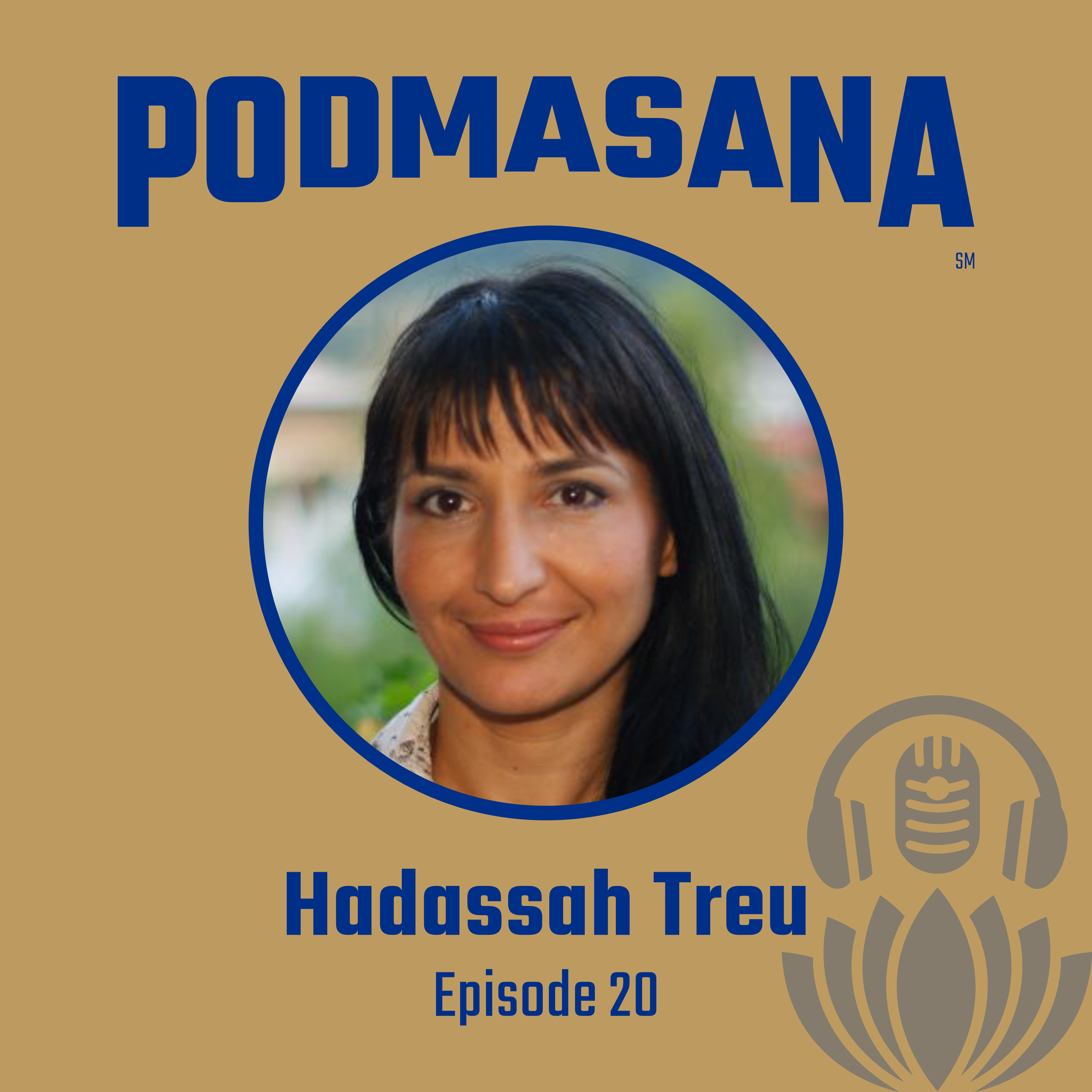
Today we're exploring that transformative possibility with Hadassah Troy, an award winning bilingual author and faith blogger from Bulgaria whose book Draw Near How Painful Experiences Become the Birthplace of Blessings offers a biblical roadmap for navigating life's trials by intentionally moving closer to God rather than away from Him.
Hadassah is no stranger to suffering and loss.
From the platform of her greatest pains, she delivers a powerful message of comfort and hope rooted in Scripture.
As she writes, adversity is not an interruption to spiritual growth, it's God's primary training tool.
Pain, properly understood, becomes the very soil where blessings take root.
Her credentials speak to both literary excellence and spiritual depth.
2020 Encouraging Blogger Award winner 2024 Literature Award winner from the Municipality of Pizarzik, Bulgaria and 2025 winner of the National Literary Translation Award. Stoyan Bakardiev as author of four books and co author of 14 devotional and poetry anthologies, she's featured on over 70 faith based platforms including Her View From Home, the Upper room encourage, and Proverbs 31 ministries.
Her blog on the waybg.com ranks in Feedspot's top 100 faith blogs for 2025.
But what makes Draw near so powerful is how it reframes the experiences most of us try to escape sadness, anxiety, rejection, loneliness, unmet expectations, disillusionment, grief, betrayal, failure, and hopelessness.
Through biblical narratives Joseph's betrayal and imprisonment, Paul's relentless hardships, Jeremiah's lament, Ruth and Naomi's loss, and her own vulnerable testimony, Hadassah shows how each painful experience creates specific spiritual gains when we draw near to God rather than pulling away.
Anxiety becomes an opportunity to develop the fear of the Lord and experience peace beyond understanding.
Rejection deepens identity in Christ and builds compassion.
Loneliness creates space for profound intimacy with God that busy seasons never allow.
Unmet expectations redirect hope from earthly desires to the eternal source of satisfaction.
Even disillusionment can lead to resilient faith. When we, like Job, question honestly while ultimately submitting to God's wisdom.
The book offers practical spiritual disciplines, lamenting honestly while holding hope, surrendering control, prayer with thanksgiving, renewing the mind through Scripture, choosing forgiveness, trusting God's sovereignty, embracing weakness to rely on his strength and cultivating joy independent of circumstances.
As a communication specialist and translator holding a master's degree in international relations, Hadassah brings both linguistic precision and cross cultural sensitivity to spiritual writing.
Living in Bulgaria, she offers a perspective often missing from Western Christian publishing, a voice shaped by different cultural contexts of suffering and faith.
On this episode of Padmasana, we explore how painful experiences become birthplaces of blessings, what it means to draw near to God in suffering rather than away from him how different spiritual traditions understand the purpose of pain, why honest lament is essential for healing, how adversity serves as God's primary training tool for spiritual maturity and what biblical figures like Joseph, Paul, Jeremiah and Ruth teach us about transformation through trials.
Whether you're in the midst of suffering right now, emerging from a season of loss, or walking alongside someone who's struggling, this conversation offers hope, comfort, and a profound reframing of what pain can produce when we lean into the divine rather than away from it.
Hello listener Brendan here.
If you're enjoying the show and would like to support it, visit podmasana.com/support to learn about all the great ways that you can contribute.
You can become a Podmasana plus partner at three different tiers with a variety of perks and also make monthly and one time donations to help support the show. Any support is greatly appreciated.
Again, that page is podmasana.com support thank you for listening and thank you for your support.
Part 1 the personal and Universal Journey Through Suffering Hadassah, thank you very much for being on Padmasana.
[00:06:55] Hadassah Treu: Thank you for this joy and honor to be a guest on your podcast. I'm really excited to talk to you and share my experiences and wisdom with the listeners.
[00:07:08] Brendon Orr: Very honored to have you on the show. Hadassah.
So you write that you are no stranger to suffering and loss and that you speak from the platform of your greatest pains.
While you don't need to share more than you're comfortable with. Can you help us understand what brought you to write your book Draw near? And what seasons of your own life taught you that painful experiences can become birthplaces of blessings?
And when did you first recognize that your suffering had spiritual purpose rather than being meaningless?
[00:07:46] Hadassah Treu: Yes, the seed of this book was planted nine years ago, actually seven years before publishing. And it was planted with my very first blog post which was called about the Losses and Gains on the Way. And in this blog post I was talking about God as a redeemer of all suffering and losses. And my main idea was that our gains, or our spiritual gains in most cases are outweighing the Losses. And then the actual concept of the book was developed in the year 2021, which was one of the hardest years for me because I struggled with the fresh loss of my husband.
I was struggling with depression, with intense grief. And somehow the concept of the book was my way and perhaps God's way to learn to interpret my suffering biblically, to learn to see it from another perspective and gain some comfort and gain some hope. And yeah, the book came in 2024 and the actual seasons, which brought me to the idea that painful experiences can be the birthplace of blessings. They were, yeah, of course not, not just one season, but really the, the most spiritually formative season in my life was during my marriage, perhaps five to seven years during which I struggled with infertility, anxiety disorder and panic attacks. And these painful experiences forced me, really forced me to, to process a lot of emotional luggage from my past, to face myself without wearing a mask, to be completely honest and vulnerable and with myself, but only also with cope. So to a certain point of view this became journey to myself. So a self discovery journey, but also a gulp discovery journey because I experienced experience not just what it means to have a relationship with God, but really to have a daily fellowship with him. And it was also a period of inner healing, of growth and strength. And that was really where this concept actually was born and was formed. And I really experienced this that from the pain can come something good, some really precious blessing. And the first time when I recognized that suffering has spiritual purpose, I was actually exactly in this period because I realized that suffering is not in vain, especially if we recognize this, if we acknowledge it, and if we in my case submit our suffering in the hands of God and submit to his ways, submit to his purpose purposes and start this path of healing.
[00:10:56] Brendon Orr: Yeah, thank you, Hadassah. And you had mentioned you were very vulnerable during this period. And the book Draw near is also deeply vulnerable. You don't just share biblical teaching, but you own testimony woven throughout.
What was it like to write so honestly about pain, loss and struggle?
Were there moments when you questioned whether to include certain stories? And what do you hope readers will take away from your willingness to be so transparent about your own journey through adversity?
[00:11:31] Hadassah Treu: Yes, writing honestly about pain and loss and struggle actually was not so difficult for me. And I will explain why, because in the years before I was was doing a lot of journaling and a lot of praying and especially journaling was very helpful to me because I shared not only my, to my journal, not only my external experiences or external circumstances, but I shared a lot about my internal experiences, what I really felt, what I really thought. Also I shared certain prayers. And actually this was kind of a training for me to be honest, to be vulnerable. And that's why it was not difficult to transfer this way of writing from my journaling to the pages of the book. Regarding the stories, I didn't have any hesitation to include these stories for one simple reason, because these stories were already processed. I have already emotionally processed these stories, and they were no longer a source of pain or a case of intense pain, and not longer source of shame or any embarrassment or anything like this. So I really didn't feel any fear or worry to share this openly.
And my hope for the readers to what they can take away from this vulnerability or honesty is simply the decision not to suppress or to numb their pain and somewhere in the deep, dark chamber of their hearts. Because I think really the first step to healing is bringing things into the light. So acknowledging our pain, facing our problems, this is really the first step thing to be honest, to be vulnerable, and just to take away any mask or masks that we are wearing in the everyday life.
[00:13:41] Brendon Orr: Thanks, Hadassah. And as you were speaking, I was thinking about how one aspect of modern times seems to be that a lot of people are either wearing a mask or they're numbing pain in certain ways. And I can only speak of what it's like, you know, in the western part of the world. But could you maybe speak a little bit to what you see in Bulgaria within this context?
[00:14:04] Hadassah Treu: In Bulgaria, it's the same. I think it's really everywhere in the world like this. It seems that people are not experienced or nobody taught people how to navigate pain, how to grieve in healthy ways. I think even for me, in the beginning of my grief journey, after the loss of my husband especially, I struggled with a lot of unhealthy ways to process grief. It was a mixture. It was kind of a, you know, everyday choice. How do I process my grief, healthy or unhealthy? And unhealthy ways can be actually quite addictive ways. They can lead to addictions, doesn't matter to what, to food, to shopping, to watching TV or whatever, because we are searching for something to stop feeling this pain, to. To numb this pain, to suppress it. But this, of course, is not healthy. We need actually to feel our pain. And in Bulgaria, there is absolutely no difference. I think even in Bulgaria, people are even more taught to be stoic, not to show so much, not emotions, but bad emotions. So grief and anger and Stuff like this in Bulgaria also is not so common, at least perhaps it starts this year recently, but it's not so common to go to, to therapy or to. To search for mental health. It's just starting this year, but it's not really so common.
[00:15:34] Brendon Orr: Thanks, Adasa. And you're writing from Bulgaria, which gives you a perspective often missing from Western Christian publishing.
How has your cultural context shaped your understanding of suffering itself?
Are there ways that the Bulgarian experience of faith, history or hardship has influenced how you approach these themes? And as a bilingual author and translator, how do you navigate writing about such intimate spiritual experiences across languages and cultures?
[00:16:08] Hadassah Treu: Yes, this is a very interesting question. I need to say I haven't thought about this and I guess of course my Bulgarian culture on heritage had influenced me not so much consciously, but rather unconsciously and generationally, I would say, because Bulgaria has a very interesting history.
For example, we have been for 500 years, or these are five centuries under the so called Ottoman or Turkish oppression.
And during these 500 years, the Ottomans, they led a severe assimilation policy. So they wanted to eradicate Christian faith, the language, the culture and so on.
So we had our Christian faith heroes, mainly in the monasteries, who really preserved the faith, preserved language, preserved history. And I think this kind of keeping the faith and persevering in suffering is perhaps something that I inherited from my Bulgarian origin. I think so.
And regarding writing about suffering in different cultural contexts, I didn't experience so many differences across cultures and languages because I lived also for 15 years in Austria, my husband was an Austrian, and I also write primarily for American audience.
And the thing is that I think suffering is such a universal theme that I really personally, and faith too, that I didn't came, didn't come across any huge difference or something that really stood out between these cultures and between these languages. I think really suffering is universal. Universal theme. Yeah.
[00:18:08] Brendon Orr: Yeah, agreed. Thanks, Hadassah. And so the book's subtitle is How Painful Experiences Become the Birthplace of Blessings.
This is countercultural. Most of us try to escape pain, as we've kind of referred to earlier, not lean into it. Can you unpack this core idea and what does it actually mean for pain to become a birthplace rather than just something we endure?
And how do you help readers understand this without minimizing their very real suffering or making them feel guilty for struggling?
[00:18:45] Hadassah Treu: Yes, the core idea is really that pain, painful experience can be the birthplace of blessing. And this means actually that suffering is not in vain, but can become, can a catalyst for growth, a catalyst for healing, a Catalyst for renewal. And this is what I wanted to explore in my book. That's why I wrote 13 different chapters for 13 different painful experiences, or let's call it traumatic experiences. And I think they're universal because nearly everyone has struggled with such like anxiety, like broken dreams, unmet expectations, loneliness, betrayal, rejection, and others, adversity, of course, and others.
And I just wanted to show, with a blend, with a mix of Bible study, personal stories, devotional elements. I wanted to show that it's really possible that our suffering is not in vain. And I also included a very interesting structure at the end of each chapter. But this more relates to the next question.
What can I say to the readers without minimizing their real suffering?
And I think especially here comes to play the special structure, because at the end of each chapter I included kind of a practical elements. And these practical elements, a list of three to five affirmations or declarations, meditation verses, reflection questions, and guided prayer. And why they are practical tools and powerful practical tools. Because by these affirmations or declarations, the reader can focus on truth or acknowledge truth or trust in these truths in their suffering. Also by meditating on Bible verses and with the reflection questions and with the guided prayer is the element of connecting personally to God. And these two elements, focusing on truth and connecting personally to God, I think can be very helpful to a person who is suffering or is in the middle of suffering.
[00:21:04] Brendon Orr: Yeah.
And you write that adversity is the primary instrument God uses to strengthen faith, build resilience, and prepare believers for his kingdom. This is a bold theological claim, perhaps. Can you walk us through why you believe this and what biblical foundation supports this understanding? And how do you reconcile this with people who experience suffering that seems to destroy rather than build faith?
Those who maybe leave religion entirely because of unanswered prayers or unrelieved pain?
[00:21:41] Hadassah Treu: Yes, that suffering is an instrument of testing our faith and leading to growth and maturity. This, I would say, is really a core theological concept, at least in the Bible. And it is a concept which we can trace from the Old Testament to the New Testament. I will simply give a few examples, starting with the Old Testament. Let's start with the oldest book in the Old Testament. This is the book of Job, who is the epitome of the suffering person. Job himself recognized what is the purpose of his suffering in one verse in which he said that when my testing is over, I will come forth as gold. I'm a little bit paraphrasing, but come forth as gold is exactly what he said. There was A certain point, point there in the book in which he actually preferred to lose his life, but to keep his faith, acknowledging or recognizing the value, the immense value of his faith, especially during this suffering.
And then in the Old Testament, we can of course start with the greatest example this of Jesus Christ, especially in the book of the Hebrews, the Letter to the Hebrews. There are a lot of examples in which it said that, for example, God saw it fitting to perfect the pioneer of our salvation through suffering.
Also there is a verse in which it said that Jesus learned obedience through suffering. And in Romans, for example, we read about the fruit of suffering. I just want to read this verse. And one note. This verse is saying not only so, but we also glory in our sufferings because we know that suffering produces perseverance, perseverance, character and character, hope. And the last verse I want to pop, because this is a very important verse for me also because of the practical implication of this verse. This is in James, chapter one, and it says, consider it pure joy. Brothers and sisters, whenever you face trials of many kinds, because you know that the testing of your faith produces perseverance, let perseverance finish its work so that you may be mature and complete, not lacking anything. So we see this clear, clear connection between adversity, trials, pain of any sort, suffering, and how this may lead to character, to maturity, to perfection. Actually, the Bible even uses this word, perfection.
And to the next part of your question, how this can be reconciled, especially for people who experience suffering, but this suffering seems to destroy their faith and now build it up. I would say that in each suffering or in each painful experience, experiences, there is a first initial phase in which the pain is so intense that we, of course, of course we get angry with God, we question God, we doubt him. And in this phase, it may very easily happen that we may fall into, not only into kind of depression, but also kind of disillusionment of faith and experience, this disillusionment. But the thing is that in my opinion, this phase is temporal. And I think there comes a time when, and it's a personal choice when we.
And this is where James 1 comes into practice, where it says, consider it pure joy.
So where we need really to check our thinking, to ask, to doubt actually our thinking, to question our thinking and to decide to reframe it and decide how we consider what is happening to us. Because this in James shows us that what we think and how we think about something is our choice. This is the first thing. And the second thing is pure joy. Of course, we don't consider something, especially suffering, pure joy because it's joyful. Definitely not. It's not joyful, but we consider it because of the result, because of the potential blessing, because of the potential gift which we can find in this suffering. And I think that we can reconcile our faith and our suffering, especially in this field. When we train, train our minds how to think, how to be suffering, and also train our hearts to trust God. These are the two key things
[00:26:36] Brendon Orr: hello listener, Brendan here.
Do you or someone you know have an article or book to share, a work to highlight or story to tell that would be a good fit for Padmasana?
If so, feel free to reach out via email at ideasodmasana.
That's ideasodmasana.com and we'll be sure to get back to you.
Thank you.
Part 2 Biblical Frameworks and Theological Foundations Hadassah throughout, draw near you map out what we lose through painful experiences such as comfort, control, security and joy. What we gain spiritual maturity, intimacy with God, resilience and hope.
This is a really helpful framework. Can you walk us through how you developed this? And for someone in the middle of acute pain, where the losses feel crushing and the gains seem maybe abstract or far away, how do you help them hold both realities simultaneously?
[00:27:53] Hadassah Treu: Yes, I developed this concept because for me really the first step was to acknowledge the pain and each painful experience is the common identifier, actually needs painful experience is some kind of loss. So I wanted for me personally to identify the the concrete losses in each painful experiences. I can have this as a helpful tool to process my pain, but this is just from one side and from another side in order really to change my thinking, to align my thinking with biblical truth. I also want to have a list of potential gains.
Most of them are spiritual and to hold these both lists so simultaneously so I can see what the two sides of the painful experience. And what is interesting about this list is not only that usual even visually in my book, the gains gains are longer, longer than the losses, which is quite, quite hopeful. But also I would say another thing which I noticed is that most of the losses seem to be temporal losses and most of the gains however are eternal gains.
And this is also another very optimistic perspective or very hopeful perspective. And yeah, regarding this person who wants to hold these two realities simultaneously. Two realities. This is actually exactly the aim of my book. I wanted to help such a person to know these two realities, to have them and really to reconcile them in a way. And I think especially with this practical structure at the end of each chapter with These tools, they're just tools. It's really possible day by day. It's a process. It doesn't happen simultaneously, but day by day, step by step to reconcile these two realities. And as I mentioned before, we are not meant to stuck in the initial phase of our grief or of our pain. We are really meant to move on and to start healing, actually start healing.
[00:30:17] Brendon Orr: Thanks, Adasa.
And you explore Joseph's betrayal and imprisonment, Paul's relentless hardships, Jeremiah's lament, Ruth and Naomi's loss, Job's disillusionment, Hagar's rejection, Daniel's loneliness, and others. These aren't sanitized success stories. They're honest portrayals of people in anguish.
Which of these biblical narratives speaks most powerfully to you personally? And what do you think contemporary readers miss about these stories when we read them too quickly or through a prosperity gospel lens?
[00:31:00] Hadassah Treu: Yes, I love these stories. And these stories were really my companions in a lot of my struggles and pain. I think that I personally related to different stories in different periods of my life and in different struggles. But what I would really call my best friends, two of them, Diza, Job and Jeremiah, I think what is common and what I really love and find inspiring in both of them is this, that they both remain faithful, faithful to God in their suffering, that they kept their faith. They also both went to through big disillusionment of faith.
They struggled with God, they questioned his ways, but as I said, they both kept their faith. Jeremiah, he was called the Weeping Prophet.
His ministry was largely rejected from the Israelite society and doesn't matter, he persevered. And even he wrote, I love the chapters from 30 to 2033, because I think these are one of the most hopeful and prophetic chapters in the Bible. So they are portraying God with God of the complete restoration and redemption. And they are really beautiful. And this is written from a person who suffered really deeply. He suffered deeply because he was obedient to God, because he was doing God's will.
He was obedient to his call, and he suffered deeply for this. And Job, Yeah, what can I say about Job? I really love his stubbornness to cling to his faith. This is really what I really love about him. But not only I love that he was completely honest with God, that he asked all his why questions and other questions. And yeah, we know that God answered him. This was not the answer he was expecting. This was actually a lesson in humility. And Job was taking this lesson very, very deeply. And what I also love about Job is the end because we were reading that God gave him double for his trouble.
So to say, he restored his fortune, he restored his family, and he gave him a long life.
And not only this, he is in the hall of fame. He gave him eternal glory, actually.
And we all know who Job is, although Job has lived, I don't know how many thousands years ago, but we know all about him and his inspiring example influencing generations ahead. So I think this is really great and I love this book. And regarding contemporary readers who may read these two books week or through the lenses of prosperity gospel, I think first, people who cling to the prosperity gospel will most probably totally skip this kind of stories because the prosperity Gospel is in total contradiction actually to this Bible teaching that suffering is universal and it's leading to growth and to strengthening of the faith.
And I think that what we need really to take away from these stories and which is the most important is that suffering is not an exception.
On the contrary, even if somebody is not suffering, he's the exception. I need to say, yeah, and he or she in this case. So suffering is not the exception. And the next thing is that God is deeply involved in our suffering. This is equally important takeaway. And I would recommend to the contemporary leaders to really dive into these stories and without any prejudice and see them for what they really are and be inspired by them.
[00:35:14] Brendon Orr: Yeah. Thanks, Hadassah.
And your book offers a distinctly Christian framework for understanding suffering as purpose, purposeful training from God.
But we have Buddhism that teaches that suffering arises from attachment and can be transcended through enlightenment. We have Hinduism that sees suffering as karma working itself out across lifetimes. Islam emphasizes suffering as a test of faith and submission to Allah's will.
And Judaism wrestles with suffering through a prophetic protest and covenant. Faith based.
How would you articulate what's unique about the Christian approach in Draw Near? And what, if anything, can all of the world's faith traditions learn from how each engages with pain and adversity?
[00:36:09] Hadassah Treu: Yes, this is also an interesting question. And I think that what makes unique dronia in the approach is that the Christian approach itself.
Why? Because for me, the Christian faith is unique. And this uniqueness, I would summarize perhaps in one word. I would say, and this word is Emmanuel God with us, this means that our Lord Jesus Christ was God, hundred percent and human 100%. And why is this so important? What does it mean this way? This is the question. And this is important because as a fully human, he was subject to the same things that we are subject. So I mean, he Experienced pain, suffering, emotional pain, physical pain, hunger, temptations, I think all variety of these painful experiences that I'm just touching in my book. He experienced it in full. And we know also the climax of this, the horrific death at the cross and the separation from God, which we can't. We can't even foretold or at least I can't even fathom the intensity of this pain. And this means that he understands. So this is the first thing, that he understands our suffering, he understands our pain.
The second thing is he can perfectly comfort us in our pain because he understands this and give us strength and hope.
I just want to read here a verse, because this verse expresses this very well, this concept. This is again in Hebrews, and it says, for we do not have a high priest who is unable to empathize with our weaknesses, but we have one who has been tempted in every way, just as we are, yet he did not sin. Let us then approach God's throne of grace with confidence so that we may receive mercy and find grace to help us in our time of need. And in Hebrews 2, 17, 18, for this reason he had to be made like them, so like us people, fully human in every way, in order that he might become a merciful and faithful high priest in service to God.
Because he himself suffered when he was tempted, he is able to help those who are being tempted. And I think this says it really very well. And regarding your second question about what we can learn from different faith traditions regarding suffering, surely we can learn from each other. I remember that when I started my own spiritual journey, I was a teenager then, teenagers of 17 to 20. In this period I was studying all the major religions because I wanted to find meaning and purpose in my life. And asking of course, the main questions from where do we come and where do we go? And yeah, I remember that I was reading a lot and asking a lot of questions. But what, what really draw me to the Christian faith was exactly this part, that God is in us and with us in our suffering, that he is Emmanuel and that he is deeply involved in our suffering, that we are not left alone. And this was the one aspect. And the other aspect was of course, that suffering is not purposeless, it's not meaningless. It can lead to something greater and better and peaceful satisfaction. Actually, what draw me then to the Christian faith?
[00:39:51] Brendon Orr: Yeah, thanks, Hadassah. And you emphasize biblical lament, honest expression of grief and pain to God as vital for healing.
This is so important because many Christians are taught to be joyful always and feel shame Perhaps about expressing anger or doubt to God.
Can you talk about the difference between lament and complaint, between honest struggle and loss of faith? And can you give us a practical guidance for how someone begins to lament when they've been taught their whole life that questioning God is wrong?
[00:40:33] Hadassah Treu: Yes, I myself needed to learn lament exactly, starting in these years which I mentioned, these formative years when I struggled with infertility and, and of course after the loss of my husband. Lament, I found, is a wonderful, wonderful way to process grief and express grief. What is the difference between complaint and lament? Lament is complaining to God or expressing painful feelings, but still remaining hopeful.
How can I express it in another way? It is, we are complaining to God, asking questions, doubting him and so on. But we don't view him as enemy or as the source of our pain when we are doing this.
We view him as our God, as our comforter, as our helper. Let's say it another way, as the safest person to whom we can unburden and really pour out our pain.
And for me personally, God or Jesus, let's say this way, is the ultimate grief expert and really the safest person, because I know that I can come in his presence, I can unburden myself without the fear, the fear of being judged, of being condemned or in some way pushed away. We know at least persons who went through grief or grieving, and perhaps they went to counseling sessions. We know that one of the advices is to find safe people, people who are ready to and can able to empathize and to listen. So really safe people. And that's why I said to me personally, discovering experientially God as my safest person, to whom I can be my real me without any masks, was the most liberating and healing thing. And the interesting thing is that in the Bible, the Psalms, one third of these psalms actually are lamented psalms. And I find them very helpful because when we struggle with conflicting emotions or really a variety of painful conflicting emotions, it sometimes it's very difficult to find words how we can get this out of us, how we can. We even sometimes can't recognize what we are feeling. This also happened. We. We can't put our finger there and said, I'm feeling this or this. And the psalms are very helpful because they give us the words to express our pain, to express it directly to God. But also, as I said, on the backdrop of, on the backdrop of trusting him, on the backdrop of still remaining hopeful, that's why I call the psalms or the Lament Psalms, I call them holy complaints. So we are complaining, but this is a holy complaint. And to the persons who are struggling somehow to imagine perhaps that they can come to God and be their real selves without masks, that they can ask questions, even release their anger or their doubt in his presence, I would say say God is big enough to handle this. He can handle really all these feelings, and he would not change his attitude or mind about us even if we are expressing these feelings. So this is really very liberating. I need to say being honest, being authentic, being vulnerable is really what God is looking for. Everywhere in the Bible it said God hates hypocrisy. So God says that we are thinking one thing or feeling one thing and saying another thing. Nobody likes this. And the cop doesn't like this too.
So I think I can encourage people who struggle with this that try the Lament Psalms, try to bring these emotions honestly in the presence of the Lord and see what happens.
[00:44:37] Brendon Orr: Yeah. Thanks, Hadassah.
So us and listeners likely know people whose suffering hasn't led to speaking spiritual maturity.
It's led to bitterness, loss of faith, or destructive coping mechanisms. Perhaps your book acknowledges this. What makes the difference?
Why does the same experience of loss produce deeper faith in one person and abandonment of faith in another?
Is it something about the person, something about the support around them, something mysterious about grace?
How do you pastorally address someone who's suffered deeply and feels that your book's promise hasn't proven true in their own life?
[00:45:24] Hadassah Treu: Yeah, I'm sure there are a lot of people like this.
And I was also on the edge to become one of this, especially in the first year of losing my husband, which was really dramatic, really a year of intense grief, grief and pain, and just surviving each day. I would say day by living, day by day and moment by moment. But of course, my book is written mainly for believers, for people who know God, who trust God. But I know that also among believers, there are people who are on the edge to abandon their faith, especially after experiencing traumatic and very painful event which they cannot explain and can't imagine why God would have allowed such thing to happen.
And I already touched a little bit on this in the previous questions, but my only explanation is that that perhaps person who is still very raw with his pain, perhaps simply, he's stuck in this phase. He or she is stuck in this phase. But really there should be a moment, or perhaps not even a moment, perhaps there would come a decision, because this is really a decision not to be stuck, but to move forward and seek God not as an enemy, not as the one, the source of the suffering, so to say, but to seek him rather as a healer, to start to lament. So really to start to lament as we talked about, lament in his presence as the safest person.
And I think this will surely lead to the first signs of healing. This would surely bring healing or at least place them on the road to healing. And I would really say to such person, please don't stay stuck, stuck in your pain and your grief. There is life after that. Decide to move forward.
Decide to see God as your helper and your comforter. There is healing, there is restoration. And I'm also the perfect example for this because really I often thought that I would not survive this. But I'm not only surviving this, I really feel to a greater extent healed. And, and I would say why? Because one of the signs of my healing was several years ago when I started for the first time to experience pockets of joy in my days. I thought in the beginning I would never smile again or I would never experience joy again. But now I'm seeing that's not the way that I'm still able to hold both grief and joy, still able to experience joy. And it's really a journey. It's really a path. I personally call this journey of grief the most dangerous and unpredictable journey. At least this was for myself and it still is.
And we need a sure guide through this journey. We can't do it again. We need alone. We. We need help. We need people like us. So I mean company on the journey. People are sojourners, so grievers, other grievers. And we need of course God, because I think we definitely need grace and strength that is bigger than us to help us and to carry us through.
[00:48:59] Brendon Orr: If you're a devoted listener of the show, becoming a Padmasana plus partner is a great way to provide ongoing support of the show and get extra perks across three tiers and such as early access to ad free episodes from the growing Padmasana archive, discounts on merchandise, and optional recognition in show notes and on Padmasana's website.
Higher tiers also get access to bonus episodes, a private chat group, live video Q&As with featured guests, a personal thank you mention in episodes and more.
Listeners can support the show via monthly or yearly subscription starting at just $3.99 per month.
A 20% discount is applied to all yearly subscriptions.
Subscriptions automatically renew and there are no contracts.
For more information, visit podmasana.com/. You can also make a one time or monthly donation to support the show at podmasana.com support 1% of all revenue from Podmasana+ memberships and donations are committed to carbon removal.
Thank you so much for considering a Podmasana plus membership.
Your support means a great deal and your subscription helps to cover the research, writing and audio production by Go into every episode of Padmasana.
Part 3 Practical Application and Paths to Healing Hadassah, you outline practical practices Surrender prayer with thanksgiving, Renewing the mind with scripture, forgiveness, waiting patiently.
That's one I'm personally still working on.
[00:50:56] Hadassah Treu: Me too.
[00:50:57] Brendon Orr: Cultivating joy despite circumstances.
For someone reading this who's in acute pain right now, which practice would you recommend they start with? And how do you do these things when you're depressed, anxious, or so depleted that even prayer feels impossible?
What does spiritual practice look like at the absolute bottom?
[00:51:21] Hadassah Treu: Hadassah yes, at the absolute bottom for me, I still kept my journaling. This was really life saving for me. And also lament I need to say, because these two somehow go together. Journaling is a very, very helpful practice.
And here I will share another practical tip, how actually I got out of depression by journaling. I decided that each day, especially when I was really at the bottom and completely depressed, I will start my journal for the day. So in the morning with listing three things which I'm thankful for from the previous day. So at least to count three things, even small things, but something which I find good, which I'm thankful for. And then yeah, with the practice the list increased and increased. And this was very good. And simply by journaling. Journaling itself is not a cure or how to say the solution, but it is a tool. A tool to get honest with oneself and somehow to express the most pressing questions or feelings.
What is really in us to get rid of the mask. This is I think the most helpful in journaling. And lamenting is another thing because as I said, sometimes we don't have the words and especially in pain, we don't have the words to pray. Perhaps we can just cry. We don't have any words to say. And that's why especially these biblical psalms of lament are very, very helpful. Just take on some open up psalm and you would recognize yourself. I mean I recognize myself and my feelings in so many of these exams is simply amazing.
These two simple practices, especially in a fresh pain, in a fresh grief, in a depression phase are very, very helpful.
[00:53:24] Brendon Orr: Thanks Hadassah.
And your chapter on anxiety struck me because you connect anxiety to Our desire for control and security, which can only be truly fulfilled by God. You offer the fear of the Lord as foundational for overcoming anxiety.
But for many contemporary readers, fear of the Lord sounds frightening or perhaps punitive.
Can you help us understand what this phrase actually means? And how is fearing God different from being afraid of God? And how does this lead to a pure peace rather than just more anxiety?
[00:54:06] Hadassah Treu: Yes, I think I, I used of course the phrase fear of the Lord because it is the phrase in the Bible which is used for this concept or experience.
But definitely fear of the Lord doesn't mean afraid of the Lord afraid in a kind of expecting a punishment. So I'm doing something bad and now he will punish me. This is definitely not what is meant by this.
I think here fear of the Lord or the biblical concept of the fear of the Lord is more that this is an attitude. This is an eternal attitude of reverence, deep respect, trust and adoration of the Lord. I need to say all this combination of these attitudes gives us the concept of fear of the Lord. And in order to fear the Lord we need of course at least a little bit to know the Lord, to know about him and to know him, which are again two different things.
Because we may know a lot about the Lord, we may know the whole Bible by heart, for example, and still don't have any clue what he is like or any relationship with Him. And what is he after is actually a relationship with us. Knowing God, knowing Him as he presented Himself in the Bible, his character, I mean, all knowing, loving, merciful, fair, and all of his characteristics actually should give us a real sense of peace. Because when we know that we are in the hands of such God and He is sovereign and he's watching over us, he is navigating us through this life, this should really lead to sense of peace. Or at least I experienced this in my life. So this is an experiential knowledge for me. It's not only theory that I'm now talking about.
This is really a real experience because the more I gave my fears to the Lord, the more I gave my worries. And I said, okay, I'm not in control, he's in control and I can trust him, okay? I cannot always understand his ways and what he is doing or not doing. And this is normal because He's God and I'm just a human, but I don't need to understand to trust. This is perhaps for many people striking, but this is what the whole point is. This is faith. In the Bible we are called the righteous will walk by faith and not by sight.
So if we then walk by sight, we don't need faith if we know everything and we can predict everything, and so on and so on. So for me, this was really a process. The more I knew God, the more I grew in this internal attitude of reverence, adoration, and the desire, the desire to follow him, to be obedient to him and to have his will in my life, the more actually my worry and my fears. My fears declined and dissipated.
[00:57:14] Brendon Orr: Thanks, Hadassah.
So your chapter on unmet expectations and broken dreams explores how God redirects our hopes from earthly desires to himself.
Some may think this sounds a little bit like spiritual bypassing, like we're supposed to stop wanting anything in this life and just focus on heaven.
How do you balance having real hopes and dreams with whole holding them loosely?
Is it possible to be fully invested in this life while also trusting that God's plan might be completely different from what we actually want?
[00:57:54] Hadassah Treu: This is a very good question. And yes, it's a point of balance and it's a point of trusting. And I'm a perfect example for this because I went, I think, through the whole variety of so the normal urk desires. I mean, to have a family, to be a mother, to have a home, to have a car, to have a career, and so on and so on.
And then, however, not all of this went through. I need to say not. Not all of this, of course, in our control. Especially actually not everything. Not all of this is in our control, but let's say especially the desire to become a mother or to be a parent. I think this is absolutely not in our control because this is. The conception is really something that only God can do. He creates the life or gives life to a new person. But ask me, because I went through a lot of medical procedures and I need to tell you that medical procedures are not guaranteed that a new life will be created, even if everything is done. So I want you to say I went through all this variety. But do you know what I also learned and experienced is that even when I had my desires met and. And fulfilled, even then this didn't bring me this kind or level of satisfaction that I actually topped that achieving or fulfilling this desire would bring me. Of course I was happy, of course I was satisfied having certain things and people and relationships. But this was not enough to, for me at least, this was not enough to feel completely satisfied or completely at peace. And I think especially when the Lord is redirecting or not granting us all of our Desires, which is a very wise thing not to grant us all of our desires. I think that this is a very good way to really focus also on eternity, because we are not just flesh, we are spiritual beings who live in the flesh. And of course there must be a balance of between these two. We live here in this world, in this material world. For sure, we need to take care of material things.
But also we are souls, we are spirits, and of course soul and spirits. We have other homes, we have other needs, we have other longings. And this is also a good way to direct our longings and hopes and wishes also to spiritual things and not just to material things, of things that can be fulfilled in this life.
[01:00:52] Brendon Orr: Hadassah Many listeners may not be in crisis themselves right now, but they're supporting someone who maybe is a spouse, a child, friend, or maybe a colleague.
What does Draw near teach us about how to be present with others? Pain?
[01:01:13] Hadassah Treu: Yes.
[01:01:14] Brendon Orr: What are the most helpful and harmful things we say? And how do we avoid the platitudes that maybe wound while still offering genuine hope?
[01:01:26] Hadassah Treu: Yes, this is another good question.
I was also on the receiving end and yeah, and I need to say what actually usually I experienced as most helpful for me and I call it my term for this is the ministry of presence. I simply found that somebody being present with me doesn't matter if he or she is talking or saying anything. This is was not at all the point. But just having physical presence with me, somebody by my side, sitting with me was the most helpful thing.
Of course, sometimes I needed practical help, I needed a word of encouragement. But what I most needed, especially when I lost my husband, was people or person at least one with me. And I'm so thankful that my family and friends there was always possibility at least for one person to be with me, especially in the beginning, because I simply couldn't be alone.
And this was very helpful. What I found for me unhelpful or embarrassing was for example, when I, for example, raised the topic of my grief. I want to share something about the person I lost or remember something about him and I start this kind of conversation and share something about my grief. What I found most embarrassing is that the other person or persons don't react at all.
So I mean that just skip this or turn to other topic. I understand this because being in the presence of pain is embarrassing and also not comfortable and people struggle with what to say or how to say it. I understand this, but I think when a grieving person or persons in pain open his or her heart and want simply to talk about this. The most helpful thing we can do is really to listen and perhaps to respond in some way. This is really helpful. And the next thing I would say the third thing that is very helpful if somebody in our crisis, struggling with painful experience, if we can do this, ministry of presence is good. And if we are not, if we are not able to be always with this person or often with this person, is to pray for him or for her. I think still for me, the prayer is really one of the most powerful things we can do because this is a direct connection to God and we can lift up this person to God and his or her pain and expect Foucault to intervene and comfort in some way.
[01:04:20] Brendon Orr: Thanks, Hadassah. And so the last question.
You're featured on over 70 faith platforms and you've won multiple literary awards and your blog ranks in the top 100 faith blogs.
But you write about deeply personal pain and vulnerability.
How do you navigate being a public voice while protecting your own heart? And what practices keep you spiritually grounded when you're constantly revisiting possibly painful material to help others?
And what would you say to someone who's been through suffering and wonders if their story could help others?
[01:04:59] Hadassah Treu: Yes, another good question, especially I value your question about what practices keep me grounded. I. I think this is a very important thing because I need it also in my ministry. Because for me, this is a ministry, my writing to learn, really to take care about myself. Because, so to say, I'm putting my heart on the page. I'm sharing a lot of stuff. And when I share, when I write about stories, even if they have been in the past, of course this brings a certain emotional response and it has its price. But I think now with the years, I'm learning really to take bootcamp myself with some simple rules. Of course, my main number one rule is I'm trying to stay connected with God throughout the day. So I'm really working and praying. So I'm trying to be tentative to his voice. What about what should I write, when should I write it, and what should I do throughout the day? Day? This is really good to have his plan, not my plans. The other thing is that I'm trying to give myself sufficient rest. And not just physical rest, but really emotional and mental rest. For example, I have a rule that after 8 o'clock in the evening, I'm not reading emails. I'm not on social media. I don't want to do any kind of work, even if this is work is connected with writing or Anything like this. So I want my mind really to relax and, and to calm down. Another thing is I'm doing a lot of sport, I'm walking a lot in nature. I think these are simple things. But this helped me stay grounded and I'm surrounded with good friends. This is also very important with whom I can be myself. And doesn't matter what I'm achieving or not achieving, I'm still the aunt, the good friend, the sister. And so to these people, and this really, this really helped me stay grounded.
And your last question. What would, what would I say to a person who is going through suffering right now? Suffering is something, as I said, which we would not be exempted for. I mean, it's not a exception.
And if you're suffering, just, I would say you are going through the most universal human experience.
But definitely there is hope. And your suffering and sharing about your suffering for sure may help another person. This is, for me, a turning point was somewhere in the first year when I lost my husband when I simply said to God, okay, I'm going through such an excruciating pain. I really don't see yet the meaning of all this, to lose my husband and to go through this pain. But I'm ready and willing to submit this pain, to submit this story to you. Please use it to help other people in some way. And I think God is already answering this prayer because by sharing my own journey of grief, I hope at least that somebody else got encouraged or comforted or had another, or gain another insight or another perspective in his or her own grief journey. So I think really sharing our stories is powerful. It's powerful for our own healing, but it's powerful for the others as well.
[01:08:35] Brendon Orr: Thanks, Hadassah. And thank you for who you are, what you're doing, and for sharing your story, even from those experiences of darkness. And thanks for being on Padmasana.
[01:08:47] Hadassah Treu: Thank you so much. I enjoyed this conversation a lot. It was very insightful for me too, and such a pleasure. Thank you.
[01:08:57] Brendon Orr: If you enjoyed this episode, please share it with people you think would also enjoy it.
You can also leave a review or rating on your preferred podcast list listening platform and be sure to follow the show to subscribe to future episodes.
You can also email
[email protected] or reach out to us on the socials.
We're on Bluesky, Mastodon, Instagram and YouTube.
Catch you next time on Padmasana
[01:09:32] Hadassah Treu: SA.