Episode Transcript
Brendon Orr (00:00)
What does it take to dedicate your life A Lotus in the Mud: Building Wellness Media Across Continents ft. Parveen Chopra spreading wisdom? To launch India's first body mind spirit magazine in 1996, long before wellness became mainstream. And then after establishing yourself as a go-to expert in that field, to start over in a new country.
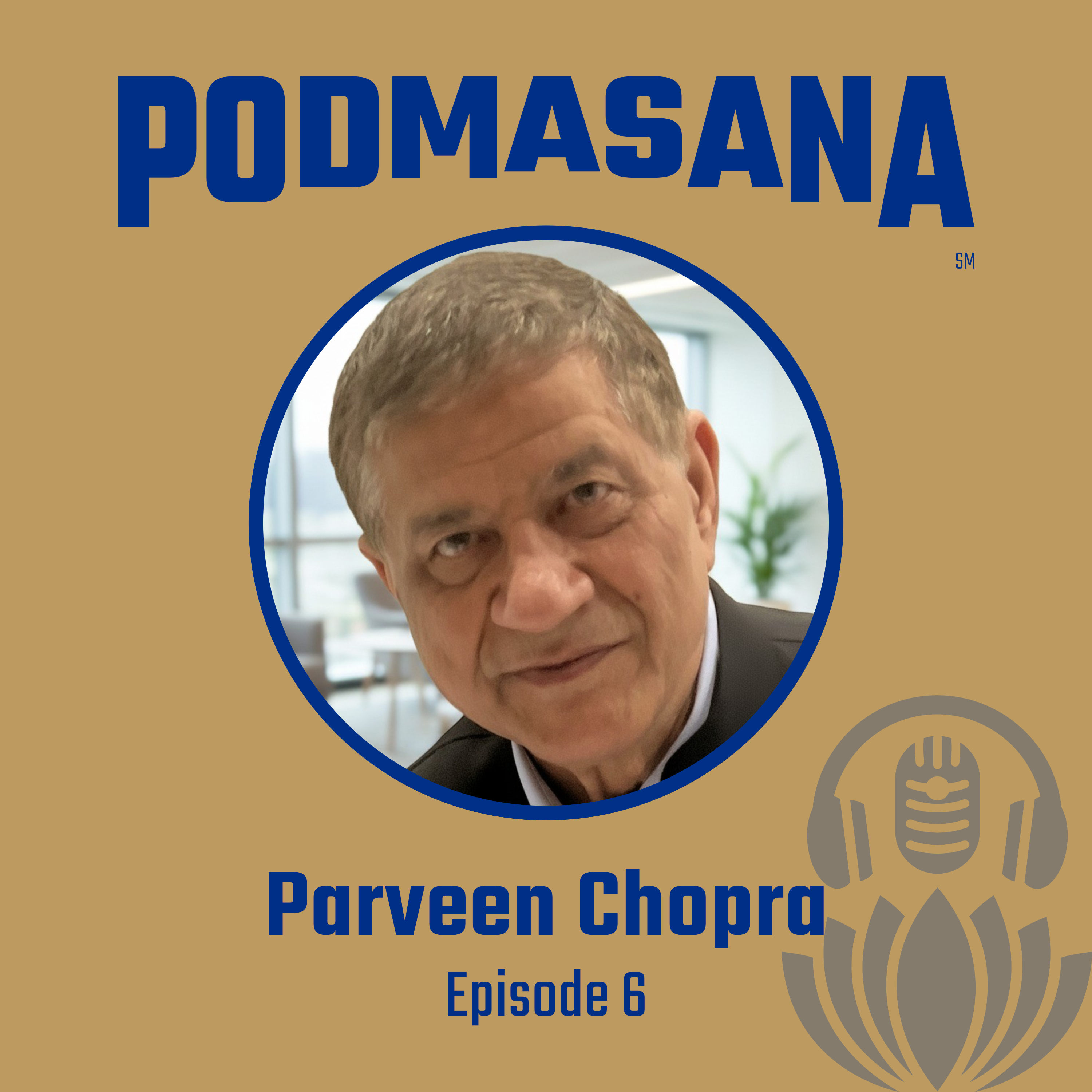
and build something equally meaningful from scratch. Today's guest, Parveen Chopra, has spent nearly three decades at the intersection of journalism and spirituality, consistently asking, how can media serve not just to inform, but to transform?
How can we draw from both ancient wisdom traditions and cutting edge science to help people become happier, healthier, and more peaceful? Parveen's journey began in India, where as a trained teacher of transcendental meditation, he recognized something profound happening in the mid 1990s. Interest in what he called growth therapies, practices like Reiki,
programs like Landmark Forum and India's age-old spiritual systems were suddenly blooming. So in 1996, he founded Life Positive, India's first magazine dedicated to wellness, personal growth, and spirituality. The monthly publication became a chronicle of this awakening, and Parveen became the media's go-to expert in the field.
Leading to the inevitable question he was asked constantly, are you Deepak Chopra's brother?
Before Life Positive, his work took him to senior positions at India Today, called India's Time Magazine, and after Life Positive to DNA in Mumbai as wellness and spirituality editor. He contributed to leading publications, including Yoga Journal, and even wrote a chapter on wellness for a coffee table book published by the Indian government.
Through it all, he held to a core belief that a mystical core is common to all religions. In 2008, Serendipity smiled on Parveen. A job offer came out of the blue from New York, helping him write what he calls a happy immigration story for his family. In the United States, he edited the South Asian Times for over a decade and One World Under God interfaith journal.
Then came COVID-19. In the aftermath of the pandemic, Parveen saw both need and opportunity. Three years ago, in November 2022, he launched a Lotus in the Mud, a wellness and spirituality web magazine that would become his most ambitious project yet. The name itself tells a story. Like the lotus flower,
pure, radiant and resilient while growing in the mud. We all have the inherent power to rise and bloom in body, mind and spirit. What started as a social enterprise has grown remarkably. Formerly launched at the Indian Consulate in New York in January 2023, the paywall-free magazine has already published over 750 original
in-depth articles.
Illustrious voices have shared their wisdom with Lotus, including Sadhguru Jaggi Yusuf Dev, Dr. Tony Nader, who succeeded Maharishi Mahasyaogi, and even New York City Mayor Eric Adams. The magazine's growing reputation led to an invitation as digital media partner for the Global Conference of Meditation Leaders in Delhi in February 2025. In August 2023,
Lotus reported from the Parliament of the World's Religions in Chicago. And in June, 2025, they co-hosted a celebration of the International Day of Yoga with the Brahma Kamaris. Published by the nonprofit American Center for Wellness and Spirituality, Lotus extends its mission offline, fostering interfaith harmony, community well-being, and world peace. Looking back on what he calls his checkered life,
Parveen feels most grateful for discovering transcendental meditation in his twenties, which gave him purpose and direction.
On this episode of Podmasana join us for a conversation about building bridges between traditions, creating media that serves transformation, and why the lotus rising from mud is such a perfect metaphor for our times.
Brendon Orr (05:05)
Part One, Life Positive and the Indian Awakening.
Brendon Orr (05:13)
Welcome to Padmasana.
Parveen Chopra (05:17)
Thank you, Brendon for having me. And congratulations on starting this podcast. And I like the name. I love the name Podmasana. It is from Pod podcast, but also Padmasana. And ⁓ Padma in Hindi in Sanskrit means lotus. And I started a website called elotusindamad.com. So wonderful.
Brendon Orr (05:40)
Yeah.
Yeah. I'm really looking forward to talking about that and other ⁓ aspects of your history and professional and personal life. So let's dive right in Parveen. You founded Life Positive in 1996, which you describe as India's first body mind spirit magazine. Take us back to the mid nineties India. What were you seeing that convinced you the time was right for this kind of publication?
What was awakening in Indian consciousness?
Parveen Chopra (06:13)
me begin by quoting Mark Twain, an American writer, and what he said about India. India is the cradle of human race, birthplace of human speech, mother of history, the grandmother of legend, a great grandmother of tradition. Our most valuable and most instructive materials in the history of man are treasured up in India only. But
When India got independence, that was in 1947. This was not in the minds of Indians. India was in a very bad shape. India was partitioned by the British between India and Pakistan. something came up recently. The British, okay, then India was very, there was poverty and so on.
Something came up recently, somebody calculated that the British looted India of $45 trillion worth in today's currency value. India had to find its feet. The initial years, were great scarcity of goods and of everything. I was born in 1953 and I was born in that kind of scarcity.
And I had a troubled youth. I went astray. I watched my ⁓ college and ended up working in a hotel as a waiter in New Delhi. And so India was finding its feet and I was also trying to find my feet and that came out of the blue in the form of meditation. I am not
I was not a religious person. It came as a outlet kind of. I wanted to quit my hotel job. And ⁓ there was an ad saying that you can do a teacher training course in Transcendental Meditation and become a full-time teacher. I said, fantastic. So I did that. But when I meditated, I said, my God, there is something to it. There is something to religion. And I was negating religion all along. And so I quit.
I quit my job and worked as a meditation teacher. But yes, it took a long time for India and Indians to find our self-worth, to find self-pride, and to find value in our traditions, in our heritage, and so on. It was forgotten. so when in 1990s, when I started
started life positive. Yes, we had recovered our self pride, our self worth. And also, actually what led me to start this magazine, and it was India's first body mind spirit magazine. After I started working in journalism, my interest was kindled by meditation into spirituality. So I was a voracious reader, mostly the books from
from Western self-development, motivational authors, spiritual authors I was reading. so I progressed in my profession as a journalist, was working for India Today, called the Time Magazine of India. And what actually triggered, what made me convinced that such a magazine, spiritual magazine is possible.
I did two cover stories for the magazine, India Today magazine. I was a rewrite person. I was not supposed to write articles or report. But because of my interest, I did one on the new crop of spiritual gurus. And that part of time, Amma, the hugging guru, Amritanandamayi, and she was there. then Chidmala, Guru Mai Chidvilasananda was popular. She disappeared somewhere in...
upstate New York. And then more than that, the other story that got so much response was what I called growth therapies. Things like silver mine control, land mark, forum, and so on. Not so much to resolve a problem, but to develop more for personal growth and so on. So I had done many of these courses and I wrote about that. So after these two cover stories, I received so many phone calls.
and so many letters to the editor. That was the time when there was no email, so people actually used to write and about 500 letters to the editor each time and so on. There is something happening in society, there is a need for such a magazine.
So that is how, and then somebody came along to finance the magazine and then I got a team and it worked out fine. So this is the atmosphere in India on the ground that prompted me, inspired me to start Life Positive magazine in 1996 it was.
Brendon Orr (11:14)
Hmm. Interesting.
Interesting. You mentioned that life positive chronicled and boosted the sudden booming interest in growth therapies like Reiki and Landmark Forum alongside India's age old spiritual systems. How did you navigate presenting both import imported Western practices and traditional Indian wisdom? Was there tension between those worlds, Parveen?
Parveen Chopra (11:40)
no tension at all. let me quote this time Mahatma Gandhi. He said, I want the culture of all lands to be blown about my house as freely as possible, but I refuse to be blown off my feet by any of them. That is India. That is India's main religion is Hinduism. We call it Sanatana Dharma. And that is very open to
to ideas from wherever. Because within Hinduism also, there are so many traditions, so many streams of knowledge. There is Bhakti Yoga, Gyan Yoga, and so on. we are accepting of wherever wisdom comes from, wherever positive things can come from. So there was...
no such tension. But yes, what I did was, of course, they must have been religious Indian, Hindu magazines and so on. We presented our content in a very contemporary way, in the contemporary Indian idiom, not decrying any other religion or any other tradition, but presenting what was there.
see in journalism, novelty is always an attraction. people know about in India had known about Shankara and so on. they didn't, they were just coming to know about say Abraham Maslow, the humanistic psychology, the hierarchy of needs. The Celestine prophecy was a big hit those days in the 1990s. And
And all these systems, they had a novel value. And I remember the second, in the second edition of Life Positive, the cover story was Hands of Light, Ricky, Prani Keeling and so on. We wrote about that and we got so much response. And after that, many of the ads in the magazine were Ricky ads.
boom in Reiki those days. And so I, being a journalist, had my ear to the ground, as to say, which meant that whatever was happening in society, I also wanted to present that. And so on the one hand, we chronicled what was happening, and on the other hand, we gave it a boost. So many people, my God, I want to learn this, I want to do that.
system and so on. And incidentally, many people found that they can have a career in this kind of work, becoming a motivational speaker or workshop leader and so on. I remember one person I encouraged to write good stories. He was an engineer kind of person. He quit that job and he became not only a motivational speaker, he ended up writing five books. He was picked up.
by publishers and so on. So we boosted what was happening on the ground. And so the magazine did very well for some years and I was very happy. We got complimented by people that it changed their lives. So many people said, and this is the highest compliment you can get. Somebody says, ⁓ it changed my life and so on.
Brendon Orr (15:08)
Yeah, it sounds like an exciting time, Parveen. As you became a go-to expert in wellness and spirituality for the media, you were constantly asked, are you Deepak Chopra's brother? How did you handle that question? And what does it reveal about how spirituality and Indian teachers were being perceived in that era?
Parveen Chopra (15:32)
Right. Okay. I am from Punjab, but I lived in Delhi most of my life when I was running Life Positive Magazine I was living in Delhi. And yes, Deepak Chopra is from Delhi. he was today is astronomically more popular. He was very popular those days also. At least Indians knew his name. So they thought brother somebody. But I saw.
We, in the magazine, we had a humor column. So I treated this question in that humor column very humorously. No, I'm not Deepak Chopra's brother or his uncle or his nephew. But ⁓ yes, I did come to know, fleetingly met him in Delhi. It was his daughter's wedding and his father was also a doctor. He knew me.
and I got invited. But because we featured him in the magazine, as he deserved maybe one or two cover stories on Deepak Chopra, and ⁓ because of the connection, common connection of transcendental meditation, I read up more about him.
⁓ This is not that well known that Deepak Chopra was promoted by what he became today. He may have become even otherwise, but he was promoted by Maharshi Mahesh Shoghi. Maharshi Mahesh Shoghi founded, started the T.M. movement way back in 1958. And he picked up Deepak Chopra because Deepak Chopra had an MD degree and he's a great orator. So Deepak Chopra wrote an article
Brendon Orr (16:50)
Mm.
Parveen Chopra (17:06)
after Mahesh Yogi's death in 2008 in Huffington Post, saying that he became initially so popular, so well known as Maharshi Mahesh Yogi's representative that Mahesh Yogi got a little jealous. So eventually Deepak Chopra had to leave. So Deepak Chopra is from the same tradition as we, that is Transcendental Meditation Movement.
There is one other person, an interesting anecdote. Today from India, there two big most popular gurus. One is Sadguru Jaggi Vasudev and the other one is Shri Sri Ravishankar. It may sound like a boast, but Shri Sri Ravishankar was my colleague, my classmate in an intensive advanced course. This was in Tirupati in South India. Tirupati is a temple town.
He was a very shy, gentle kind of person then. Of course, he didn't have a beard or anything. And again, Mahesh Yogi picked him up. Why? Because he had modern education and he also had a Vedic education. So Maharshi just picked him up, took him to Switzerland, and then he must have grown in the hierarchy. And at some point of time, he broke away and started his own art of living movement. So that is how Shri Shri Ravi Shankar.
became a guru and then he kept growing and growing, his movement kept growing and growing. And I'm just a gentleman.
Brendon Orr (18:33)
Yeah, that's it. That's some really interesting insight and behind the scenes. information. Thanks, Parveen. And You've been a trained teacher of transcendental meditation since your 20s. How did that practice shape not just your spiritual path, but your approach to journalism and media? What did TM, as it's known, teach you about how to present spiritual content to a general audience?
Parveen Chopra (19:01)
When I started teaching, this should be in the 1970s, by then enough research has been done on the effects of meditation. And I think this was the first practice, meditation practice, which was researched well in different institutions and universities. And we always used to go to
introduced meditation carrying a booklet and that had charts. the metabolic rate goes down by about 16 percent. Even in sleep, is only 8 percent or so. And the brainwave coherence, brainwave pattern shows that you are in a highly alert but very restful state. meditation was taught ⁓ as a scientifically validated technique.
So even as a journalist, I said, whatever we write, it has to be evidence-based. It has to be rational. As far as possible, let's find some research. Let's find people who are practicing a certain thing, doing a certain thing, and how they have benefited. my approach also, even as a journalist, has always been
to write positive things. And my great fundamental journalistic principle is self-help. There's so much information today, more than ever. So how something can help me. So that should be highlighted. There's negative news, there's all kinds of news. And even now that AI is bursting onto the scene, I will see, even for myself.
How can I benefit? And it is. I recently started using AI as an editor to find a better headline, to find what is called SEO, search engine optimization, which ⁓ Google search engines can find in my articles and so on, or even to generate visuals. many things become it. And for many people, they are
positives and negatives, but for many people AI can help. So as a journalist, I always try to present the positive things. when you write about spirituality or spiritual gurus, there are scandals also, but I would always say, okay, take the teaching. The guru is not important. The message is important. And even the gurus, mostly they'll teach. ⁓
nice things, positive things, which you can help, which you can use to help yourself. So there'll be scandals and so on. So we try to not go into those scandals or try not to write about those gurus who were involved in scandals and so on. And we did pretty well. also at Life Positive, there was also a fine line we were trying to
trying to walk, which was not to become Hindu-Jinguistic kind of. These days there is Hindutva, which is political Hinduism, and there are controversies around that. So we were talking about the Indian wisdom traditions, but not in a way that we are the best or this is the thing you should take it.
The idea was, as a journalist, I'll say, not to impose yourself on your readers. Present it as gently as possible, not saying that I have the gospel truth and you have to follow what I'm telling you.
Brendon Orr (22:39)
Yeah, I appreciated you touching on that balance you had to strike between your coverage of gurus and how that maybe shows that even a human who's very spiritually aspirant may be susceptible either to the ego or some other aspects or foibles of life. Could you maybe speak to that just a little bit?
Parveen Chopra (23:00)
Like I said, what is important is the teaching, is the message, not the personality of the Guru. Like some years ago, hot yoga guru, Vikram Chaudhary was in a scandal here to flee to India. But that doesn't mean that yoga is bad. Hot yoga I'm not so sure about, but yoga is fantastic. So the...
the gurus, the traditions, they have some insights and we need to share it with people. And increasingly, think, particularly in that now I started Lotus, is what we need to do is present more scientific basis to the spiritual practices and luckily,
Fortunately, in the last few years, even science has advanced enough that they can measure what is happening in the neurophysiology and so on. so the other thing I always tell readers is not to let go of your rationality. It's very important. If a guru says, donate all your wealth to my organizations, why should you?
So don't let go of your rush. Yes, some gurus may be teaching some practices in that organization. And yes, I have been into many guru spiritual organizations and there is corruption in there. So I also tell people not to join as full-time members. Yes, learn from them.
but not really get into the web of each organization. They can be corruption, where they can try to exploit you. the extreme case where commit suicide. All of you should just, because the world is ending, so you should better end your life also.
Brendon Orr (24:50)
Yeah, thanks, Parveen. So working at senior positions at India Today and DNA as wellness and spirituality editor, how did you maintain credibility in mainstream journalism while covering topics that many might have dismissed as woo-woo or unserious? What was the litmus test for what you'd publish?
Parveen Chopra (25:15)
Yeah. At India today, as I said, I was a rewrite person only the editorial side, but I did a couple of stories. And at DNA, full name is Daily News and Analysis. It started from Bombay. It was a major, major launch, a mainstream daily paper. And I was appointed as the
spirituality and wellness editor. Maybe the first time in an Indian publication, don't know maybe internationally, a mainstream paper had a wellness and spirituality editor. because I had worked as editor of Life Positive, I got that title. So yes, of course I had senior editors at both places, at India Today and DNA. So they were hard-nosed journalists.
I had also worked in mainstream newspapers, so I knew the drill. I didn't do too badly, but still they wanted me to support what I'm trying to say, support with research, support with an authority talking about that or a book of an authority on a certain subject, or still better to find
people who are practicing that, who are practitioners of a certain thing, or who have learned or practiced a certain system and benefited from it. So for example, past life therapy, past life regression therapy, I wrote a piece on that. Of course, one can quote Brian Weiss, Many Lives, Many Masters, and so on, or there's so many other books. But I had to find...
practitioners in conducting that therapy in India. And I had to find people who had gone through that and benefited that. By the way, even I did it. Though I never quite believed that I was looking at my past lives, but something was happening. And as a therapy, worked. So the other thing editors also drilled into me is be concise.
We focused no frills. And in a publication, in a print publication particularly, space is limited. So you have to say your thing in 600 words or 800 words and so on. So, gravity, how to write more focused and more clear, that is what I tried and it worked out fine.
Brendon Orr (27:47)
Part Two. Immigration, interfaith work, and starting.
Brendon Orr (27:54)
Parveen in 2008, you received a job offer out of the blue from New York that helped you write what you call a happy immigration story for your family.
What was it like to leave India after building such a prominent career in wellness media and essentially start all over in America?
Parveen Chopra (28:18)
It is the strange are the ways of karma, destiny. I started Life Positive magazine, ran it for eight years. My tears and sweat and blood went into it. Of course somebody financed it. It was editorially a great success.
But financially, business-wise, not so much. So at some point, there was also some trouble. people, my staffers quit and started a rival magazine. And I couldn't make the magazine self-sustaining, so I said, I leave. My deputy editor took over as editor. So everything was fine. And again, out of the blue, I got a job offer from DNA.
to be the spirituality and wellness editor. So I went to Bombay. And then after a few months, they sent me to assistive publication to start a lifestyle, spirituality kind of magazine. After six months of working on that, their finance department said, will not work out. So they said, you go. Okay, I said, I go.
So I was in between jobs in 2008 and how this job offer came from America. And remember this, today it is easier for Indians to come to America. It was very difficult those years. So a friend of mine got this job offer from New York to be the editor of two Indian newspaper. He told me, I said, fantastic.
People will give their leg and arm to go to America. He said, no, no, I can't because my wife says that she will not accompany me. And why so? Because she said that she's also a journalist. She said that you will go to America, you'll have a good job and a good life, but I will not be able to work on the spouse visa, dependent visa. And so I don't work, sit at home and do nothing.
So he declined the job offer. So I said, okay, pass it on to me. He did. Within a month, I had a visa. It's called iVisa for journalists. And within a month, I was in New York. But within six months, I was asked to leave because the editor who wanted to retire, she didn't like me and so many things happened.
But then I got some other job and some other work and then the other turning point came when I was in America, I talked to people and I understood that if you have to, and we had come to settle in America, not for five years on journalism. So somebody suggested,
the if you need to settle down in America, you need to have a green card. Okay. And how do I get a green card? It's a very long process. These days under Trump, sorry, the what is that visa, H1 visa is in great controversy. So I learned that ⁓ there is a category called EB1. It's for extra ordinary ability. We have to prove. Of course, on paper,
Brendon Orr (31:27)
Yeah, true.
Parveen Chopra (31:37)
It is meant for PhD professors and Nobel Prize winners and so on. I can take a shot. And ⁓ so I put together a huge file, fat file, of all my journalistic attainments, achievements, particularly life positive, all the cover stories or whatever I had done. And within three months, I had the green card. But this was the Obama years. So maybe it was easier to get. So we got a green card.
Then I felt we had settled enough, a house, and five years after that, we became citizens. My wife, my only son became citizens. And in a way, American dream achieved, I won't say for myself at least, but for my son, yes. He graduated from Georgia Institute of Technology in Atlanta in computer engineering.
And right away he got a great job, very well paying job in a startup in San Francisco. He changed jobs and he's doing very well professionally and making good money. So it's a happy immigration story. I know there's so many bad stories also you hear about, but mine was a happy immigration story.
Brendon Orr (32:34)
Hmm.
I'm glad to hear that. Glad to hear that. And you've worked across different religious platforms, editing One World Under God, Interfaith Journal, writing for Pathios.com's multi-religion platform, and contributing to Newsday's Asking the Clergy column.
What have you learned about the commonalities and differences across traditions through this interfaith work, Parveen?
Parveen Chopra (33:23)
I will say we still live in silos, ⁓ our own religious community silos. And I'll say that is me too. My reading, my mind is open, my reading is very wide, but I'm not still interacting enough with people of other cultures, other communities, other faith traditions.
And particularly when I look at Pathios, pathios.com is a multi-religion website. Of course, it is dominated by Christianity. It is owned by Mormons. And so there is content, people writing from their own tradition, their own faith and so on.
but they seem to be close to other traditions and other religion and so on. So when I was asked to write a column for Pathios, but yes, something is happening in America. Pathios felt a need to have a Hindu voice. So they offered it to somebody else. He passed it on to me and I started writing. I said, not.
just Hinduism, I am from India and I know fairly well Buddhism, Jainism and Sikhism. So I called my column Lotus Pond, which can be inclusive. Again, positive things I can write about. And there's one other example of why there is more need for voices from different religions. Religion news service like AP, AFP and so on is a
big organization, big platform, Religion News Service, RNS. They didn't have a Hindu correspondent. Somebody, I live on Long Island, somebody on Long Island gave them a donation to hire a full-time journalist. She is a Columbia graduate. And recently they have, Religion News Service recently have been looking for a Muslim correspondent. So.
So yes, more voices are coming. the column I contribute to for Newsday is a main daily on Long Island. And I think weekly they have this column called Ask The Clergy. so the person who anchors, edits that column, he approached me and I started writing.
So yes, there is certainly more awareness, but much, much more needs to be done. the other thing, and which I am ⁓ guilty of also, each one of us in whatever religion, faith tradition we are in, we think that that is the best. I think so too that the Hindu tradition is very open, very wide and...
with meditation, so many practices. Buddhism also has so many meditation practices because I think theory is not enough. You have to have those practices to advance spiritually. So everybody thinks that their religion is the best. If everybody's religion is the best, then either everyone's religion is best or one religion cannot be the best. So that also I think is a learning.
Brendon Orr (36:19)
Hmm.
Parveen Chopra (36:30)
And I'm learning also as I interact with people in interfaith groups. I'm not saying that I'm really much sought after, yes, when I interact with them, I also learn. For example, Swami Vivekananda, I would have always said that he introduced Hinduism to America. That was in 1893, think, yeah, 1893.
was the first parliament of the world's religions in Chicago and he created a sensation. He talked about Hinduism and so on. But the one Christian guy at one of the interfaith meetings, he said Swami Vivekananda also in a way introduced the interfaith movement in America. And now you see so many groups and
Interfaith groups and quite a movement. So good things are happening.
Brendon Orr (37:27)
Hmm.
Yeah. And you're a firm believer that a mystical core is common to all religions. Can you articulate what you see as that common core, Parveen? And how do you communicate that belief in a way that honors each tradition's uniqueness while recognizing their unity?
Parveen Chopra (37:50)
That's a good question. I think more for a scholar. I'm not a scholar, I'm just a journalist. But yes, and not me, many mystics in different religious spiritual traditions have talked about some similar experience that they had and
which inspired them to found a religion. What is that experience? Call it God, call it cosmic consciousness or whatever. From my experience, I didn't have any great mystical experiences, but from my meditation experience, I can say when I meditate, for some time, I just disappear. No body consciousness, no nothing.
call it that I enter pure consciousness or whatever. So, and in that consciousness, I'm neither a man nor a woman, nor child, nor human, not bird, I don't know what I am. So there is a level, there is a stage which is where everything is the same. In India,
we call it Brahman, which is different from the word God, that Brahman permeates everything. So that's another difference between Indian tradition and others. We believe that whatever that truth is, that both transcends and also permeates all that is there out there. We have the great Vedic Mahavakyas.
The first one is, Aham Brahmasmi, that I am that Brahman, that cosmic consciousness. The second one is,
Thou art that. Tattva, Masi, you are also that. So you, no matter what religion you are from, what gender or whatever, you are that. And the third one is still more interesting that says, Sarvam Kalvidam Brahma. All that is there, the entire cosmos, all that is there is also that. That's the great unity.
the mystics, the founders of various religions had seen that light, had seen that, had personally experienced that. So that, I think, is the core of every religion. Over decades and millennia, the founders also set up code of conduct and moral code, moral codes are good in every religion, that's fine, but also some rites and rituals which may be particular to that.
that region or that age or that era. But then over the years, the rites and rituals are retained. I give the example of a coconut. The coconut shell is there to save what is inside, to safeguard. So the rites and rituals were created, are created to safeguard that core, that mystical core. But that mystical goes away and only the shell remains.
We hold on tightly to that shell and this is what the truth is. It is not.
Brendon Orr (40:57)
So moving from India where spirituality is woven into daily life to the United States, where it's often more compartmentalized or commercialized perhaps, what differences did you notice in how people approach wellness and spirituality, Parveen? And what maybe surprised you about American spiritual seeking?
Parveen Chopra (41:21)
think yes in America it is more compartmentalized. Even not only spiritual practices, but even the life as such. Okay, one hour in the gym, okay, one hour having beer in the pub and nine to five job and weekends you have fun. Indian spirituality and wellness are ⁓
are woven into the daily life. I'll give you the example of my wife. My wife, I'm not so much into rituals and religious practices. My wife wakes up in the morning and ⁓ she lights a lamp. And we have many deities in our house. So she'll show the light to all the deities. She has a little altar, makeshift temple, and she will show the light there. She'll light incense.
she'll blow the conch and she'll arrange the flowers. It creates a very good atmosphere in the house. What in India we say sattvic, a positive atmosphere. So you can contrast that with seen in a pub, in a strip mall, stinking of beer and smoke and so on and old people just voiling away their time there. So yes.
And more than spirituality, think wellness is more so woven into the Indian life. turmeric, take simple thing like turmeric. It is a basic ingredient of Indian cooking, Indian curry. But here in America, you'll find turmeric in CVS stores and Walgreens as a capsule.
as a supplement, it should be in your food. So yes, wellness, people, so the kitchen is or should be our lab, where we can find food as medicine, for example. So yes, America, I'm not...
interacted enough to say how Americans practice spirituality. But yes, they go to retreats and workshops and attend courses and so on. I am afraid that it's very difficult to sustain that, having been a teacher of meditation. And one reason why I quit as a full-time teacher is that the dropout rate is very high.
as with any self-development course or practice. Even with spiritual practices, the dropout rate is very high. So you go to a retreat and something very difficult to continue practicing that when you come back and then so on. it's more important to, even if you do meditation for 10 minutes or whatever in a day, that is good enough, but sustain it. And that is...
That is what I will suggest people should do.
Brendon Orr (44:14)
Thank you. And you've gained recognition from interfaith organizations in New York. In a time of increasing polarization and division, Parveen, what role do you see interfaith dialogue and cooperation playing? What makes interfaith work urgent right now?
Parveen Chopra (44:36)
In America, more so in the current atmosphere, I speak to, listen to people in interfaith groups and they say it is very hard, it is getting very hard. Even to say that we need multiculturalism and we need respect for other faiths, that can be taken as anti-Christian or anti-national.
I will give the example of my son. I see positive things happening, particularly I'm very confident of the young people. Some years ago, my son was in high school and he held a birthday party, ice cream he served to people, four or five friends, and I took a picture and I asked
to write a caption for that picture for social media. I asked him the names of those people. One was a Christian, one was a Buddhist, one was a ⁓ Muslim, one was of course a Sikh, which I can make out wearing a turban and so on, and my son is a Hindu. I said, fantastic, but he was not conscious. His group of friends were not conscious that they have a Hindu, Muslim, Sikh, Christian, and all this in their group. So the young people are...
They are more for justice and equality and respect for other religions. Even three years ago, when the Israel-Gaza war started and whatever we know what was happening there, my son said, no, this is not good. What Jews say that Hitler did to them, they are doing the same thing in Gaza. And that was the Biden years.
And that may have been one of the factors that young people voted in protest against Democrats, against Kamala Harris, who is of Indian American origin. And recently in New York City for the mayor's race, Mamdani, a Muslim, Indian American Muslim, he won the mayor's race. And one reason was the young people in droves, they voted for him, they volunteered for him. And that is the...
That is the next generation and I'm hopeful in that generation and in that connection. Why some people, Christians maybe, feel that their religion is more superior than the other. The controversy broke out a couple of weeks ago. America's Vice President, JD Vance, he said publicly that he expects, he looks forward to
His wife, her name is Usha. She is Hindu of Indian origin. He wished that she would convert to Christianity. He is a Catholic. so Hindus and Indians post on him. So you think that Christianity is the best religion. You think we can only have salvation if we believe in Christ and the gospel. So yes.
There is a need. And I think there are ups and downs in society. Certain things happen and it is cyclic. But on the other hand, I also feel civilizations are also cyclic. They rise and fall. I'm not saying America is declining or falling, but you never know Western civilization had.
had its day, the great contributions we led to industrial revolution and then computers and internet and AI and so on. But yes, India is also rising and ⁓ Muslims population is growing in the world. So maybe they'll have their day. so we should be accepting of that. Some people will try to...
hold on to whatever is there. In India also we have a problem. It's a Hindu majority nation, but the population of Muslims is increasing. So Hindus want, some Hindus want India to be a Hindu state, but India is a secular state. America is also secular too. But yes, people who are in power, who are in majority, they want that power, that majority to...
to remain, but this is how life is.
Brendon Orr (48:58)
Part Three. A Lotus in the Mud and Media's Higher Purpose.
Brendon Orr (49:05)
Parveen, you launched a Lotus in the Mud in November 2022 in the aftermath of COVID-19 as what you call a social enterprise to render service to society. What did the pandemic reveal about what people need from wellness and spirituality media? What gap were you trying to fill?
Parveen Chopra (49:30)
It was the most traumatic time for me, my family, and for everybody in the world. The COVID years, fortunately, I didn't catch it, nor my wife, nor our son. But yes, it made me think, made many people in those years think.
What is life for? What are we here in the world for? For me particularly, I started thinking what I should be doing with the rest of my life, with the years left. I was working in an Indian community paper. Okay, it has its role, but it was not challenging for me.
It was not fulfilling for me. I felt suffocated. So, first thing was that I should quit my job, which I did. And the second thing was, so what do I do? So I look back, what is my background? What is my experience? is I'm good at? So, okay, I'm a journalist. I can write in English.
and I'm in America. can, and my special talent is curating spiritual content, spirituality and wellness. And more than spirituality, people, wellness was the need of the hour. And many people must have changed their routine, their diet and
habits to be healthier and so on. So I knew that that was much in need. So I said, okay, it has to be wellness and spirituality, some kind of journalism, a journal, but I thought, no.
I don't have the resources, deep pockets to start a print magazine, which ⁓ Life Positive was when I started in India. So yes, I call it a social enterprise because I started it as a not-for-profit. I formed a not-for-profit.
nonprofit called American Center for Wellness and Spirituality that publishes a lotusindamath.com. The idea is not to make money from it. in time, I will be happy if it becomes self-sustaining, but for now, I'm putting in my own money and I got some donations from people. So this is a model.
that so far is working. I keep getting donations and as we grow, we get recognized more. I will apply for grants and from foundations and even from the government institution and so on. how I could manage to work pro bono, I'm not taking any salary, is because of my
Brendon Orr (52:05)
Mm.
Parveen Chopra (52:28)
son getting a well-paying job. So he is on his own, house is paid off, my wife is still working, she worked for a cable company. so bread and butter, putting food on the table is not an issue. So I said, can take this chance and start something that I really like doing and something that people can benefit from. yes, a litmus.
Brendon Orr (52:30)
Hmm.
Parveen Chopra (52:58)
litmus test I have for any story on Lotus, we don't manage it every time, is that it should be of some use to people health-wise, emotionally, spiritually, in whichever ways. Otherwise, what is the point? It's not there enough books, enough literature, enough scriptures in the world, you can spend lifetime. But how? So we try to curate content from there.
something, some practice, something, some tips that people can use in their lives, practical lives to get benefit.
Brendon Orr (53:30)
The name a lotus in the mud is such a powerful metaphor, Parveen. Beauty and purity emerging from difficult conditions. How does that metaphor apply not just to individual spiritual growth, but to the state of media and journalism today? Can media itself be a lotus rising from the mud?
Parveen Chopra (53:58)
Whatever publications I started, I'm very happy with the names I come up with. Life Positive was a great name. Everything positive, it's in the name. And then an Interfaith magazine I started, One World Under God. What is the slogan America has? One Nation Under God, think, yeah. America.
Brendon Orr (54:05)
Mm.
Parveen Chopra (54:19)
uses that in the currency notes or something, one nation under God. So one world under God I came up with. A lotus in the mud. Yes. okay. So COVID has something to do with it. People were more in the mud during the COVID years, worried about this and that and health problems and many continue to have health problems after COVID, what's called long COVID. So yes.
In Hinduism and more than Hinduism, the religion I come from, in Buddhism it's a great concept, a lotus in the mud. Lotus grows from the mud and it is unperturbed by the mud. It grows out beautiful and resilient and so on. But it grows from the mud. That's an interesting thing. It will not grow in a swimming pool in clean, clear water.
It needs that mud. And the mud is this world. The worldly things are the mud and we get entangled. But the potential is there. Like every religion says, we are created in the image of God. we can, Hinduism says, Eastern tradition says, you can become God. It may be, maybe.
not accepted in other religions that you are God or you can become God, but yes, you are and you can, so you can rise. But you need effort. Whether media can come out of it, I don't know. I'm not an authority on where the media is going. But in my life, in my work, I can do what I can in my own small way.
I try to grow what I'm doing, my work, expand it. Right now, actually, we are in the process of redesigning a lotosindamard.com, redesigning, restructuring, to have more impact, to have more readers, and then also I'm on the verge of putting in more of my money to grow it, to take it to other countries. Incidentally,
I started in America from New York. I didn't know where my readers will be, but somehow 60 % of my readers are in India, maybe because I'm Indian and we write more about Indian wisdom traditions and Indian systems of health and wellness. So yes, but in America also I have a growing readership and as I interact more with people from other communities, other faiths.
it is growing and then we'll take it to others to start with other English speaking countries, Canada and Australia and England and so on.
Brendon Orr (56:52)
Yeah, love that answer Parveen. You've published over 750 original in-depth articles in just over two years featuring voices like Sadhguru, Dr. Tony Nader and interestingly, New York Mayor Eric Adams. What's your editorial philosophy? How do you decide what serves your mission of helping people become happier, healthier and more peaceful?
Parveen Chopra (57:23)
Everything that we write, we publish has to be of some help, some benefit to readers. But yes, I understand the celebrities, the leaders in spirituality and so on, there is name value. Their names will be more searched. So we interview them and ⁓ we try to...
get their take on a certain subject or and so on. Interestingly, the New York City mayor who will be ex-mayor in two months, his name is Eric Adams. He's African American and I read somewhere that he cured his diabetes by
turning vegan. I said, fantastic. So leaving aside his politics or his party or whatever, I interviewed him on this aspect, why he turned vegan. so when having a discussion on any such subject, you learn more. For example, he told me, oh,
I'm not vegan. said, okay, so what are you? Plant-based ⁓ diet and lifestyle. Vegan, says, many things can be vegan, not from animal sources, but they are not necessarily healthy. So plant-based lifestyle and diet is, said, what he follows. In this, during this discussion, I like to add,
that India is very welcoming of different health systems also, wellness systems. The traditional Indian system is called Ayurveda, but we also had seen Yunani medicine, that Yunani itself means Greek, so the Muslims brought that in.
And then homeopathy was originated in Germany. But where do you find homeopaths or homeopathic medical doctors and hospitals in India, in South Asia? Nature cure, and that is my personal favorite is naturopathy or nature cure. It originated in Europe, but you find more naturopaths and hospitals, big hospitals and institutions in India. Mahatma Gandhi.
People know him for many other things, but he promoted, popularized naturopathy, naturopathy in India as a no medicine. Only by diet and lifestyle changes, we can cure problems, health problems and so on. So yes, we try to write what's called alternative systems of medicine, complementary systems of medicine, and we are not afraid.
to say modern medicine, there are some flaws in modern medicine. I go to a doctor for whatever problem I ask them, doctor, do you suggest any particular foods I should or should not eat or whatever? Or they'll say, okay, go to a nutritionist because doctors, maybe, I don't know, in medical school, they are not taught about nutrition, but they should be ideally.
They should be because if diet is producing a certain problem and you're not eliminating that food from your diet, then you're not going to get cured from whatever that problem is. The modern medicine just suppresses the system, doesn't really go to the root of the problem or cure that problem. So yes, not afraid of writing about.
other systems which are probably not even acknowledged in America or recognized in America. Maybe you can't practice them. But yes, there should be awareness. Some things people can do on their own. Many things in naturopathy, nature care, for example, you can do at home. And I go to India every year and I do a detox with nature care. But I can't live in India, so I have to come back. But some of those things I learn and do myself here at home.
Brendon Orr (1:01:28)
Interesting. So your son and other young people tell you they can only consume Lotus content if it's in TikTok format because of failing or falling attention spans. As someone creating in-depth authoritative content, how do you wrestle with that tension, Parveen? Should wisdom adapt to shorter formats or does depth require patience?
Parveen Chopra (1:01:57)
Difficult question to answer. Because I come from print journalism, I come from traditional journalism, I'm doing what I can. And being older, older generation, tech comes a little hard to me learning all these things.
Editing a video, we have interviewed people and I had to hire somebody, ask somebody to edit the videos, TikTok videos, I don't know, I think I can produce. But yes, I understand that the attention span is falling. So we also try to write our stories which are shorter. I think on the...
Any digital publication, 800 to 1200 words is considered optimum length for a story. So we try to be concise and so on. But surely, shorts can direct, can inspire a reader to go to the longer articles to actual written content.
And I don't think content, that kind of content is going to die. People say people don't read books, but books are still sold. So if you need to go into depth, certainly you need this kind of content. other mediums, you started a podcast.
Podmasana So that's a new format. you also trying to present content, which is something similar to Lotus, I'll say. You also trying to curate content from the wisdom traditions and in the modern context. And that is what Lotus. So the presentation can change, but ⁓
the intent remains the same.
Brendon Orr (1:03:51)
Yeah, thank you for that answer. So Parveen, looking back on nearly three decades in wellness and spirituality media from Life Positive in 1996 to Lotus in the Mud today, how has the conversation around spirituality and wellness changed? Where do you see it going? And what gives you hope about humanity's spiritual evolution?
Parveen Chopra (1:04:18)
Life positive was one sign for me that things have changed, that people are moving, not moving away from religion, but people are looking for spiritual content. And it's not me saying it, but mainstream media in America has
said that. I think Newsweek did a cover story, no Time magazine, meditation going mainstream. So many articles you must have come across in America and in Western countries. Yes, people are becoming aware. COVID made people more aware of not only wellness, physical wellness.
but also emotional wellness. And so they are looking for something which is not in their routine life or something not given to them by their faith tradition as it is practiced. So they're looking for something because more than
more than money or more than health, people want to be happy. So everybody wants to be happy. So how do I balance my work and my life, my family life? How do I balance need for money against greed for money? So I can be more at peace.
Everybody wants that. up to you. Many people are looking for that. Of course, some years have passed after COVID, so people are back into their routine lives and self. But yes, there is hope. And also I see the world is becoming more multicultural, whether it is America or Europe or India.
international travel, internet, so many things are making us more connected with each other, making us exposed to other traditions, other faiths, other ways of life, other cultures. And in that sense, yes, yes, I see hope. But I am always hesitant to say some golden age is coming because many gurus in the past have said,
a new era or whatever. They start their organization saying a ⁓ new world in India we call it Satyug, a new Yuga is coming. I don't know. So many great human beings, great gurus, founders, religious founders, mystics have come and gone. And the world has remained more or less as it is, some good, some bad. But yes, I do look forward to.
good things and we are trying to do our best to add something positive to this world.
Brendon Orr (1:07:08)
Yeah, that's great Parveen I just want to say thank you for your life's work, your work with a Lotus in the Mud. And thank you very much for being on Podmasana.
Parveen Chopra (1:07:19)
Thank you, Brendon And it was a pleasure. And it was my first to be interviewed. I'm a journalist editor. I interview people. it's a different experience to be interviewed and that too on a podcast. So congratulations on your podcast. Wish you well.